 Back
The Origin and Diversification of Eukaryotes: Study Notes
Study Guide - Smart Notes
 Tailored notes based on your materials, expanded with key definitions, examples, and context.
The Origin and Diversification of Eukaryotes
Major Events in the History of Life
The evolutionary history of eukaryotes is marked by several key events, including the origin of unicellular and multicellular forms. Eukaryotes arose more than 1.8 billion years ago, and their diversification has shaped the major domains of life.
Large multicellular eukaryotes emerged after small single-cell eukaryotes.
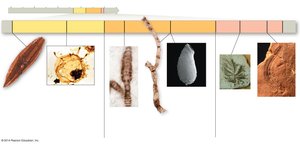
Fossil evidence and chemical markers help trace the timeline of eukaryotic evolution.
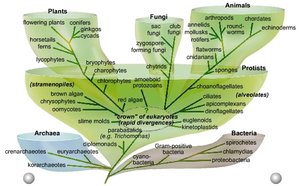
Evolutionary trees illustrate relationships among plants, fungi, animals, protists, archaea, and bacteria.
Example: Fossils such as Bangiomorpha (red alga) and Proterocladus (green alga) represent early multicellular eukaryotes.
Concept 25.1: Eukaryotes Arose by Endosymbiosis
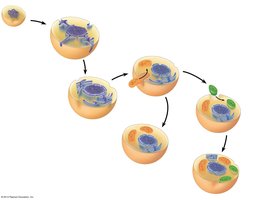
Eukaryotes originated through endosymbiosis, a process in which one cell engulfed another, leading to the formation of organelles such as mitochondria and plastids. This event enabled the development of complex cellular structures.
Endosymbiosis: The theory that mitochondria and plastids (chloroplasts) originated from prokaryotic cells engulfed by ancestral eukaryotes.
Key evidence:
Inner membranes of mitochondria and plastids resemble prokaryotic membranes.
Division and DNA structure are similar between these organelles and prokaryotes.
Organelles transcribe and translate their own DNA.
Ribosomes are more similar to prokaryotic than eukaryotic ribosomes.
Serial endosymbiosis: Multiple engulfment events led to the diversity of eukaryotic organelles.
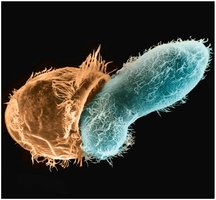
Example: The ciliate Didinium demonstrates structural complexity and shape changes.
Concept 25.2: Evolution of Multicellularity
Multicellularity evolved multiple times in eukaryotes, allowing for greater complexity and specialization. This transition required mechanisms for cell adhesion and communication.
Multicellular lineages: Red algae, green algae, brown algae, plants, fungi, and animals.
Cellular mechanisms: Proteins such as cadherins facilitate cell adhesion and signaling.
Example: Colonial algae like Volvox show evolutionary steps from unicellular to multicellular forms.
Choanoflagellates: Closest relatives to animals; their collar cells are homologous to sponge choanocytes.
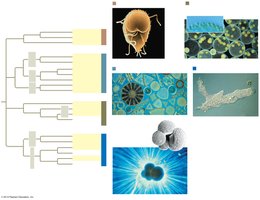
Concept 25.3: Four Supergroups of Eukaryotes
Modern classification divides eukaryotes into four supergroups based on morphological and molecular data: Excavata, SAR clade, Archaeplastida, and Unikonta. Each supergroup contains diverse protists and other taxa.
Excavata: Characterized by a unique cytoskeleton and, in some cases, a feeding groove. Includes diplomonads, parabasalids, and euglenozoans.
SAR clade: Composed of stramenopiles (diatoms, brown algae), alveolates (dinoflagellates, ciliates), and rhizarians (forams, cercozoans).
Archaeplastida: Includes red algae, green algae, and land plants. Plastids originated from cyanobacterial endosymbionts.
Unikonta: Contains animals, fungi, and amoebozoans.
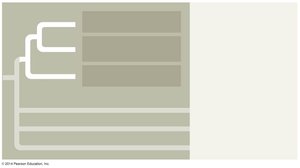
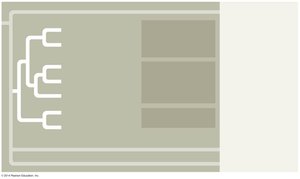
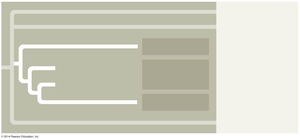
Excavata
Diplomonads: Have reduced mitochondria called mitosomes.
Parabasalids: Possess hydrogenosomes; some are parasites (e.g., Trichomonas vaginalis).
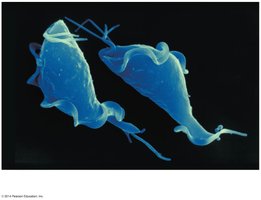
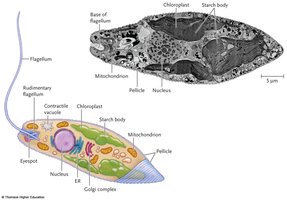
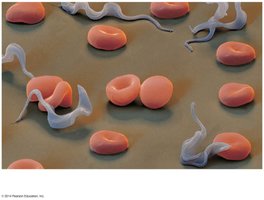
Euglenozoans: Include free-living and parasitic species; notable for their flagella and unique cell structure.
Example: Trypanosoma causes sleeping sickness.
SAR Clade
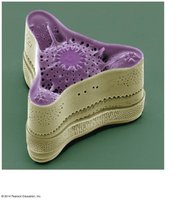
Stramenopiles: Diatoms (glass-like cell walls), brown algae (largest, most complex algae).
Alveolates: Dinoflagellates (cause red tides), ciliates (predators of bacteria and protists).
Rhizarians: Foraminiferans (porous shells), cercozoans (amoeboid and flagellated protists).
Example: Triceratium morlandii (diatom), Pfiesteria shumwayae (dinoflagellate), Globigerina (foraminiferan).
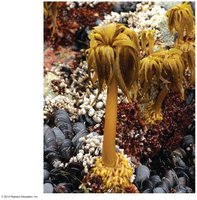
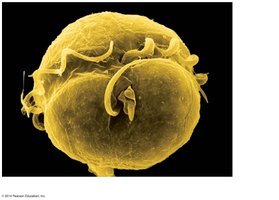
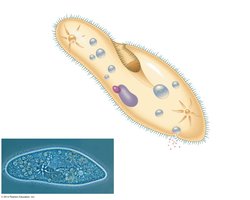
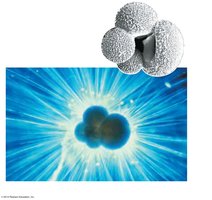
Archaeplastida
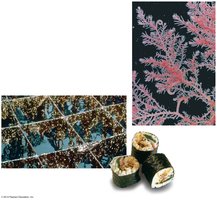
Red algae: Reddish due to phycoerythrin; mostly multicellular; important in food (e.g., nori).
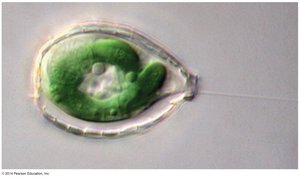
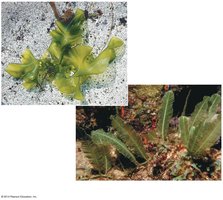
Green algae: Grass-green chloroplasts; charophytes are closely related to land plants.
Example: Bonnemaisonia hamifera (red algae), Ulva and Caulerpa (green algae).
Unikonta
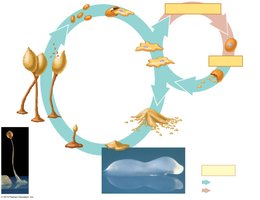
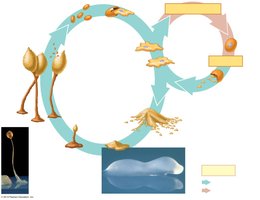
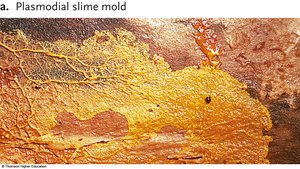
Amoebozoans: Free-living and parasitic; slime molds (e.g., Dictyostelium) aggregate to form fruiting bodies.
Opisthokonts: Includes animals, fungi, and related protists.
Example: Slime mold intelligence and aggregation.
Structural and Functional Diversity in Protists
Protists exhibit remarkable structural and functional diversity. They are primarily aquatic, mostly unicellular, but several multicellular lineages exist. Their nutritional modes include photoautotrophy, heterotrophy, and mixotrophy.
Reproduction: Both sexual and asexual methods are observed.
Complexity: Single-celled protists carry out all biological functions within one cell.
Concept 25.4: Ecological Roles and Human Health
Single-celled eukaryotes, especially protists, play crucial roles in ecological communities and impact human health. They are major producers in aquatic environments and are sensitive to climate change.
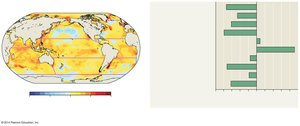
Photosynthetic protists: Account for about 30% of global photosynthesis.
Climate change: Warming oceans affect the abundance and productivity of photosynthetic protists, impacting ecosystems and fisheries.
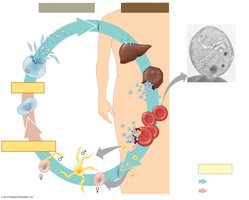
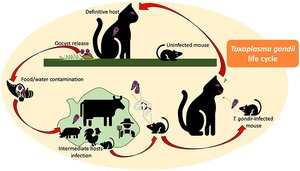
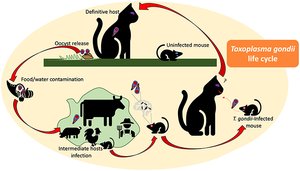
Human health: Some protists cause diseases, such as malaria (caused by Plasmodium) and toxoplasmosis (caused by Toxoplasma gondii).
Example: The life cycle of Plasmodium involves both human and mosquito hosts.

Summary Table: Major Eukaryotic Supergroups and Their Characteristics
Supergroup | Main Characteristics | Representative Groups |
|---|---|---|
Excavata | Unique cytoskeleton, feeding groove | Diplomonads, Parabasalids, Euglenozoans |
SAR Clade | Stramenopiles, Alveolates, Rhizarians | Diatoms, Brown algae, Dinoflagellates, Ciliates, Forams |
Archaeplastida | Plastids from cyanobacteria, multicellular forms | Red algae, Green algae, Land plants |
Unikonta | Amoebozoans, Opisthokonts | Slime molds, Fungi, Animals |
Key Equations and Concepts
Endosymbiosis:
Photosynthesis (generalized):
