 Back
BackThe Origin and Diversity of Life: Study Notes for General Biology II
Study Guide - Smart Notes
 Tailored notes based on your materials, expanded with key definitions, examples, and context.
Chapter 25: The Origin & Diversity of Life
Deep Time and Geological History
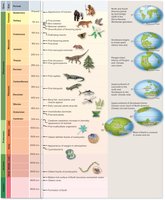
Understanding the history of life on Earth requires knowledge of geological time, which is divided into eons, eras, and periods. These divisions help scientists organize major events in Earth's history and the evolution of life.
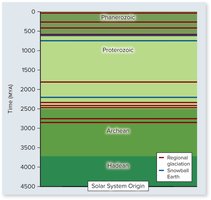
Four Eons: Hadean, Archean, Proterozoic, Phanerozoic
Geological Evidence: Earth formed about 4.6 billion years ago (BYA); earliest rocks are from the Archean eon.
Major Events: Meteor impacts, formation of Earth's crust, and the emergence of life.
Changes in Earth's Atmosphere and Climate
Earth's atmosphere and climate have changed dramatically over time, influencing the evolution and survival of life forms.
CO2 Levels: Early atmosphere had high CO2, which affected temperature and weathering processes.
Weathering: Conversion of silicate rock to soil released bicarbonate ions, lowering CO2 and cooling the planet.
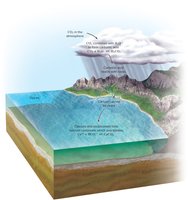
Plate Tectonics and Continental Movement
Earth's crust is divided into plates that move over time, shaping continents and oceans. This movement has influenced the evolution and distribution of life.
Supercontinents: Rodinia, Gondwana, and Pangea formed and broke apart at different times.
Impact on Evolution: Plate movement caused reproductive isolation and mixing of populations, driving evolutionary change.
Origins of Life
The origin of life is a central question in biology. Scientists study how organic molecules and metabolic pathways could have arisen on early Earth.
Early Organic Molecules: May have formed from atmospheric reactions or arrived via meteorites and comets.
Reducing Atmosphere: Early Earth likely had a reducing atmosphere (rich in hydrogen, lacking oxygen), favoring the formation of organic molecules.
The Miller-Urey Experiment
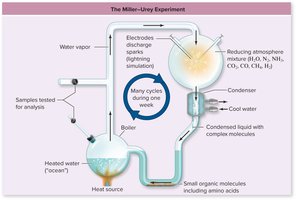
The Miller-Urey experiment simulated early Earth conditions to test the formation of organic molecules.
Setup: Simulated a reducing atmosphere with water vapor, methane, ammonia, and hydrogen; electrical sparks mimicked lightning.
Results: Produced amino acids and other organic compounds, supporting the hypothesis that life's building blocks could form naturally.
Emergence of Metabolic Pathways and Early Cells
Life likely began with the formation of simple cells capable of metabolism and replication.
RNA World Hypothesis: RNA may have been the first genetic material, with ribozymes acting as catalysts.
Cell Membranes: Fatty acid/lipid bubbles could form primitive cell membranes, enabling metabolic reactions.
First Life Forms: Single-celled organisms, likely prokaryotic, were the earliest life forms.
Evidence for Early Life
Fossil and isotopic evidence provides clues about the earliest life on Earth.
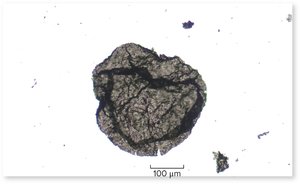
Microfossils: Fossilized microscopic life forms, some as old as 3.5 billion years, resembling modern prokaryotes.
Stromatolites: Layered structures formed by cyanobacteria, with ancient and modern examples.
Isotopic Analysis: Living organisms preferentially use carbon-12, which can be detected in ancient rocks.
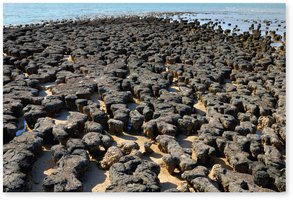
Earth's Changing System and Mass Extinctions
Climate and atmospheric changes have repeatedly altered the course of evolution, sometimes causing mass extinctions.
Glaciations: Periods of extreme cold covered Earth in ice, affecting life globally.
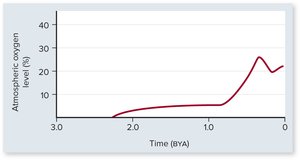
Oxygenation: Oxygenic photosynthesis by cyanobacteria increased atmospheric O2, eventually forming the ozone layer (O3).
The Tree of Life: Domains and Supergroups
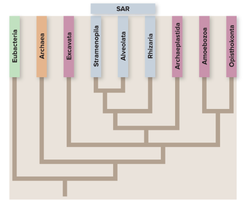
Life is classified into three domains and several eukaryotic supergroups, reflecting evolutionary relationships.
Domains: Eubacteria, Archaea, Eukarya
Eukaryotic Supergroups: Excavata, SAR (Stramenopila, Alveolata, Rhizaria), Archaeplastida, Amoebozoa, Opisthokonta
Compartmentalization and the Origin of Eukaryotes
The evolution of compartmentalized cells (eukaryotes) allowed for greater complexity and specialization.
Endomembrane System: Includes the nuclear membrane, Golgi apparatus, and endoplasmic reticulum.
Physical Separation: Transcription and translation are separated, allowing more control over gene expression.
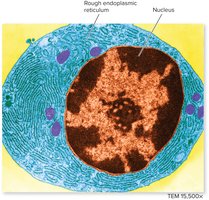
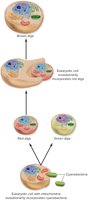
Endosymbiosis Theory
Mitochondria and chloroplasts originated from symbiotic relationships with prokaryotic cells.
Mitochondria: Descended from purple sulfur bacteria.
Chloroplasts: Descended from cyanobacteria.
Multicellularity and Cell Specialization
Multicellularity enabled the evolution of specialized cells and tissues, increasing organismal complexity.
Unicellular Success: Unicellular organisms remain abundant and successful.
Cell Differentiation: Multicellularity allows cells to specialize and communicate, leading to tissues and organs.
Sexual Reproduction and Genetic Diversity
Sexual reproduction, including meiosis and crossing over, increases genetic diversity and evolutionary potential.
Haploid and Diploid Stages: Early eukaryotes were likely haploid; diploidy evolved independently in different lineages.
The Cambrian Radiation
The Cambrian period saw a rapid diversification of life, especially in aquatic environments, laying the foundation for modern biodiversity.
Cambrian Radiation: Occurred 542–488 million years ago, resulting in the emergence of most major animal groups.
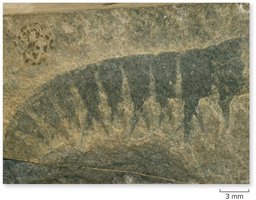
Major Innovations for Life on Land
Adaptations such as photosynthesis, the ozone layer, and mechanisms to prevent desiccation enabled plants and animals to colonize terrestrial environments.
Ozone Layer: Formed from atmospheric O2, protecting organisms from UV radiation.
Desiccation Prevention: Innovations were required for life to survive outside water.
Classification and Taxonomy
Biologists use a hierarchical system to classify and name organisms, reflecting evolutionary relationships.
Hierarchy: Domain, Supergroup, Kingdom, Phylum, Class, Order, Family, Genus, Species
Binomial Nomenclature: Developed by Linnaeus; each species has a unique two-part name (Genus species), italicized or underlined.
Taxon: A group of organisms at any level in the classification system.
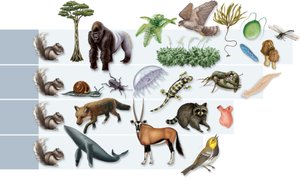
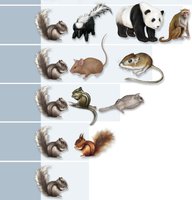
Example: Eastern Gray Squirrel Classification
Level | Name |
|---|---|
Domain | Eukarya |
Kingdom | Animalia |
Phylum | Chordata |
Subphylum | Vertebrata |
Class | Mammalia |
Order | Rodentia |
Family | Sciuridae |
Genus | Sciurus |
Species | Sciurus carolinensis |
Key Terms and Concepts
Monophyletic: A group consisting of an ancestor and all its descendants.
Stromatolite: Layered structure formed by cyanobacteria.
Endosymbiosis: Theory explaining the origin of mitochondria and chloroplasts in eukaryotic cells.
Taxonomy: The science of classifying organisms.
