 Back
The Origin and Evolution of Vertebrates: Chordates and Their Characteristics
Study Guide - Smart Notes
 Tailored notes based on your materials, expanded with key definitions, examples, and context.
Conquest of the Waters: The First Chordates
Introduction to Chordates
The phylum Chordata represents a major evolutionary lineage within the animal kingdom, characterized by a set of unique anatomical features. Chordates originated during the Early Cambrian Period, approximately 540–550 million years ago, and have since diversified into over 81,000 species, including all vertebrates and several groups of invertebrates. Initially restricted to marine environments, the evolution of limbs enabled some chordates to colonize terrestrial habitats around 365 million years ago.
Phylogenetic Context of Chordates
Chordates in the Animal Tree of Life
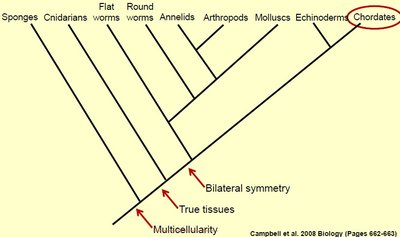
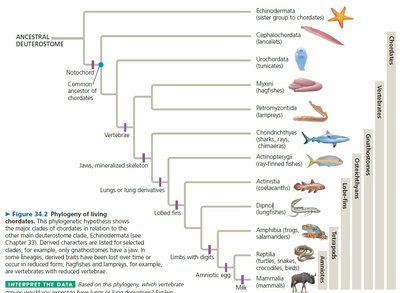
Chordates are part of the deuterostome lineage, sharing a close evolutionary relationship with echinoderms. Key evolutionary milestones such as multicellularity, true tissues, and bilateral symmetry are shared with other animal groups, but chordates are distinguished by their unique features.
Bilateral symmetry: Chordates possess a body plan with left and right sides that are mirror images.
Cephalization: Development of a head region with sensory organs.
Segmentation: Repetition of body units, especially evident in muscles and vertebrae.
Coelomate: Presence of a true body cavity.
Closed circulatory system: Blood is contained within vessels.
Defining Characteristics of Chordates
Four Key Chordate Features
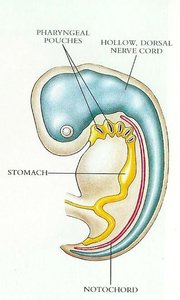
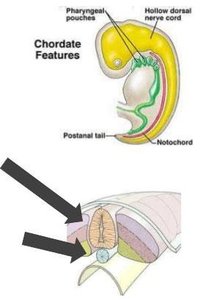
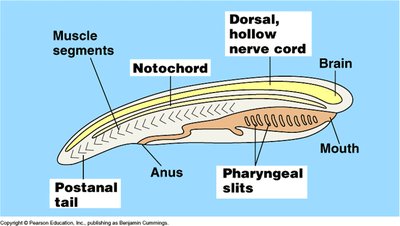
All chordates possess four defining features at some stage in their life cycle. These features are evidence of a common ancestry and are used to distinguish chordates from other animal phyla.
Notochord: A flexible, rod-shaped structure that provides skeletal support.
Dorsal, hollow nerve cord: Develops into the central nervous system (brain and spinal cord in vertebrates).
Pharyngeal slits or clefts: Openings in the pharynx that function in filter feeding, respiration, or develop into structures of the head and neck in terrestrial vertebrates.
Post-anal tail: A muscular tail that extends beyond the anus, aiding in locomotion.
Additional Chordate Feature: Endostyle/Thyroid Gland
Some sources include the endostyle (or its derivative, the thyroid gland) as a fifth chordate characteristic, involved in iodine metabolism.
Subphyla of Chordata
Major Subphyla
Chordata is divided into three main subphyla, each with distinct characteristics and evolutionary significance:
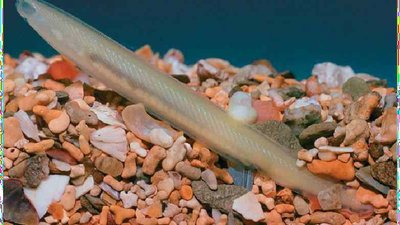
Cephalochordata (lancelets): Small, fish-like marine animals that retain all chordate features throughout life.
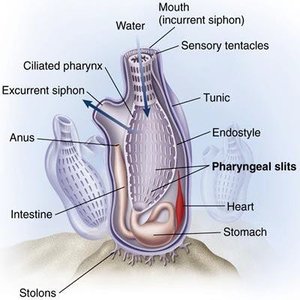
Urochordata (tunicates/sea squirts): Marine filter feeders with a free-swimming larval stage exhibiting chordate traits; adults are sessile and lose most chordate features except pharyngeal slits.
Vertebrata: Chordates with a backbone, including fish, amphibians, reptiles, birds, and mammals.
Cephalochordata: Lancelets
Structure and Function
Lancelets are considered the most basal group of chordates. They are small, jawless, marine filter feeders that retain all four chordate characteristics into adulthood. Their simple body plan provides insight into the ancestral chordate condition.
External anatomy: Elongated, laterally compressed body with a spear-like appearance.
Internal anatomy: Notochord, dorsal nerve cord, pharyngeal slits, and post-anal tail are all present.
Feeding: Cilia draw water into the mouth, passing through pharyngeal slits where food particles are trapped and transported to the intestine.
Urochordata: Tunicates (Sea Squirts)
Life Cycle and Structure
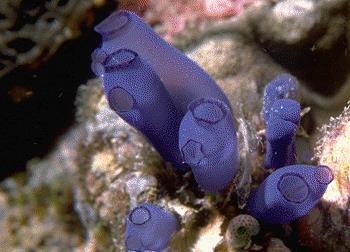
Tunicates, or sea squirts, are marine invertebrate chordates. Their larvae possess all chordate features, but adults are sessile and retain only the pharyngeal slits. The adult body is covered by a tunic made of tunicin, and they feed by filtering water through their pharynx.
Larval stage: Free-swimming, with notochord and tail for dispersal.
Adult stage: Sessile, solitary or colonial, with a prominent pharynx and tunic.
Feeding: Water enters through the incurrent siphon, passes through pharyngeal slits, and exits via the excurrent siphon. Food particles are trapped and digested.
Vertebrata: The Evolution of Vertebrates
Key Features of Vertebrates
Vertebrates are distinguished from other chordates by the presence of a backbone (vertebral column) and a more complex nervous system. These adaptations have enabled vertebrates to become efficient predators and to colonize a wide range of environments.
Backbone: Replaces the notochord as the main axial support in adults.
Head and skull (cranium): Protects the brain and sensory organs.
Efficient gas exchange: Gills or lungs for respiration.
Advanced organ systems: Including closed circulatory, digestive, and excretory systems.
Chordate Features in Human Development
Vestigial Chordate Traits in Humans
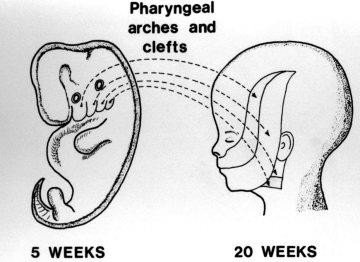
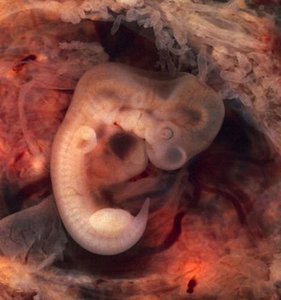
During embryonic development, humans exhibit all four chordate characteristics. These features are modified or lost as development proceeds, but remnants persist in adult anatomy.
Notochord: Becomes the gelatinous disks between vertebrae.
Dorsal nerve cord: Develops into the spinal cord.
Pharyngeal slits: Form structures in the head and neck, such as parts of the ear.
Post-anal tail: Reduced to the coccyx (tailbone).
Summary Table: Comparison of Chordate Subphyla
Subphylum | Example Organisms | Key Features | Presence of Chordate Traits in Adult |
|---|---|---|---|
Cephalochordata | Lancelets | All four chordate features retained; simple body plan | Yes |
Urochordata | Tunicates (sea squirts) | Larvae with chordate features; adults sessile, retain only pharyngeal slits | No (except pharyngeal slits) |
Vertebrata | Fish, amphibians, reptiles, birds, mammals | Backbone, complex organ systems, advanced nervous system | Yes (modified) |
Conclusion
The phylum Chordata encompasses a diverse group of animals united by four key anatomical features. The evolutionary innovations of the notochord, dorsal nerve cord, pharyngeal slits, and post-anal tail have enabled chordates to adapt to a wide range of environments and to give rise to the vertebrates, including humans. Understanding the structure, function, and evolutionary history of chordates provides essential context for the study of animal diversity and the origins of complex life forms.
