 Back
BackThe Origin and Evolution of Vertebrates: Chordates, Tetrapods, Amniotes, and Mammals
Study Guide - Smart Notes
 Tailored notes based on your materials, expanded with key definitions, examples, and context.
Chordates and Vertebrate Evolution
Overview of Chordate Characteristics
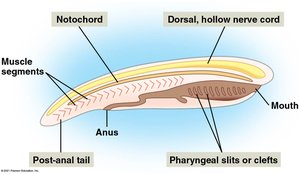
Chordates are a diverse phylum of animals characterized by four key features present at some stage in their life cycle. These features are essential for understanding vertebrate evolution and the transition from aquatic to terrestrial life.
Notochord: A flexible, rod-like structure providing skeletal support.
Dorsal, hollow nerve cord: Develops into the central nervous system (brain and spinal cord).
Pharyngeal slits or clefts: Openings in the pharynx used for filter feeding, gas exchange, or modified into other structures.
Muscular, post-anal tail: Extends beyond the anus, aiding in locomotion.
Chordate Phylogeny and Major Groups
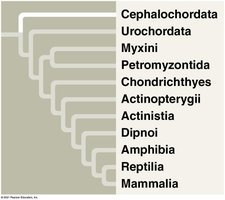
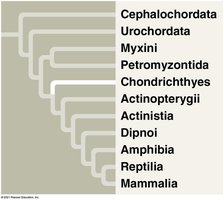
Chordates belong to the clade Deuterostomia and include both vertebrates and two groups of invertebrates: cephalochordates (lancelets) and urochordates (tunicates). The evolutionary tree illustrates the relationships among major chordate groups and the emergence of key adaptations.
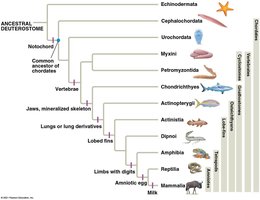
Table: Major Chordate Groups
Group | Key Characteristics |
|---|---|
Cephalochordata | Retain all chordate features as adults; marine suspension feeders |
Urochordata | Chordate features prominent in larval stage; filter-feeding adults |
Vertebrata | Backbone, complex nervous system, multiple Hox gene sets |
Cephalochordates and Urochordates
Lancelets (Cephalochordata)
Lancelets are marine animals that retain all chordate features throughout life. They are important for understanding the ancestral chordate body plan.
Bladelike shape and swimming mechanism similar to fishes
Key features: notochord, dorsal nerve cord, pharyngeal slits, post-anal tail
Tunicates (Urochordata)
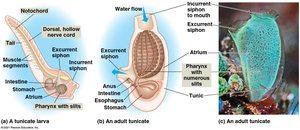
Tunicates exhibit chordate features mainly during their brief larval stage. Adults are sessile filter feeders known as sea squirts.
Larval stage: Muscular tail and notochord for swimming
Adult stage: Incurrent and excurrent siphons for water flow and feeding
Reduced number of Hox genes compared to vertebrates
Early Vertebrate Evolution
Vertebrate Innovations
Vertebrates are distinguished from other chordates by the presence of a backbone and increased genetic complexity. The neural crest is a unique vertebrate feature that gives rise to diverse structures.
Backbone: Allows for larger body size and more complex movement
Neural crest: Cells contribute to teeth, skull bones, neurons, and sensory organs
Multiple sets of Hox genes enable nervous system and skeletal innovations
Jawless Vertebrates: Hagfishes and Lampreys
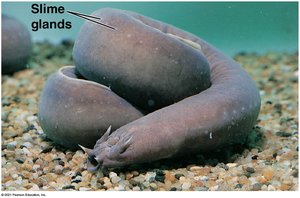
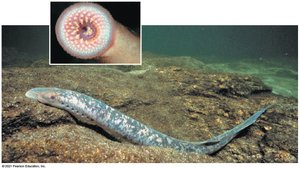
Hagfishes and lampreys are the only living jawless vertebrates. They possess rudimentary vertebrae and retain the notochord as adults.
Hagfishes: Marine scavengers with slime glands for defense
Lampreys: Parasitic or free-living; attach to host fish and feed on blood
Early Fossil Vertebrates
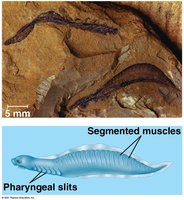
Fossils from the Cambrian explosion document the transition to vertebrates, including Haikouella and Myllokunmingia, the first chordate with a head.
Haikouella: Primitive vertebrate with brain, eyes, and muscles
Myllokunmingia: First evidence of a skull and head
Gnathostomes: Jawed Vertebrates
Evolution of Jaws
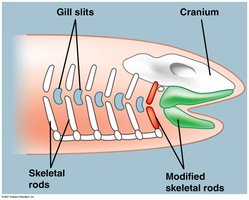
Gnathostomes are vertebrates with jaws, a major evolutionary innovation. Jaws likely evolved from skeletal rods supporting pharyngeal slits.
Jaws: Hinged structures with teeth for gripping and slicing food
Genome duplication and enlarged forebrain
Lateral line system for detecting vibrations in aquatic species
Placoderms and Early Jawed Vertebrates
Placoderms were extinct armored jawed vertebrates. Gnathostomes diverged into three main lineages: chondrichthyans, ray-finned fishes, and lobe-fins.
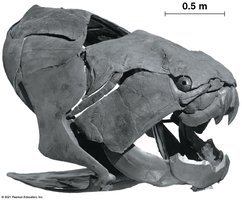
Chondrichthyans: Cartilaginous Fishes
Defining Characteristics
Chondrichthyans include sharks, rays, and chimaeras. Their skeleton is primarily cartilage, often with traces of bone.
Streamlined body for swift swimming
Oil in liver for buoyancy
Internal fertilization with diverse reproductive strategies
Osteichthyans: Bony Fishes and Tetrapods
Ray-Finned Fishes
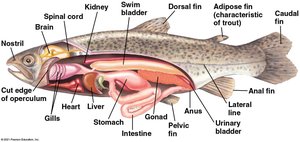
Ray-finned fishes are the most diverse group of vertebrates, with adaptations in body form and fin structure.
Bony endoskeleton and operculum covering gills
Swim bladder for buoyancy
External fertilization common
Lobe-Finned Fishes
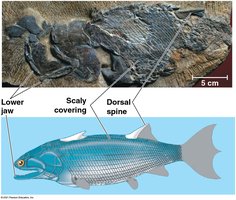
Lobe-fins have rod-shaped bones surrounded by muscle in their fins. Only three lineages survive: coelacanths, lungfishes, and tetrapods.
Tetrapods: Limbs and Life on Land
Derived Characters of Tetrapods
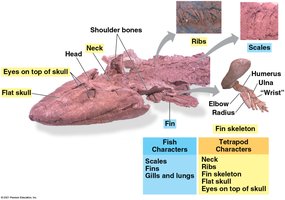
Tetrapods evolved limbs with digits, a neck, and other adaptations for terrestrial life. The fossil Tiktaalik shows transitional features between fish and tetrapods.
Four limbs with digits
Neck and shoulders for head movement
Absence of gills (except in some aquatic species)
Amphibians
Major Clades and Characteristics
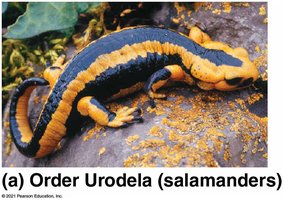
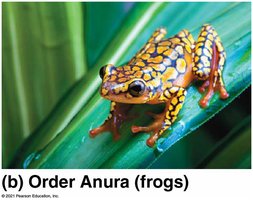
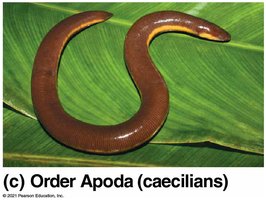
Amphibians include salamanders, frogs, and caecilians. They exhibit both aquatic and terrestrial life stages.
Salamanders: Tailed amphibians, some retain larval features as adults
Frogs: Powerful hind legs, lack tails as adults
Caecilians: Legless, resemble earthworms, adapted to burrowing
Amniotes: Adaptations for Terrestrial Life
Amniotic Egg and Extraembryonic Membranes
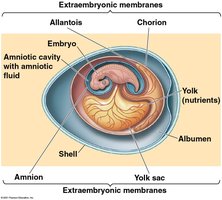
Amniotes are tetrapods with a terrestrially adapted egg, reducing dependence on water for reproduction. The amniotic egg contains four membranes: amnion, chorion, yolk sac, and allantois.
Amnion: Fluid-filled sac protecting the embryo
Chorion: Gas exchange
Yolk sac: Nutrient supply
Allantois: Waste storage
Reptiles
Defining Characteristics and Diversity
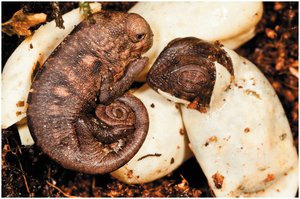
Reptiles include turtles, lepidosaurs (lizards, snakes), crocodilians, and birds. Most are ectothermic, except birds which are endothermic.
Scales with keratin for protection
Shelled eggs laid on land
Internal fertilization
Mammals
Derived Characters of Mammals
Mammals are amniotes with hair and mammary glands. They exhibit endothermy, efficient organ systems, and extensive parental care.
Mammary glands: Milk production
Hair and fat layer: Insulation
Kidneys: Water conservation
Large brain-to-body ratio
Major Mammalian Lineages
Monotremes: Egg-laying mammals (e.g., platypus, echidnas)
Marsupials: Pouched mammals with early birth and continued development in a pouch
Eutherians: Placental mammals with complex placenta and longer gestation
Primates and Human Evolution
Primates
Primates are characterized by adaptations for arboreal life, including grasping hands and feet, large brains, and complex social behavior.
Flat nails instead of claws
Forward-facing eyes for depth perception
Opposable thumbs for dexterity
Human Evolution
Humans are distinguished by upright posture, bipedal locomotion, large brains, and complex language and tool use. Fossil evidence reveals a branching evolutionary tree with multiple hominin species.
Homo sapiens: Originated in Africa, spread worldwide
Bipedalism: Efficient walking in arid environments
Tool use: Evidence predates large brain evolution
Table: Key Evolutionary Adaptations in Vertebrates
Adaptation | Group | Function |
|---|---|---|
Notochord | Chordates | Skeletal support |
Jaws | Gnathostomes | Feeding efficiency |
Amniotic egg | Amniotes | Terrestrial reproduction |
Hair and milk | Mammals | Insulation, nourishment |
Bipedalism | Humans | Efficient locomotion |
Summary
This guide covers the major evolutionary innovations and defining characteristics of chordates, vertebrates, tetrapods, amniotes, reptiles, mammals, primates, and humans. Understanding these adaptations is essential for studying the diversity and evolutionary history of vertebrate life.
