 Back
The Origin and Evolution of Vertebrates
Study Guide - Smart Notes
 Tailored notes based on your materials, expanded with key definitions, examples, and context.
The Origin and Evolution of Vertebrates
Overview: Half a Billion Years of Backbones
Vertebrates are animals with backbones that have evolved over the past 530 million years, originating from invertebrate ancestors in the Cambrian period. This group includes some of the largest and most diverse animals on Earth, with over 57,000 species ranging from fish to mammals.
Chordates: Key Features and Evolutionary Relationships
Chordate Characteristics
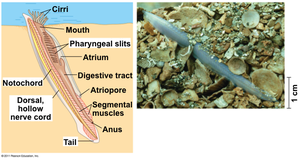
Chordates (phylum Chordata) are bilaterian animals within the clade Deuterostomia. They include all vertebrates and two groups of invertebrates: urochordates and cephalochordates. All chordates share four key derived characters, though some are present only during embryonic development:
Notochord: A flexible, longitudinal rod providing skeletal support.
Dorsal, hollow nerve cord: Develops into the central nervous system (brain and spinal cord).
Pharyngeal slits or clefts: Grooves in the pharynx that function in suspension feeding, gas exchange, or develop into parts of the ear, head, and neck in tetrapods.
Muscular, post-anal tail: Tail posterior to the anus, often reduced in adults but important for movement in aquatic species.
Example: Lancelets (Cephalochordata) are marine suspension feeders that retain all four chordate characteristics as adults.
Vertebrates: Chordates with a Backbone
Derived Characters of Vertebrates
Vertebrates are distinguished from other chordates by the presence of a backbone and other features:
Two or more sets of Hox genes (compared to one set in lancelets and tunicates).
Vertebrae enclosing a spinal cord.
An elaborate skull.
Fin rays in aquatic forms.
Jawless Vertebrates: Hagfishes and Lampreys
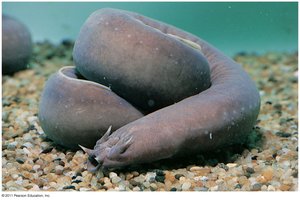
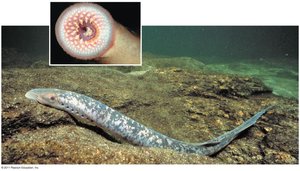
The earliest vertebrates lacked jaws. Today, only two lineages of jawless vertebrates remain: hagfishes and lampreys. Although they lack a true backbone, they possess rudimentary vertebrae and are considered vertebrates based on phylogenetic analysis.
Origins of Bone and Teeth
Mineralization in vertebrates likely began with mouthparts, with the endoskeleton becoming fully mineralized later. Early jawless vertebrates, such as conodonts, had mineralized skeletal elements in their mouth and pharynx, while others had defensive plates of bone on their skin.
Gnathostomes: Vertebrates with Jaws
Derived Characters of Gnathostomes
Gnathostomes are jawed vertebrates, a group that includes sharks, ray-finned fishes, lobe-finned fishes, amphibians, reptiles (including birds), and mammals. Key features include:
Jaws with teeth for gripping and slicing food.
An enlarged forebrain for enhanced smell and vision.
A lateral line system in aquatic species, sensitive to vibrations.
Fossil Gnathostomes
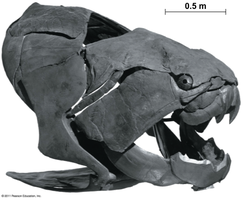
The earliest jawed vertebrates were placoderms, an extinct lineage of armored fishes. Three major lineages of jawed vertebrates survive today: chondrichthyans, ray-finned fishes, and lobe-fins.
Osteichthyans: Bony Fishes and Tetrapods
Ray-Finned Fishes
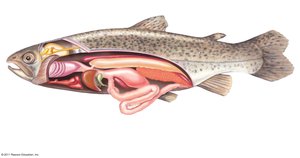
Ray-finned fishes are the most diverse group of vertebrates. Their fins are supported by long, flexible rays, and they possess a bony endoskeleton. Most breathe by drawing water over gills protected by an operculum and control buoyancy with a swim bladder.
Lobe-Fins
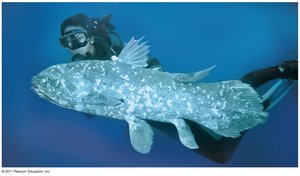
Lobe-fins have muscular pelvic and pectoral fins, which they use to swim and "walk" underwater. Surviving lineages include coelacanths, lungfishes, and tetrapods. Coelacanths were thought extinct until one was discovered in 1938.
Tetrapods: Gnathostomes with Limbs
Derived Characters of Tetrapods
Tetrapods evolved from lobe-finned fishes, with fins transforming into limbs and feet. Key adaptations include:
Four limbs with digits.
A neck for independent head movement.
Fusion of the pelvic girdle to the backbone.
Absence of gills (except in some aquatic species).
Ears for detecting airborne sounds.
Amphibians
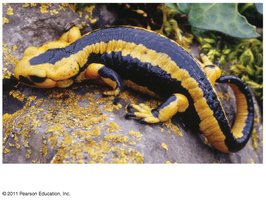
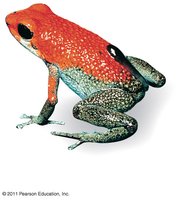
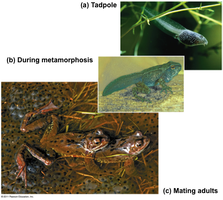
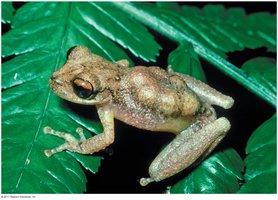
Amphibians (class Amphibia) include salamanders, frogs, and caecilians. They are characterized by a life cycle that often involves metamorphosis from an aquatic larva to a terrestrial adult. Amphibians have moist skin for gas exchange and are sensitive to environmental changes.
Amniotes: Tetrapods with a Terrestrially Adapted Egg
Derived Characters of Amniotes
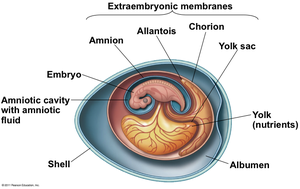
Amniotes include reptiles (including birds) and mammals. The amniotic egg, with its protective membranes, was a key adaptation for terrestrial life. Other adaptations include relatively impermeable skin and rib cage ventilation of the lungs.
Reptiles
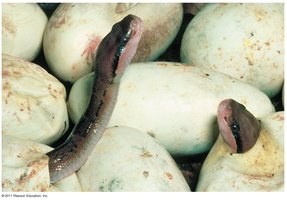
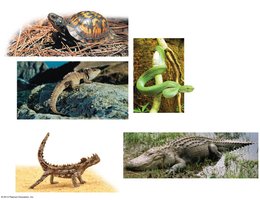
Reptiles are a diverse clade that includes turtles, lizards, snakes, crocodilians, and birds. They have scales for waterproofing and most lay shelled eggs on land.
Birds
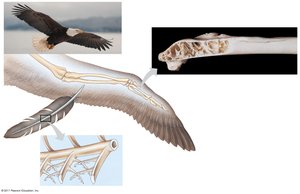
Birds are reptiles that have undergone extensive modification for flight. Adaptations include wings with keratin feathers, lightweight bones, and the absence of a urinary bladder. Flight enables efficient hunting, escape from predators, and migration.
Mammals: Amniotes with Hair and Milk
Derived Characters of Mammals
Mammals (class Mammalia) are characterized by:
Mammary glands producing milk.
Hair for insulation.
Endothermy and a high metabolic rate.
Larger brains relative to body size.
Differentiated teeth for varied diets.
The three main lineages are monotremes (egg-laying), marsupials (pouched), and eutherians (placental mammals).
Summary Table: Major Vertebrate Clades and Their Features
Clade | Key Features | Examples |
|---|---|---|
Chordates | Notochord, dorsal hollow nerve cord, pharyngeal slits, post-anal tail | Lancelets, tunicates, vertebrates |
Vertebrates | Backbone of vertebrae, elaborate skull | Hagfish, lampreys, jawed vertebrates |
Gnathostomes | Hinged jaws, four sets of Hox genes | Sharks, ray-finned fishes, lobe-fins, tetrapods |
Osteichthyans | Bony skeleton | Ray-finned fishes, lobe-fins, tetrapods |
Lobe-fins | Muscular fins or limbs | Coelacanths, lungfishes, tetrapods |
Tetrapods | Four limbs, neck, fused pelvic girdle | Amphibians, reptiles, mammals |
Amniotes | Amniotic egg, rib cage ventilation | Reptiles, mammals |
