 Back
The Origin and Evolution of Vertebrates (General Biology II, Chapter 34)
Study Guide - Smart Notes
 Tailored notes based on your materials, expanded with key definitions, examples, and context.
The Origin and Evolution of Vertebrates
Half a Billion Years of Backbones
Vertebrates are among the most successful animal groups, characterized by the presence of a backbone. Their evolutionary history began in the Cambrian period (~530 million years ago), with one lineage eventually colonizing land and giving rise to amphibians, reptiles (including birds), and mammals.
Vertebrae: Series of bones making up the backbone.
Species Diversity: ~65,000 vertebrate species, including the largest organisms ever to live.
Land Colonization: Occurred ~365 million years ago.
Chordates: Key Derived Characters
Chordates (phylum Chordata) are bilaterian animals within the clade Deuterostomia. They include all vertebrates and two groups of invertebrates: Urochordates and Cephalochordates.
Four Key Traits: All chordates share these during some stage of development:
Notochord
Dorsal, hollow nerve cord
Pharyngeal slits or clefts
Muscular, post-anal tail
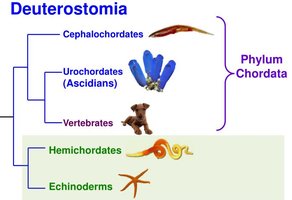
Derived Characters of Chordates
Notochord: A flexible rod providing skeletal support, present between the digestive tube and nerve cord. In most vertebrates, it is replaced by a more complex skeleton, with remnants remaining in adults.
Dorsal, Hollow Nerve Cord: Develops from ectoderm and forms the central nervous system (brain and spinal cord).
Pharyngeal Slits or Clefts: Grooves in the pharynx that develop into slits for suspension feeding, gas exchange, or parts of the ear/head/neck in tetrapods.
Muscular, Post-Anal Tail: Tail posterior to the anus, containing skeletal elements and muscles, often reduced in adults but provides propulsion in aquatic species.
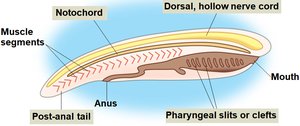
Cephalochordates and Urochordates
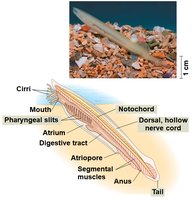
Lancelets (Cephalochordata)
Lancelets are marine suspension feeders that retain chordate characteristics as adults.
Bladelike Shape: Adapted for burrowing and filter feeding.
Body Plan: Includes notochord, dorsal nerve cord, pharyngeal slits, and post-anal tail.
Tunicates (Urochordata)
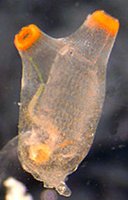
Tunicates, or "sea squirts," are more closely related to vertebrates than lancelets.
Larval Stage: Resembles chordates; undergoes metamorphosis to adult form.
Adult Tunicates: Filter feeders; shoot water through excurrent siphon when threatened.
Vertebrates: Chordates with a Backbone
Jawless Vertebrates: Hagfish and Lampreys
The earliest vertebrates lacked jaws. Only two lineages of jawless vertebrates remain: hagfish and lampreys.
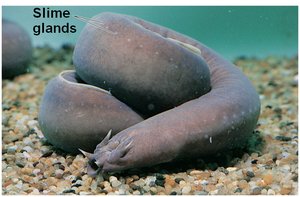
Hagfish (Myxini): Cartilaginous skull, reduced vertebrae, flexible rod of cartilage, marine scavengers, produce slime for defense.
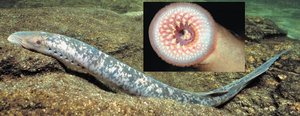
Lampreys (Petromyzontida): Jawless, inhabit saltwater and freshwater, some are parasitic, have notochord and cartilaginous skeleton.
Gnathostomes: Vertebrates with Jaws
Key Features and Evolutionary Advantages
Gnathostomes include sharks, ray/lobe-finned fishes, amphibians, reptiles, birds, and mammals.
Hinged Jaws: Used to grip and slice food.
Enlarged Forebrain: Enhanced senses of smell and vision.
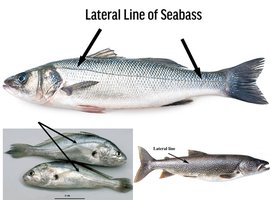
Lateral Line System: Detects vibrations in aquatic species.
Fossil Gnathostomes
The earliest jawed vertebrates appeared ~440 million years ago.
Fin Rays: Provided thrust and steering.
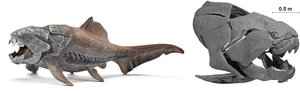
Placoderms: Armored vertebrates.
Chondrichthyans: Cartilaginous Fishes
Includes: Sharks, rays, skates, and chimaeras.
Skeleton: Composed primarily of cartilage.
Adaptations: Streamlined body, acute senses, internal fertilization, spiral valve in digestive tract.
Reproductive Strategies in Vertebrates
Oviparous: Eggs hatch outside the mother.
Ovoviviparous: Eggs hatch within the mother.
Viviparous: Embryo nourished by mother, born alive.
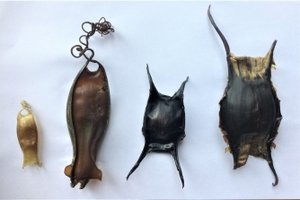
Ray-Finned Fishes and Lobe-Fins
Ray-Finned Fishes (Actinopterygii)
Fins: Supported by long, flexible rays.
Buoyancy: Controlled by swim bladder.
Scales: Flattened, bony, covered by mucus.
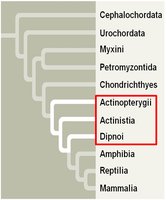
Lobe-Fins (Sarcopterygii)
Fins: Rod-shaped bones surrounded by muscle.
Surviving Lineages: Coelacanths, lungfishes, tetrapods.
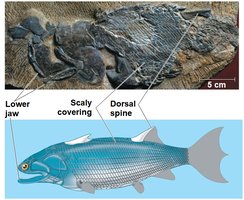
Tetrapods: Gnathostomes with Limbs
Key Adaptations
Tetrapods evolved limbs and feet with digits, a neck, fusion of pelvic girdle to backbone, absence of gills (except some aquatic species), and ears for detecting airborne sounds.
The Origin of Tetrapods
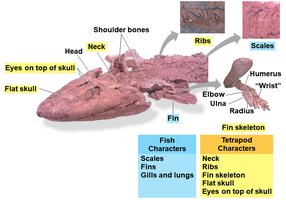
Tiktaalik is a transitional fossil showing both fish and tetrapod characteristics.
Fish Traits: Fins, gills, lungs, scales.
Tetrapod Traits: Ribs, neck, shoulders, limb bone pattern.
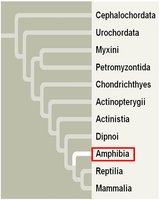
Amphibians
Major Clades
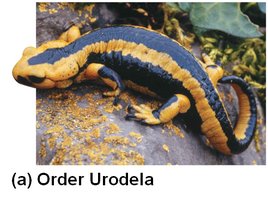
Salamanders (Urodela): Tailed amphibians, aquatic or terrestrial, paedomorphosis common.
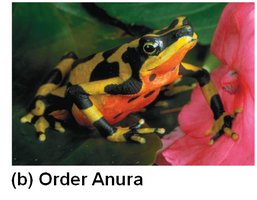
Frogs (Anura): Tail-less, powerful hind legs, leathery skin "toads".
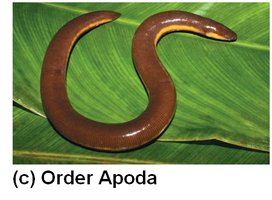
Caecilians (Apoda): Legless, nearly blind, resemble earthworms.
Amphibian Life Cycle and Metamorphosis
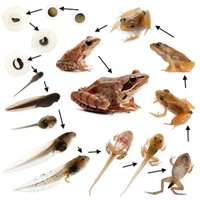
Amphibians typically undergo metamorphosis from aquatic larvae (tadpoles) to terrestrial adults.
Eggs: Require moist environment.
Gas Exchange: Through skin and lungs.
Parental Care: Some species carry eggs on back, in mouth, or stomach.
Amniotes: Tetrapods with a Terrestrially Adapted Egg
Key Derived Characters
Amniotes include reptiles (including birds) and mammals.
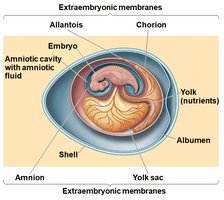
Amniotic Egg: Contains membranes (amnion, chorion, yolk sac, allantois) that protect the embryo.
Terrestrial Adaptations: Impermeable skin, rib cage ventilation.
Reptiles
Major Groups and Adaptations
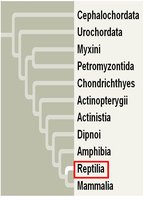
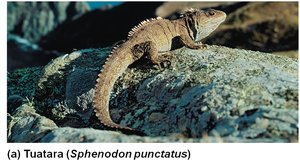
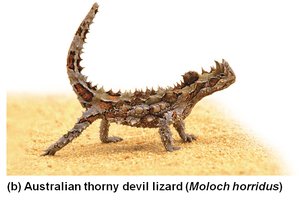
Clade Includes: Tuataras, lizards, snakes, turtles, crocodilians, birds.
Scales: Create waterproof barrier.
Eggs: Shelled, laid on land, internal fertilization.
Thermoregulation: Most are ectothermic; birds are endothermic.
Mammals
Key Derived Characters
Mammals are amniotes with hair and mammary glands.
Mammary Glands: Produce milk.
Hair: Insulation.
Kidneys: Conserve water.
Endothermy: High metabolic rate.
Parental Care: Extensive.
Differentiated Teeth: Specialized for diet.
Monotremes, Marsupials, and Eutherians
Monotremes: Egg-laying mammals (echidnas, platypus).
Marsupials: Embryo develops in uterus, completes development in pouch (marsupium).
Eutherians: Placental mammals, complete development in uterus.
Primates and Hominins
Primates
Groups: Lemurs, tarsiers, monkeys, apes.
Adaptations: Grasping hands/feet, large brain, depth perception, opposable thumb.
Humans and Hominin Evolution
Homo sapiens: Distinguished by upright posture, bipedal locomotion, large brain, reduced jawbones, shorter digestive tract.
Hominins: Extinct species more closely related to humans than chimpanzees.
Australopiths: Paraphyletic group, some walked fully erect.
Early Homo: Homo habilis ("handy man"), Homo ergaster (first fully bipedal, large-brained), Homo erectus (first to migrate out of Africa).
Neanderthals: Homo neanderthalensis, lived in Europe and Near East, buried dead, made tools.
Homo sapiens: Oldest fossils in Ethiopia, first evidence of symbolic thought and art.
Summary Table: Major Vertebrate Groups
Group | Key Traits | Examples |
|---|---|---|
Cephalochordata | Notochord, dorsal nerve cord, pharyngeal slits, post-anal tail | Lancelets |
Urochordata | Larval chordate traits, adult filter feeder | Tunicates |
Myxini & Petromyzontida | Jawless, cartilaginous skeleton | Hagfish, Lampreys |
Chondrichthyes | Cartilaginous skeleton, jaws | Sharks, rays |
Actinopterygii | Ray-finned, bony skeleton | Trout, salmon |
Actinistia & Dipnoi | Lobe-finned, rod-shaped bones | Coelacanths, lungfishes |
Amphibia | Moist skin, metamorphosis | Frogs, salamanders, caecilians |
Reptilia | Scales, shelled eggs | Lizards, snakes, turtles, birds |
Mammalia | Hair, mammary glands | Humans, dogs, whales |
