 Back
The Origin of Species: Mechanisms and Patterns of Speciation
Study Guide - Smart Notes
 Tailored notes based on your materials, expanded with key definitions, examples, and context.
The Origin of Species
Introduction to Speciation
Speciation is the evolutionary process by which populations evolve to become distinct species. Understanding how new species arise is fundamental to evolutionary biology and biodiversity studies. Species are often defined as groups of actually or potentially interbreeding natural populations that are reproductively isolated from other such groups.
Species Concepts and Appearance
Variation Within and Between Species
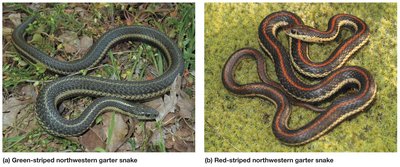
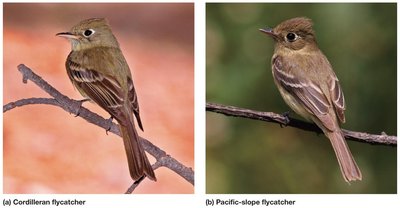
Intraspecific Variation: Members of the same species can show considerable variation in appearance, behavior, or physiology, yet still interbreed successfully.
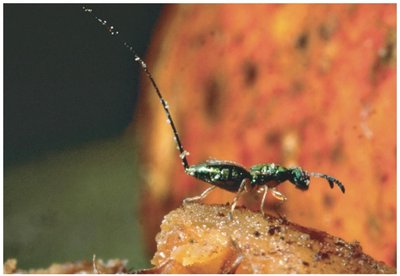
Interspecific Similarity: Different species may appear very similar morphologically but are reproductively isolated.
Species Definition: The biological species concept emphasizes reproductive isolation rather than physical similarity.
Mechanisms of Reproductive Isolation
Prezygotic and Postzygotic Barriers
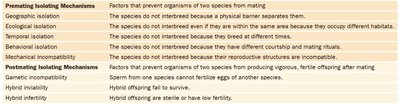
Reproductive isolation prevents gene flow between populations, leading to the formation of new species. These mechanisms are classified as prezygotic (before fertilization) or postzygotic (after fertilization).
Isolating Mechanism | Description |
|---|---|
Geographic isolation | Physical barriers prevent mating between populations. |
Ecological isolation | Populations occupy different habitats within the same area. |
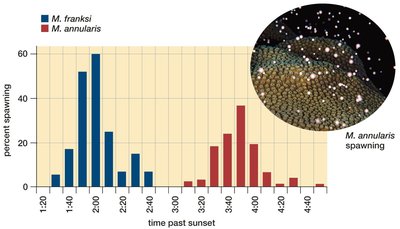
Temporal isolation | Populations breed at different times. |
Behavioral isolation | Differences in courtship or mating behaviors prevent interbreeding. |
Mechanical incompatibility | Reproductive structures are incompatible. |
Genetic incompatibility | Sperm and egg are not compatible. |
Hybrid inviability | Hybrid offspring fail to survive. |
Hybrid infertility | Hybrid offspring are sterile or have reduced fertility. |
Examples of Reproductive Isolation
Geographic Isolation: Physical separation by barriers such as mountains or rivers can lead to speciation.
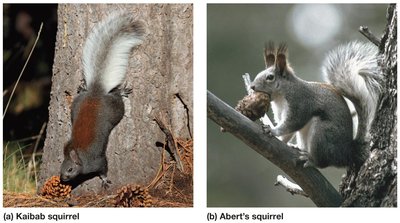
Ecological Isolation: Species may occupy different habitats within the same area, reducing encounters.
Temporal Isolation: Species may breed at different times, preventing interbreeding.
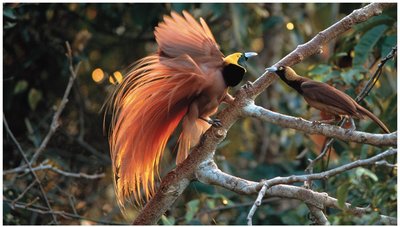
Behavioral Isolation: Unique courtship behaviors can prevent mating between species.
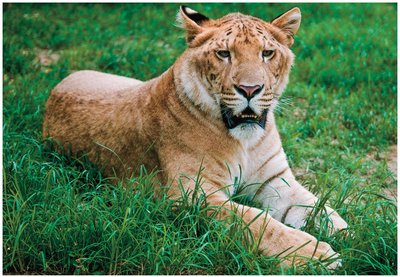
Hybrid Infertility: Even if hybrids are produced, they may be sterile (e.g., ligers).
Modes of Speciation
Allopatric Speciation
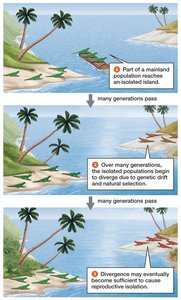
Allopatric speciation occurs when populations are geographically separated, leading to genetic divergence and the formation of new species. Over time, genetic drift and natural selection cause the isolated populations to diverge until reproductive isolation is achieved.
Sympatric Speciation
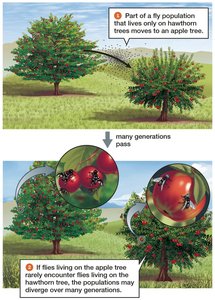
Sympatric speciation occurs without geographic separation. Instead, reproductive isolation arises within a single population, often due to ecological specialization or polyploidy (especially in plants).
Interpreting Evolutionary Relationships
Evolutionary Trees and Adaptive Radiation
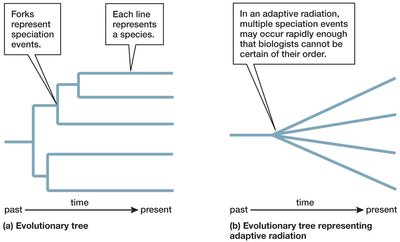
Evolutionary trees (phylogenies) depict the relationships among species, showing how speciation events have occurred over time. Adaptive radiation is a rapid diversification of a lineage into multiple new species, often following the colonization of new habitats or the evolution of a novel trait.
Examples of Adaptive Radiation
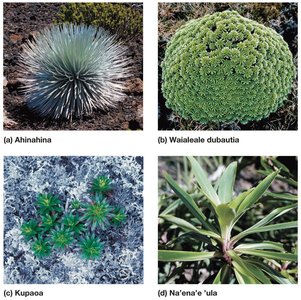
Hawaiian plants: A single ancestral species can give rise to a wide variety of forms adapted to different environments.
Specialization and Extinction Risk
Extreme Specialization
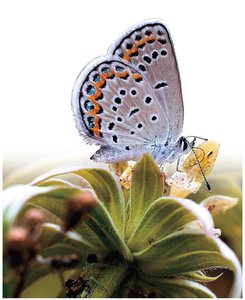
Species that are highly specialized for particular habitats or resources are at greater risk of extinction if their environment changes or is destroyed.
Biodiversity and Human Impact
Threats to Biodiversity
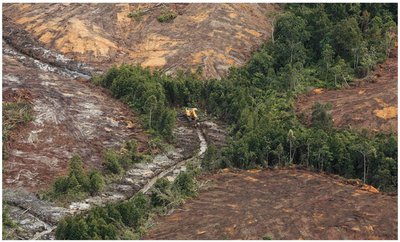
Human activities such as deforestation, habitat destruction, and climate change are major threats to biodiversity. The loss of species reduces ecosystem resilience and function.
Deforestation Trends
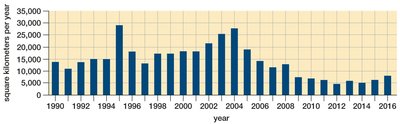
Deforestation rates, such as those in the Brazilian Amazon, have fluctuated over recent decades, with significant impacts on global biodiversity.
Additional info: The above notes integrate textbook figures and tables to clarify the mechanisms and patterns of speciation, as well as the consequences of human activities on biodiversity. All images included are directly relevant to the adjacent explanations and reinforce key concepts in speciation biology.
