 Back
The Origin of Species: Mechanisms and Processes of Speciation
Study Guide - Smart Notes
 Tailored notes based on your materials, expanded with key definitions, examples, and context.
Chapter 24: The Origin of Species
Introduction to Speciation
Speciation is the evolutionary process by which populations evolve to become distinct species. This chapter explores the mechanisms that lead to the formation of new species, focusing on reproductive isolation, the biological species concept, and the genetic and ecological factors that drive speciation.
Biological Species Concept and Reproductive Isolation
Defining Species
The biological species concept defines a species as a group of populations whose members have the potential to interbreed in nature and produce viable, fertile offspring. Members of different species are reproductively isolated from one another, meaning they do not exchange genes in nature.
Gene flow between populations maintains species integrity.
Reproductive isolation prevents gene flow and maintains species boundaries.
Reproductive Barriers
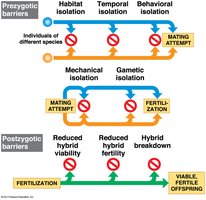
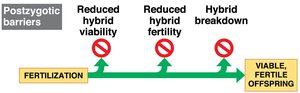
Reproductive isolation is maintained by biological barriers that impede members of different species from producing viable, fertile offspring. These barriers are classified as prezygotic (before fertilization) or postzygotic (after fertilization).
Prezygotic barriers: Prevent mating or fertilization between species.
Postzygotic barriers: Prevent hybrid offspring from developing into viable, fertile adults.
Types of Prezygotic Barriers
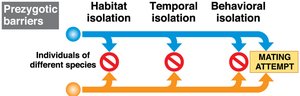
Habitat isolation: Species occupy different habitats and rarely encounter each other.
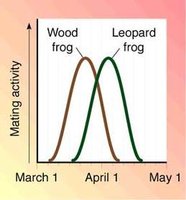
Temporal isolation: Species breed at different times (seasons, years, or times of day).
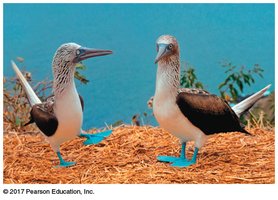
Behavioral isolation: Unique courtship rituals or behaviors prevent mating.
Mechanical isolation: Morphological differences prevent successful mating.
Gametic isolation: Sperm of one species may not fertilize eggs of another species.
Example: Temporal Isolation
Temporal isolation is illustrated by two frog species that breed at different times, preventing interbreeding.
Example: Behavioral Isolation
Behavioral isolation is seen in species with distinct courtship rituals, such as the blue-footed boobies.
Example: Mechanical Isolation
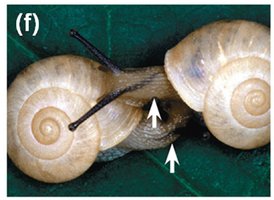
Mechanical isolation occurs when physical differences prevent mating, as seen in some snail species.
Example: Gametic Isolation
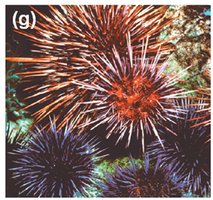
Gametic isolation is common in aquatic species like sea urchins, where eggs and sperm of different species are incompatible.
Types of Postzygotic Barriers
Reduced hybrid viability: Hybrid offspring have impaired development or survival.
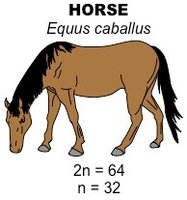
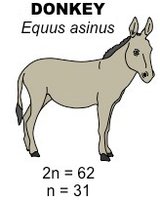
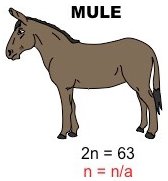
Reduced hybrid fertility: Hybrids are sterile or have reduced fertility (e.g., mules).
Hybrid breakdown: First-generation hybrids are viable and fertile, but their offspring are weak or sterile.
Example: Hybrid Sterility
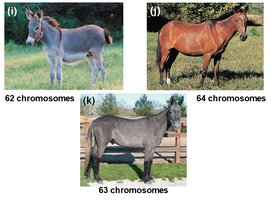
Mules, the offspring of a horse and a donkey, are sterile due to differences in chromosome number.
Limitations of the Biological Species Concept
Cannot be applied to fossils or asexual organisms.
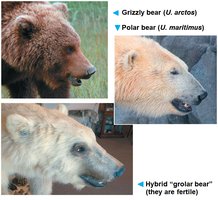
Some species can interbreed and produce fertile hybrids (e.g., grizzly and polar bears).
Alternative Species Concepts
Morphological species concept: Defines species by structural features; applicable to sexual and asexual species.
Ecological species concept: Defines species by ecological niche; emphasizes role in environment.
Mechanisms of Speciation
Allopatric Speciation
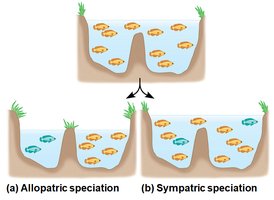
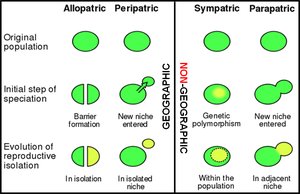
Allopatric speciation occurs when populations are geographically separated, leading to the interruption of gene flow and the evolution of reproductive barriers.
Geographic barriers (e.g., mountains, rivers) isolate populations.
Genetic divergence occurs due to mutation, natural selection, and genetic drift.
Example: Mosquitofish
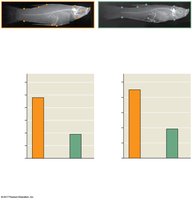
Isolated populations of mosquitofish have evolved different body shapes and escape responses due to the presence or absence of predators.
Sympatric Speciation
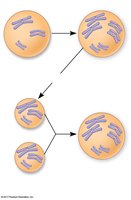
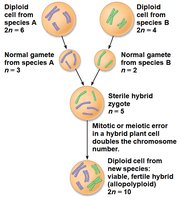
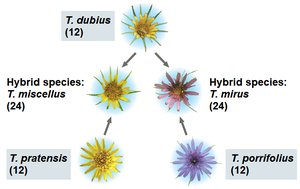
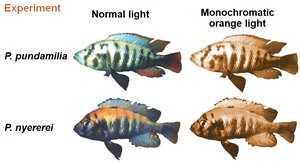
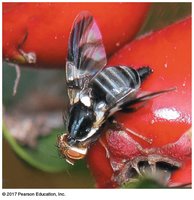
Sympatric speciation occurs without geographic separation. It can result from polyploidy, sexual selection, or habitat differentiation.
Polyploidy: Extra sets of chromosomes lead to instant reproductive isolation, common in plants.
Sexual selection: Divergence in mate choice can drive speciation.
Habitat differentiation: Subpopulations exploit different ecological niches.
Comparison of Speciation Types
Allopatric and sympatric speciation differ in whether geographic isolation is involved. Both can lead to reproductive isolation and the formation of new species.
Hybrid Zones and Speciation Outcomes
Hybrid Zones
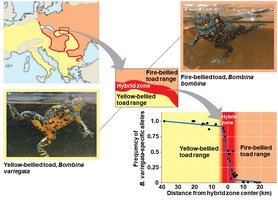
A hybrid zone is a region where members of different species meet and mate, producing hybrids. These zones provide insight into the mechanisms of reproductive isolation and gene flow.
Hybrids often have reduced fitness compared to parent species.
Hybrid zones can shift or change in response to environmental changes.
Outcomes of Hybrid Zones
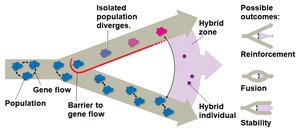
There are three possible outcomes for hybrid zones over time:
Reinforcement: Strengthening of reproductive barriers; hybrids become less common.
Fusion: Weakening of reproductive barriers; species merge.
Stability: Continued production of hybrids; parent species remain distinct.
Rates and Genetics of Speciation
Pace of Speciation
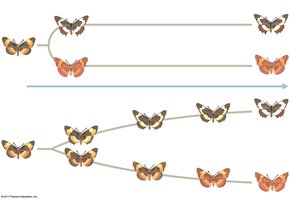
Speciation can occur rapidly or gradually. The punctuated equilibrium model suggests that species experience long periods of stability interrupted by brief periods of rapid change, while the gradual model proposes slow, steady divergence.
Genetic Basis of Speciation
Speciation can result from changes in a few or many genes. Genetic changes affecting reproductive isolation may involve mutations, chromosomal rearrangements, or changes in gene regulation.
Examples include shell coiling in snails and flower color in monkey flowers.

Microevolution vs. Macroevolution
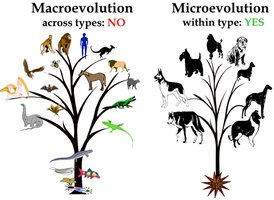
Microevolution refers to changes in allele frequencies within a population, while macroevolution encompasses the broader patterns of evolutionary change above the species level, including speciation events.
Additional info: These notes synthesize the main concepts and examples from the provided lecture slides, expanding on definitions, mechanisms, and outcomes of speciation. Images are included only where they directly reinforce the academic content.
