 Back
BackThe Origin of Species: Mechanisms and Patterns of Speciation
Study Guide - Smart Notes
 Tailored notes based on your materials, expanded with key definitions, examples, and context.
Chapter 24: The Origin of Species
Introduction to Speciation
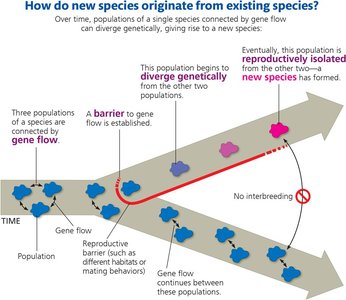
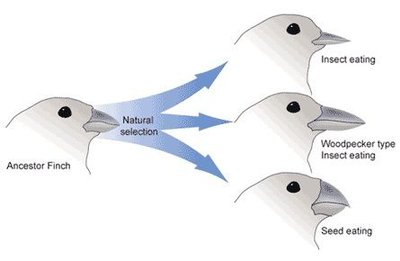
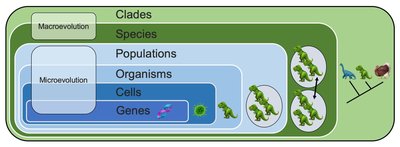
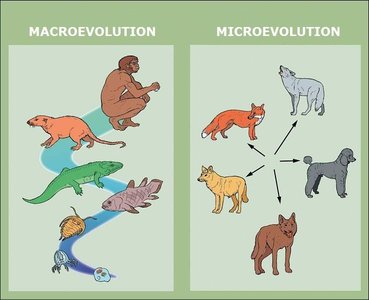
Speciation is the evolutionary process by which one species splits into two or more distinct species. This process is fundamental to understanding the diversity and unity of life, serving as a bridge between microevolution (small-scale changes within populations) and macroevolution (broad patterns of evolutionary change above the species level).
Speciation: The formation of new and distinct species in the course of evolution.
Microevolution: Changes in allele frequency within a population over time (e.g., development of drug resistance).
Macroevolution: Large-scale evolutionary changes that result in the origin of new groups (e.g., mammals, flowering plants) and the impact of mass extinctions.
Biological Species Concept and Reproductive Isolation
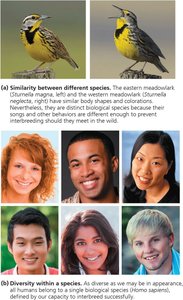
The biological species concept defines a species as a group of populations whose members can interbreed in nature and produce viable, fertile offspring, but are reproductively isolated from other such groups. This concept emphasizes the importance of reproductive barriers in maintaining species boundaries.
Gene flow between populations holds a species together genetically.
Reproductive isolation: Biological barriers that prevent members of different species from interbreeding and producing viable, fertile offspring.
Hybrids: Offspring resulting from the mating of individuals from two different species.
Types of Reproductive Barriers
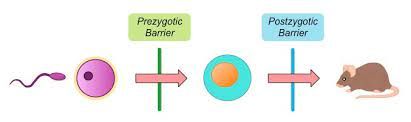
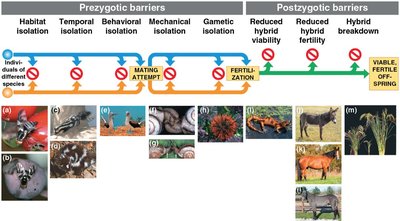
Reproductive barriers are classified based on whether they act before or after fertilization:
Prezygotic barriers: Prevent fertilization from occurring.
Postzygotic barriers: Prevent hybrid zygotes from developing into viable, fertile adults.
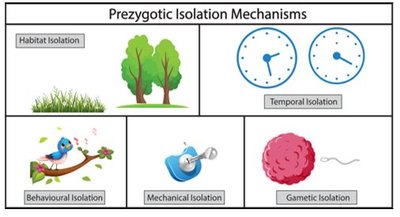
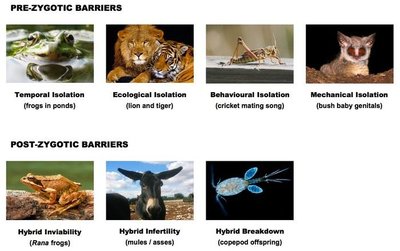
Prezygotic Barriers
Habitat Isolation: Species occupy different habitats and rarely encounter each other.
Temporal Isolation: Species breed at different times (seasons, years, or times of day).
Behavioral Isolation: Differences in courtship rituals or behaviors prevent mating.
Mechanical Isolation: Morphological differences prevent successful mating.
Gametic Isolation: Gametes of different species are incompatible and cannot fuse.
Postzygotic Barriers
Hybrid Inviability: Hybrids fail to develop or are very frail and do not survive to reproductive age.
Hybrid Infertility: Hybrids are sterile (e.g., mule, which is a cross between a horse and a donkey).
Hybrid Breakdown: First-generation hybrids are viable and fertile, but their offspring are weak or sterile.
Limitations of the Biological Species Concept
The biological species concept is not universally applicable. It cannot be used for fossils or asexual organisms, and some distinct species may still exchange genes (e.g., grolar bears).
Morphological species concept: Defines species by structural features; applicable to sexual and asexual organisms, living or extinct.
Ecological species concept: Defines species by their ecological niche; emphasizes the role of natural selection.
Modes of Speciation
Speciation can occur with or without geographic separation:
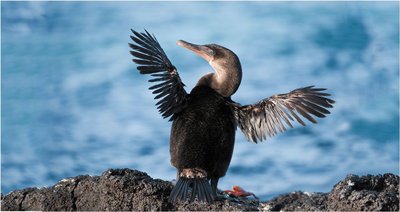
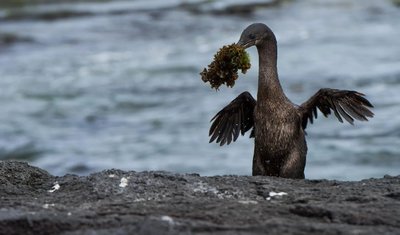
Allopatric speciation: Occurs when populations are geographically isolated, leading to genetic divergence and reproductive isolation.
Sympatric speciation: Occurs without geographic isolation, often through polyploidy, sexual selection, or habitat differentiation.
Allopatric Speciation
Gene flow is interrupted by geographic barriers (e.g., rivers, mountains, islands).
Genetic divergence occurs due to mutation, natural selection, and genetic drift.
Reproductive isolation evolves as a byproduct of genetic divergence.
Sympatric Speciation
Polyploidy: The presence of extra sets of chromosomes, common in plants, can lead to instant speciation.
Sexual selection: Divergence in mate choice can drive speciation (e.g., cichlids in Lake Victoria).
Habitat differentiation: Utilization of different resources or habitats within the same area can reduce gene flow and promote speciation.
Hybrid Zones and Reproductive Isolation
Hybrid zones are regions where members of different species meet and mate, producing hybrids. The fate of hybrid zones depends on the fitness of hybrids and the strength of reproductive barriers.
Reinforcement: Strengthening of reproductive barriers, reducing hybrid formation.
Fusion: Weakening of reproductive barriers, leading to the merging of species.
Stability: Continued production of hybrids without significant change in species boundaries.
Rates and Genetics of Speciation
Speciation can occur rapidly or gradually, and may involve changes in a few or many genes. The fossil record shows both punctuated equilibria (long periods of stasis interrupted by rapid change) and gradual divergence.
Punctuated equilibria: Long periods of little change punctuated by brief periods of rapid speciation.
Speciation rates vary widely, from thousands to millions of years.
Genetic changes underlying speciation can range from single gene mutations to complex interactions among many genes.
From Speciation to Macroevolution
Successive speciation events accumulate differences, leading to the formation of new groups that differ greatly from their ancestors. Macroevolution is the cumulative effect of many speciation and extinction events over time.
Additional info: The study of speciation integrates genetics, ecology, paleontology, and evolutionary biology to explain the origin and diversity of life on Earth. Understanding speciation is essential for fields such as conservation biology, agriculture, and medicine, where the maintenance or creation of species boundaries can have significant practical implications.
