 Back
BackThe Prokaryotes: Eubacteria and Archaea – Structure, Classification, and Importance
Study Guide - Smart Notes
 Tailored notes based on your materials, expanded with key definitions, examples, and context.
The Six Kingdoms of Life
Overview of Biological Classification
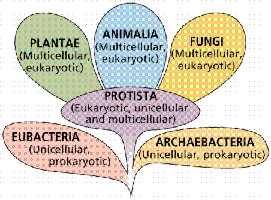
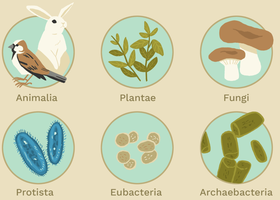
The six-kingdom system is a widely accepted method for classifying all living organisms based on cellular organization and modes of nutrition. The kingdoms include Plantae, Animalia, Fungi, Protista, Eubacteria, and Archaebacteria. Eubacteria and Archaebacteria are prokaryotic, while the other four kingdoms are eukaryotic.
Importance of Prokaryotes
Harmful Effects
Pathogenic bacteria cause diseases in humans, animals, and plants. Examples include cholera, leprosy, typhoid fever, strep throat, salmonella poisoning, and tuberculosis.
Bacterial infections can impact agriculture by infecting livestock and crops.
Diseases that harm one species may benefit another by altering ecological balances (e.g., weakening predators can benefit prey populations).
Beneficial Effects
Decomposers: Break down dead organic matter, recycling nutrients in ecosystems.
Nitrogen fixation: Convert atmospheric nitrogen into forms usable by plants, essential for soil fertility.
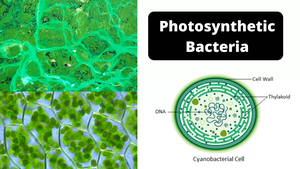
Photosynthetic bacteria: Major producers of atmospheric oxygen, especially in marine environments (e.g., cyanobacteria).
Reside in animal intestines, producing vitamins such as K and B12 for humans.
Commercial and Medical Uses
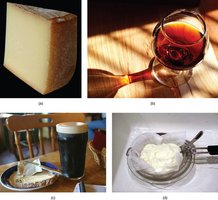
Essential in food production: vinegar, butter, cheese, yogurt, and sourdough bread.
Production of antibiotics and medically valuable compounds (e.g., insulin, human growth hormone).
Used in sewage treatment and odor control by digesting organic waste.

Classification of Bacteria
Two Prokaryotic Kingdoms
Eubacteria: True bacteria, found in most environments.
Archaebacteria: Ancient bacteria, often found in extreme environments (e.g., hot springs, salt lakes).
Key Features of Eubacteria
General Characteristics
Prokaryotic: Lack a nucleus and membrane-bound organelles.
Unicellular with a rigid cell wall (some form colonies).
Genetic material is a single circular DNA loop (chromosome) in the nucleoid region.
Reproduce asexually by binary fission; some exchange genetic material via conjugation.
Metabolism: Some are autotrophic (make their own food), others are heterotrophic (consume organic material).
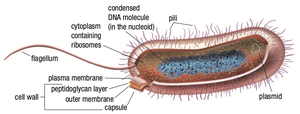
Structure of a Typical Bacterial Cell
Cell wall made of peptidoglycan (unique to bacteria).
No membrane-bound organelles.
Some have a capsule for protection against water loss and high temperatures.
May contain plasmids—small loops of DNA carrying extra genes.
Ribosomes scattered in the cytoplasm for protein synthesis.
Movement via flagella; attachment via pili (singular: pilus).
Bacterial Shapes and Arrangements
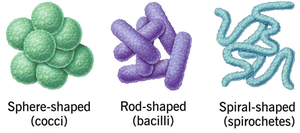
Common Shapes
Cocci (singular: coccus): Spherical, resist drying.
Bacilli (singular: bacillus): Rod-shaped, absorb nutrients efficiently.
Spirilli (singular: spirillum): Spiral-shaped, move easily through fluids.
Groupings and Naming Conventions
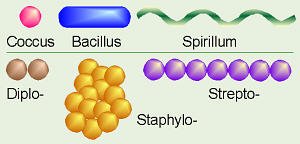
Diplo-: Arranged in pairs (e.g., diplococcus).
Staphylo-: Arranged in clusters (e.g., staphylococcus).
Strepto-: Arranged in chains (e.g., streptococcus).
Gram Staining and Cell Wall Structure
Gram Stain Technique
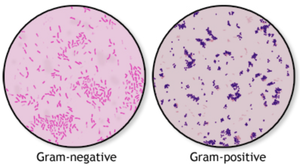
The Gram stain, developed by Hans Gram in 1884, is a differential staining technique that distinguishes bacteria based on cell wall composition:
Gram-positive bacteria: Thick peptidoglycan layer, stain purple.
Gram-negative bacteria: Thin peptidoglycan layer and an outer lipid membrane, stain pink.
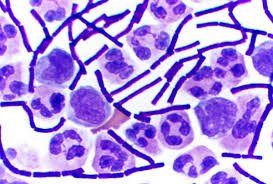
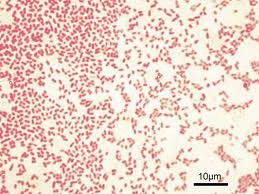
Structural Differences
Gram-positive: Thick peptidoglycan, no outer lipid membrane.
Gram-negative: Thin peptidoglycan, outer lipid membrane present.
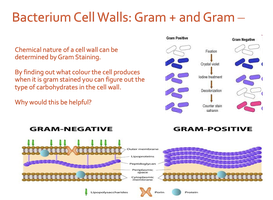
Other Classification Methods: Bacterial Respiration
Oxygen Requirements
Aerobic bacteria: Require oxygen for survival and growth.
Obligate aerobes: Cannot survive without oxygen (e.g., most animals and plants).
Anaerobic bacteria: Do not use oxygen for respiration.
Obligate anaerobes: Cannot survive in the presence of oxygen.
Facultative anaerobes: Can survive with or without oxygen, switching metabolic pathways as needed.
Summary Table: Bacterial Classification and Features
Feature | Gram-Positive | Gram-Negative |
|---|---|---|
Peptidoglycan Layer | Thick | Thin |
Outer Lipid Membrane | Absent | Present |
Stain Color | Purple | Pink |
Key Terms
Prokaryote: An organism lacking a nucleus and membrane-bound organelles.
Peptidoglycan: A polymer forming the cell wall of most bacteria.
Plasmid: Small, circular DNA molecule in bacteria, often carrying beneficial genes.
Binary fission: Asexual reproduction method in prokaryotes.
Conjugation: Transfer of genetic material between bacterial cells.
Pathogen: Disease-causing organism.
