 Back
BackL5b Biodiversity
Study Guide - Smart Notes
 Tailored notes based on your materials, expanded with key definitions, examples, and context.
The Six Kingdoms of Life
Overview of Biological Classification
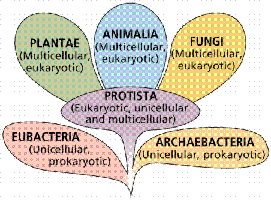
The six-kingdom system is a widely accepted method for classifying all living organisms based on cellular organization and modes of nutrition. This system divides life into six major groups: Plantae, Animalia, Fungi, Protista, Eubacteria, and Archaebacteria.
Plantae: Multicellular, eukaryotic, autotrophic organisms.
Animalia: Multicellular, eukaryotic, heterotrophic organisms.
Fungi: Multicellular, eukaryotic, heterotrophic organisms (mainly decomposers).
Protista: Mostly unicellular, eukaryotic organisms; some are multicellular.
Eubacteria: Unicellular, prokaryotic organisms; true bacteria.
Archaebacteria: Unicellular, prokaryotic organisms; distinct from eubacteria, often found in extreme environments.
Bacteria and Metabolism
Modes of Nutrition in Bacteria
Bacteria exhibit remarkable metabolic diversity, allowing them to thrive in a wide range of environments. Their nutritional strategies can be classified as follows:
Autotrophs: Organisms that produce their own food from inorganic substances.
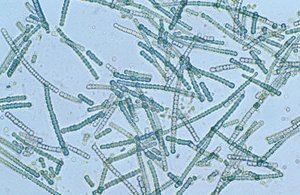
Phototrophs: Use light energy to synthesize organic compounds (e.g., cyanobacteria).
Chemotrophs: Obtain energy by oxidizing inorganic molecules such as hydrogen or sulfur.
Heterotrophs: Obtain energy by consuming other organisms or organic matter.
These metabolic pathways enable bacteria to colonize diverse ecological niches.
Why Are Cyanobacteria Not in the Plant Kingdom?
Key Differences Between Cyanobacteria and Plants
Although cyanobacteria perform photosynthesis like plants, they are classified as prokaryotes due to the absence of a nucleus and membrane-bound organelles. Additionally, cyanobacteria can exist as unicellular organisms, unlike plants, which are always multicellular and eukaryotic.
Reproduction in Bacteria
Binary Fission (Asexual Reproduction)
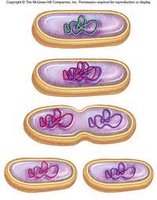
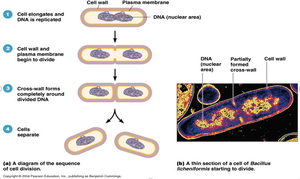
Bacteria primarily reproduce asexually through binary fission, a rapid process resulting in two genetically identical daughter cells.
The single, circular DNA molecule replicates.
The cell elongates, and the plasma membrane and cell wall begin to divide.
A cross wall forms, separating the two DNA copies.
The cell splits into two daughter cells.
Increasing Genetic Diversity
Despite asexual reproduction, bacteria can increase genetic diversity through:
Mutations: Random copying errors during DNA replication.
Horizontal Gene Transfer: Acquisition of new DNA via conjugation, transformation, or transduction.
Conjugation (Sexual-like Process)
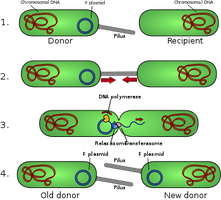
Conjugation involves the direct transfer of DNA (usually plasmids) from a donor to a recipient cell via a pilus. This process introduces new genetic traits to the recipient.
Transformation
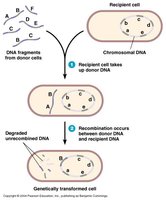
Transformation is the uptake of free DNA fragments from the environment by a bacterial cell. This DNA may integrate into the recipient's genome, resulting in new genetic combinations. Transformation can occur between different species (horizontal gene transfer).
Transduction
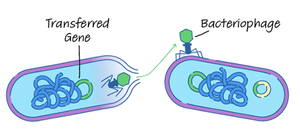
Transduction is the process by which bacteriophages (viruses that infect bacteria) transfer genetic material from one bacterium to another. This method is significant for spreading genes, including those for antibiotic resistance.
Endospores
Structure and Function
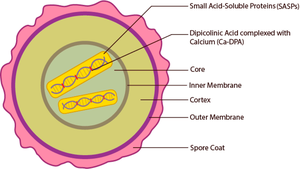
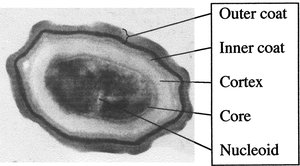
Some bacteria can form endospores—highly resistant, dormant structures that protect the cell's genetic material during unfavorable conditions. Endospores can survive extreme heat, desiccation, chemicals, and radiation, remaining viable for years until conditions improve.
Endospore formation is a survival strategy, not a reproductive process.
When conditions become favorable, the endospore germinates, and the bacterium resumes normal function.
Bacterial Diseases
Pathogenic Mechanisms
Bacteria can cause diseases in humans and other organisms by producing toxins or by the release of toxic compounds upon cell death. The severity of bacterial diseases varies widely.
Exotoxins: Secreted toxins that can cause damage even if the bacteria are not present (e.g., botulinum toxin).
Endotoxins: Components of the bacterial cell wall released upon cell death (e.g., certain strains of Escherichia coli).
Example: The Walkerton, Ontario E. coli outbreak (2000) was caused by the transfer of toxin genes to E. coli, which released toxins upon cell death, resulting in severe food poisoning.
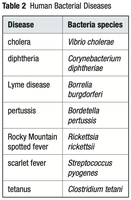
Examples of Human Bacterial Diseases
Disease | Bacteria species |
|---|---|
Cholera | Vibrio cholerae |
Diphtheria | Corynebacterium diphtheriae |
Lyme disease | Borrelia burgdorferi |
Pertussis | Bordetella pertussis |
Rocky Mountain spotted fever | Rickettsia rickettsii |
Scarlet fever | Streptococcus pyogenes |
Tetanus | Clostridium tetani |
Antibiotics and Antibiotic Resistance
Mechanism of Antibiotics
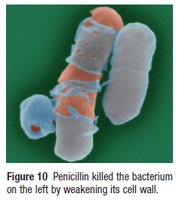
Antibiotics are chemicals that kill or inhibit the growth of bacteria, often by targeting the bacterial cell wall. For example, penicillin weakens the cell wall, causing the bacterium to burst and die.
Development of Antibiotic Resistance
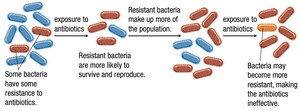
Overuse and misuse of antibiotics can lead to the evolution of antibiotic-resistant bacteria. These bacteria survive antibiotic treatment and reproduce, passing resistance genes to future generations or other bacteria via horizontal gene transfer.
Resistant bacteria become more prevalent in the population.
Antibiotics become less effective, making infections harder to treat.
Archaebacteria
Characteristics and Types
Archaebacteria (Archaea) are prokaryotes distinct from eubacteria. They have unique cell wall structures lacking peptidoglycan and often inhabit extreme environments. Their cell walls contain specific glycoproteins.
Thermophiles: Thrive in high temperatures and acidity (e.g., hot springs, volcanoes).
Methanogens: Live in anaerobic (oxygen-free) environments (e.g., swamps, marshes, sewage) and produce methane gas.
Halophiles: Inhabit highly saline environments (e.g., Dead Sea), mostly aerobic, obtain energy from organic molecules and light.
Acidophiles/Alkaliphiles: Prefer acidic or basic environments.
Psychrophiles: Thrive in cold environments (e.g., Antarctic and Arctic oceans, -20°C to 15°C).
These adaptations allow archaebacteria to survive where few other organisms can.
