 Back
The Rise of Animal Diversity: Evolutionary History, Body Plans, and Major Animal Groups
Study Guide - Smart Notes
 Tailored notes based on your materials, expanded with key definitions, examples, and context.
The Rise of Animal Diversity
Evolutionary History of Animals
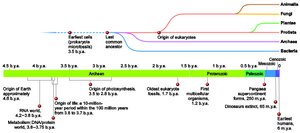
The evolutionary history of animals spans over 700 million years, beginning with the earliest multicellular organisms and culminating in the vast diversity seen today. Key events include the emergence of the Ediacaran biota, the Cambrian explosion, and the subsequent radiation of aquatic and terrestrial animals.
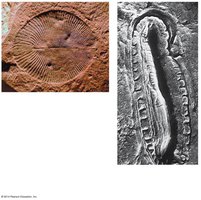
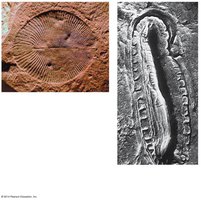
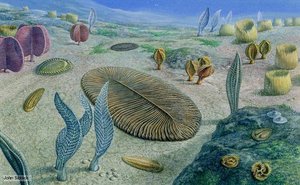
Ediacaran Period: Earliest known animal fossils date to about 560 million years ago, representing simple, soft-bodied organisms.
Cambrian Explosion: Occurred 535–525 million years ago, marking the rapid diversification of animal body plans and the appearance of most major animal groups.
Major Diversifications: Animals radiated first in aquatic environments, then colonized land, leading to further diversification.
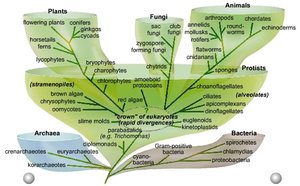
Phylogenetic Relationships: Modern animals are classified based on molecular and morphological data, revealing evolutionary connections among phyla.
Fossil Evidence: Ediacaran and Cambrian Fauna
Fossil and molecular evidence provide insight into the early evolution of animals. The Ediacaran biota includes enigmatic forms, while Cambrian fossils show the first hard, mineralized skeletons and complex body plans.
Ediacaran Fossils: Dickinsonia and Kimberella are examples of early animal fossils, though their taxonomic affiliations remain uncertain.
Cambrian Fossils: Mark the appearance of bilaterians—animals with bilateral symmetry and a complete digestive tract.
Major Animal Groups and Their Characteristics
Early-Diverging Animal Groups: Sponges and Cnidarians
Sponges and cnidarians represent early branches in animal evolution. Sponges lack true tissues and symmetry, while cnidarians possess true tissues and exhibit radial symmetry.
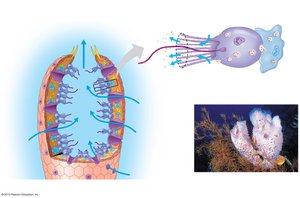
Sponges (Porifera): Asymmetrical, lack tissues, have specialized cells such as choanocytes and amoebocytes.
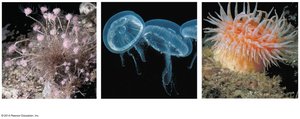
Cnidarians: Radially symmetrical, possess true tissues, include hydrozoans, jellies, and sea anemones.
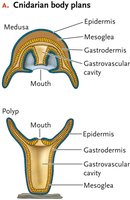
Body Plan: Cnidarians have a sac-like body with a gastrovascular cavity and a single opening serving as both mouth and anus.
Body Plans: Symmetry, Tissues, and Body Cavities
Animal body plans are defined by symmetry, tissue organization, and the presence of body cavities. These features are crucial for classification and understanding evolutionary relationships.
Symmetry: Radial symmetry (e.g., cnidarians) vs. bilateral symmetry (e.g., most advanced animal groups).
Tissues: Three germ layers—ectoderm, mesoderm, and endoderm—give rise to tissues and organs.
Body Cavities: Most bilaterians possess a coelom, a fluid-filled cavity that cushions organs and allows for organ movement.

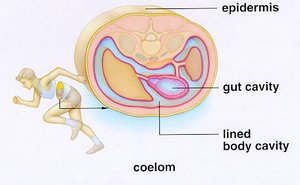
Bilaterian Radiation and Major Invertebrate Groups
Bilaterian Invertebrates: Lophotrochozoa, Ecdysozoa, Deuterostomia
Bilaterian invertebrates account for the majority of animal diversity. They are classified into three major clades based on developmental and molecular characteristics.
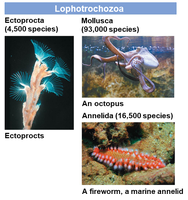
Lophotrochozoa: Includes molluscs, annelids, and ectoprocts.
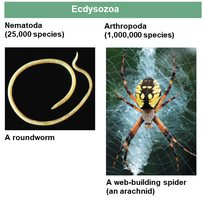
Ecdysozoa: Includes nematodes and arthropods, characterized by molting (ecdysis).
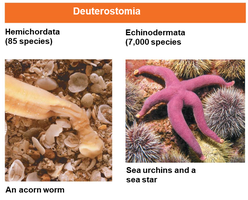
Deuterostomia: Includes echinoderms and hemichordates.
Clade | Example Species | Key Features |
|---|---|---|
Lophotrochozoa | Mollusca, Annelida, Ectoprocta | Trochophore larvae, lophophore feeding structure |
Ecdysozoa | Arthropoda, Nematoda | Molting exoskeleton |
Deuterostomia | Echinodermata, Hemichordata | Deuterostome development |
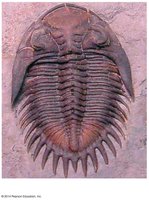
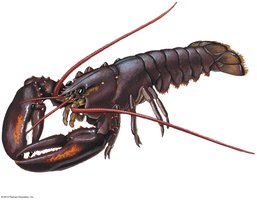
Arthropods: The Most Successful Animal Group
Arthropods are the most diverse and successful animal phylum, with adaptations that have enabled them to colonize nearly every habitat.
Body Plan: Segmented body, hard exoskeleton (chitin), jointed appendages.
Evolution: Reduction in number of appendages, increased specialization for walking, feeding, sensory reception, defense, and reproduction.
Terrestrial Adaptations: Specialized structures for gas exchange (spiracles, tracheal tubes).

Vertebrate Evolution and Terrestrial Adaptations
The Rise of Vertebrates
Vertebrates are a subgroup of chordates distinguished by a backbone and a well-defined head. Early vertebrates were jawless, but jawed vertebrates (gnathostomes) now dominate.
Chordate Features: Notochord, dorsal hollow nerve cord, pharyngeal slits, post-anal tail.
Major Groups: Jawless vertebrates (hagfishes, lampreys), jawed vertebrates (sharks, rays, bony fishes, tetrapods).
Colonization of Land by Vertebrates
The transition from aquatic to terrestrial life involved significant adaptations, including the evolution of limbs and lungs. Tiktaalik is a key transitional fossil showing both fish and tetrapod characteristics.
Tetrapods: Limbs with digits evolved from lobed fins.
Amniotes: Reptiles, birds, and mammals possess amniotic eggs with protective membranes.
Mammals and Human Evolution
Mammals are characterized by mammary glands, hair, and endothermy. Human evolution is marked by upright posture, bipedal locomotion, and advanced cognitive abilities.
Three Lineages: Monotremes (egg-laying), marsupials (pouch), eutherians (placental).
Human Traits: Larger brains, language, tool use, artistic expression.
Summary: Animals originated over 700 million years ago, diversified in aquatic environments, and several groups adapted to terrestrial life. Animal evolution has profoundly shaped ecosystems and the course of life on Earth.
