 Back
The Rise of Animal Diversity: Evolutionary History, Body Plans, and Major Animal Groups
Study Guide - Smart Notes
 Tailored notes based on your materials, expanded with key definitions, examples, and context.
The Rise of Animal Diversity
Evolutionary History of Animals
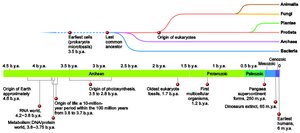
The evolutionary history of animals spans over 700 million years, beginning with the earliest multicellular organisms and culminating in the vast diversity observed today. Key events include the emergence of the Ediacaran biota, the Cambrian explosion, and the subsequent radiation of both aquatic and terrestrial animal groups.
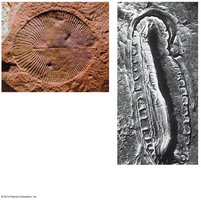
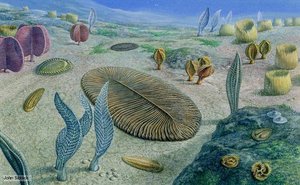
Ediacaran Biota: The first animals in the fossil record, dating back to approximately 560 million years ago, are known as the Ediacaran biota. These organisms were soft-bodied and their taxonomic affiliations remain uncertain.
Cambrian Explosion: Occurring between 535 and 525 million years ago, this event marks the rapid diversification of animal life, including the appearance of most major animal groups and the first hard, mineralized skeletons.
Major Radiations: Animals diversified extensively in aquatic environments before some groups colonized land, leading to the rise of terrestrial vertebrates and invertebrates.
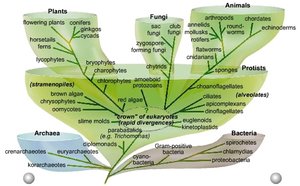
Phylogenetic Relationships: Molecular and fossil evidence supports the existence of a common ancestor for all living animals between 700 and 770 million years ago.
Fossil Evidence: Ediacaran and Cambrian Animals
Fossils provide critical evidence for understanding early animal evolution. The Ediacaran biota and Cambrian fossils illustrate the transition from simple to complex animal forms.
Examples: Dickinsonia costata and Kimberella are notable Ediacaran fossils, representing some of the earliest known animals.
Adaptive Radiation: The Cambrian explosion led to new predator-prey relationships, increased atmospheric oxygen, and the evolution of developmental genes such as the Hox gene complex.
Major Animal Groups and Early-Diverging Lineages
Early-Diverging Animal Groups: Sponges and Cnidarians
Sponges and cnidarians represent some of the earliest-diverging animal groups. Sponges lack true tissues and symmetry, while cnidarians possess true tissues and exhibit radial symmetry.
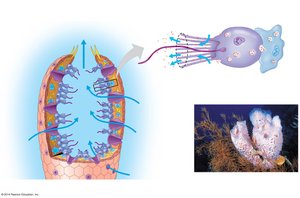
Sponges: Characterized by specialized cells but no tissues, sponges are asymmetrical and filter feed using choanocytes.
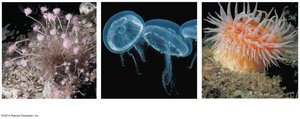
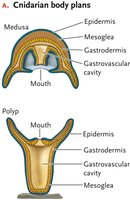
Cnidarians: One of the oldest animal groups, cnidarians include hydrozoans, jellies, and sea anemones. They have a sac-like body plan with a central gastrovascular cavity and a single opening serving as both mouth and anus.
Cnidarian Anatomy and Feeding
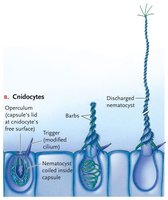
Cnidarians are carnivores that use tentacles equipped with specialized cells called cnidocytes to capture prey. They possess a noncentralized nerve net for sensory processing.
Cnidocytes: These cells contain nematocysts, which discharge barbed threads to immobilize prey.
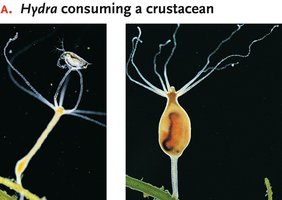
Example: Hydra, a freshwater cnidarian, uses its tentacles to capture and consume crustaceans.
Animal Body Plans: Symmetry, Tissues, and Body Cavities
Symmetry
Animal body plans are categorized by symmetry, which influences their lifestyle and behavior.
Radial Symmetry: Seen in cnidarians, radial symmetry is associated with sessile or planktonic lifestyles.
Bilateral Symmetry: Bilaterally symmetrical animals typically have sensory structures concentrated at the anterior end and move actively, often possessing a central nervous system.
Tissues and Germ Layers
Tissues are collections of specialized cells separated by membranous layers. Most animals develop from three germ layers: ectoderm, mesoderm, and endoderm.
Ectoderm: Forms the body covering.
Mesoderm: Forms the tissue layer lining the body cavity and suspending internal organs.
Endoderm: Forms the digestive tract.

Body Cavities (Coelom)
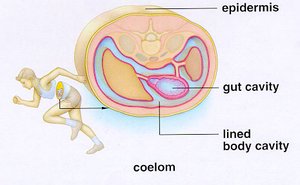
Most bilaterians possess a coelom, a fluid- or air-filled space between the digestive tract and the outer body wall. The coelom serves several functions:
Cushioning organs
Hydrostatic skeleton
Facilitating organ movement
Major Animal Phyla and Bilaterian Radiation
Classification of Major Animal Groups
Zoologists recognize about three dozen animal phyla, most of which are invertebrates. The advanced groups are bilaterally symmetrical, and only the phylum Chordata includes vertebrates.
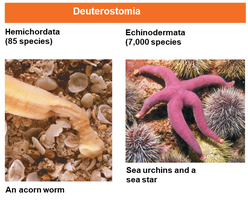
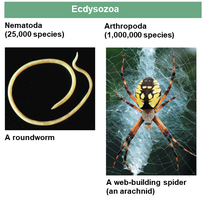
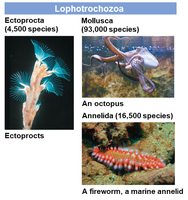
Bilaterian Invertebrates: Account for 95% of known animal species and are classified into three major clades: Lophotrochozoa, Ecdysozoa, and Deuterostomia.
Clade | Example Phyla | Representative Species |
|---|---|---|
Lophotrochozoa | Mollusca, Annelida, Ectoprocta | Octopus, fireworm, ectoprocts |
Ecdysozoa | Arthropoda, Nematoda | Spider, roundworm |
Deuterostomia | Chordata, Echinodermata, Hemichordata | Sea star, acorn worm, vertebrates |
Arthropods: The Most Successful Animals
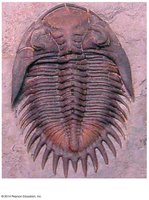
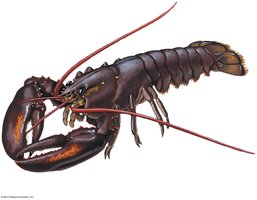
Arthropods are the most diverse and successful animal group, characterized by a segmented body, hard exoskeleton, and jointed appendages. Their evolutionary success is attributed to specialization of appendages and the development of Hox genes.
Exoskeleton: Composed of protein and chitin, providing structural support, protection, and resistance to desiccation.
Terrestrial Adaptations: Specialized structures for gas exchange, such as spiracles and tracheal tubes.
Examples: Trilobites, millipedes, crabs, insects.

The Rise of Vertebrates and Terrestrial Adaptations
Chordates and Early Vertebrates
Chordates are bilateral members of Deuterostomia and share four key derived characters: notochord, dorsal hollow nerve cord, pharyngeal slits, and post-anal tail. Early vertebrates had a backbone and a well-defined head.
Jawless Vertebrates: Early vertebrates were soft-bodied and jawless, using barbed hooks to hunt prey.
Gnathostomes: Jawed vertebrates, including sharks, rays, and bony fishes, are more efficient predators.
Colonization of Land by Vertebrates
The transition from aquatic to terrestrial life involved significant adaptations. Fins of some lobed-finned fish evolved into limbs and feet of tetrapods, exemplified by the fossil Tiktaalik.
Tetrapods: The first tetrapods appeared around 365 million years ago, possessing limbs with digits.
Amphibians: Include salamanders, frogs, and caecilians, with diverse adaptations for terrestrial life.
Amniotes: Reptiles, Birds, and Mammals
Amniotes are vertebrates with an amniotic egg, which contains membranes that protect the embryo. This adaptation facilitated the colonization of land.
Reptiles: Possess scales, lay shelled eggs, and are mostly ectothermic.
Birds: Endothermic, capable of maintaining body temperature through metabolism.
Mammals: Distinguished by mammary glands, hair, fat layer, high metabolic rate, and differentiated teeth. Three lineages: monotremes, marsupials, eutherians.
Human Evolution
Humans and Primate Evolution
Humans (Homo sapiens) are primates, nested within the group informally called apes. Unique traits include upright posture, bipedal locomotion, large brains, and complex tool use.
Distinctive Features: Language, symbolic thought, artistic expression.
Summary
Animals originated more than 700 million years ago, with diverse groups radiating in aquatic environments and several groups evolving adaptations for terrestrial life. The transformation of ecosystems and evolutionary pathways by animals underscores their significance in the history of life.
