 Back
BackL4 Biodiversity
Study Guide - Smart Notes
 Tailored notes based on your materials, expanded with key definitions, examples, and context.
The Six Kingdoms of Life
Overview of Biological Classification
The classification of living organisms is fundamental to understanding biological diversity. The six-kingdom system organizes all life forms into six major groups based on cellular structure, mode of nutrition, and genetic relationships. This system helps biologists categorize and study the vast diversity of life on Earth.
Kingdoms: Eubacteria, Archaebacteria, Protista, Fungi, Plantae, Animalia
Domains: The three-domain system (Bacteria, Archaea, Eukarya) is based on genetic evidence and reflects evolutionary relationships.
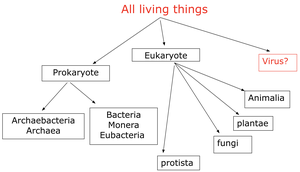
Viruses: Non-living Biological Entities
Characteristics of Viruses
Viruses are unique biological entities that do not fit into the six-kingdom classification. They lack cellular structure and metabolic machinery, and can only reproduce by infecting host cells.
No organelles: Viruses do not contain organelles or cytoplasm.
No metabolism: They cannot respire or perform metabolic functions independently.
Obligate parasites: Viruses require host cells to replicate.
Additional info: Viruses are studied in biology due to their impact on living organisms, but are not classified as living things.
Prokaryotes and Eukaryotes
Cellular Organization
All living organisms are classified as either prokaryotes or eukaryotes based on their cellular structure.
Prokaryotes: Single-celled organisms lacking membrane-bound organelles (e.g., bacteria).
Eukaryotes: Organisms with cells containing membrane-bound organelles; can be unicellular or multicellular.
Kingdom Eubacteria
Characteristics and Examples
Eubacteria are prokaryotic organisms with diverse metabolic pathways and ecological roles. They are found in nearly every environment on Earth.
Cell structure: Prokaryotic; cell walls contain peptidoglycan.
Shape and size: Highly variable.
Nutrition: Can be photosynthetic, chemotrophic, or heterotrophic.
Reproduction: Mostly asexual, some sexual processes observed.
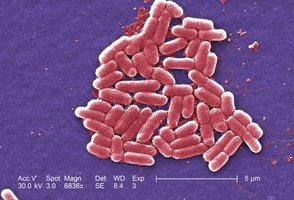
Examples: Escherichia coli, Salmonella, nitrogen-fixing bacteria.
Kingdom Archaea
Characteristics and Examples
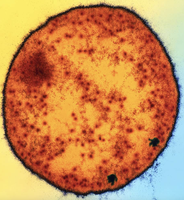
Archaea are prokaryotic organisms distinct from bacteria, often found in extreme environments. Their cell walls and membranes contain unique molecules.
Cell structure: Prokaryotic; unique glycoproteins in cell walls and membranes.
Size: Extremely small.
Habitat: Extreme environments (e.g., high temperature, high salinity).
Nutrition: Mainly autotrophic, some heterotrophic.
Reproduction: Asexual.
Examples: Extreme thermophiles, methanogens.
Kingdom Protista
Characteristics and Examples
Protists are a diverse group of eukaryotic organisms, including both unicellular and multicellular forms. They are primarily found in aquatic or moist environments.
Cell structure: Eukaryotic; extreme diversity in cellular structure.
Nutrition: Heterotrophic, photosynthetic, or both.
Movement: Variable forms (e.g., flagella, cilia, pseudopodia).
Reproduction: Sexual and asexual.
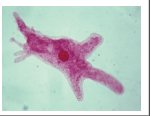
Examples: Amoeba, kelps, green algae.
Kingdom Fungi
Characteristics and Examples
Fungi are eukaryotic organisms that play essential roles as decomposers. They have cell walls made of chitin and are mostly multicellular.
Cell structure: Eukaryotic; cell wall composed of chitin.
Nutrition: All are heterotrophic (absorb nutrients from organic matter).
Habitat: Mostly terrestrial.
Reproduction: Sexual and asexual.
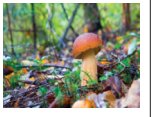
Examples: Mushrooms, yeasts, moulds.
Kingdom Plantae
Characteristics and Examples
Plants are multicellular, eukaryotic organisms that perform photosynthesis. They are primary producers in most ecosystems.
Cell structure: Eukaryotic; cell walls composed of cellulose; possess chloroplasts.
Nutrition: Autotrophic and photosynthetic.
Habitat: Mostly terrestrial, some aquatic.
Reproduction: Sexual and asexual.
Examples: Mosses, ferns, conifers, flowering plants.

Kingdom Animalia
Characteristics and Examples
Animals are multicellular, eukaryotic organisms that lack cell walls and chloroplasts. They are heterotrophic and exhibit diverse forms and behaviors.
Cell structure: Eukaryotic; no cell walls or chloroplasts.
Nutrition: All are heterotrophic.
Reproduction: Most reproduce sexually.
Habitat: Terrestrial and aquatic environments.
Examples: Elephants, sponges, corals, insects, snails, birds, humans.
Domains of Life
Carl Woese's Three-Domain System
The three-domain system, proposed by Carl Woese in 1996, classifies all life into three domains based on genetic and molecular evidence:
Domain Bacteria: Includes Kingdom Eubacteria.
Domain Archaea: Includes Kingdom Archaea.
Domain Eukarya: Includes Kingdoms Protista, Fungi, Plantae, and Animalia.
This system reflects evolutionary relationships and genetic similarities among organisms.
Comparison of the Six Kingdoms
Summary Table
The following table summarizes the main characteristics of each kingdom:
Kingdom | Cell Type | Cell Wall Composition | Number of Cells | Nutrition | Examples |
|---|---|---|---|---|---|
Eubacteria | Prokaryotic | Peptidoglycan | Unicellular | Autotrophic/Heterotrophic | Escherichia coli, Salmonella |
Archaea | Prokaryotic | Unique glycoproteins | Unicellular | Autotrophic/Heterotrophic | Thermophiles, Methanogens |
Protista | Eukaryotic | Varied | Unicellular/Multicellular | Autotrophic/Heterotrophic | Amoeba, Kelp, Green algae |
Fungi | Eukaryotic | Chitin | Mostly Multicellular | Heterotrophic | Mushrooms, Yeasts, Moulds |
Plantae | Eukaryotic | Cellulose | Multicellular | Autotrophic | Mosses, Ferns, Conifers, Flowering plants |
Animalia | Eukaryotic | None | Multicellular | Heterotrophic | Elephants, Insects, Birds, Humans |
