 Back
BackThe Structure and Function of Large Biological Molecules
Study Guide - Smart Notes
 Tailored notes based on your materials, expanded with key definitions, examples, and context.
Large Biological Molecules
Overview
Large biological molecules, or macromolecules, are essential to life and include carbohydrates, lipids, proteins, and nucleic acids. These molecules are primarily polymers, built from smaller units called monomers, except for lipids, which are not true polymers. Their structure and function are central to cellular processes and the diversity of life.
Macromolecules: Polymers and Monomers
Polymer Formation and Breakdown
Polymers are long molecules consisting of many similar or identical building blocks linked by covalent bonds.
Monomers are the repeating units that serve as the building blocks of polymers.
Polymers are synthesized by dehydration reactions, which remove a water molecule to form a new bond.
Polymers are broken down by hydrolysis, a process that adds a water molecule to break a bond.
An immense variety of polymers can be constructed from a small set of monomers, leading to molecular diversity.
Example: Proteins are polymers of amino acids; nucleic acids are polymers of nucleotides.
Carbohydrates: Fuel and Building Material
Structure and Function
Carbohydrates include sugars and polymers of sugars.
Monosaccharides are the simplest carbohydrates (e.g., glucose, fructose).
Disaccharides are composed of two monosaccharides (e.g., lactose, sucrose).
Polysaccharides are large polymers of monosaccharides (e.g., starch, cellulose, glycogen, chitin).
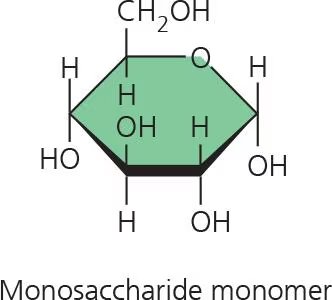
Functions:
Serve as fuel and carbon sources.
Cellulose strengthens plant cell walls.
Starch stores glucose for energy in plants.
Glycogen stores glucose for energy in animals.
Chitin strengthens animal exoskeletons and fungal cell walls.
Comparison: Starch is digestible by humans and serves as an energy source, while cellulose is not digestible and provides structural support in plants.
Lipids: Diverse Hydrophobic Molecules
Structure and Function
Lipids are a diverse group of hydrophobic molecules, not true polymers.
Major types include fats (triacylglycerols), phospholipids, and steroids.
Type | Structure | Function |
|---|---|---|
Fats (Triacylglycerols) | Glycerol + 3 fatty acids | Energy storage |
Phospholipids | Glycerol + phosphate group + 2 fatty acids | Main component of cell membranes |
Steroids | Four fused rings with attached chemical groups | Hormones, membrane structure (cholesterol) |
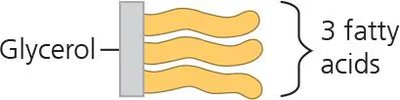
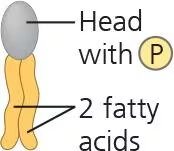
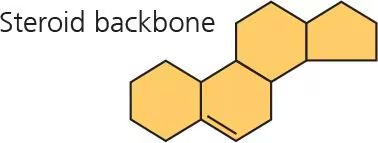
Fats are important energy sources. Saturated fats (e.g., butter) are solid at room temperature, while unsaturated fats (e.g., olive oil) are liquid.
Phospholipids form bilayers that are the foundation of all cell membranes.
Steroids include cholesterol and hormones, which are critical for signaling and membrane structure.

Proteins: Diversity of Structure and Function
Structure and Function
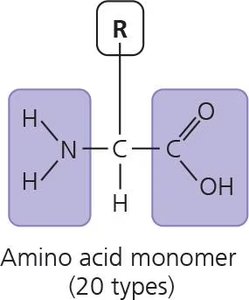
Proteins are polymers of amino acids, folded into specific three-dimensional structures.
There are 20 different amino acids, each with a unique side chain (R group).
Functions:
Enzymes: Catalyze chemical reactions
Defensive proteins: Protect against disease
Storage proteins: Store amino acids
Transport proteins: Move substances
Hormones: Coordinate organismal responses
Receptor proteins: Receive signals
Motor proteins: Enable movement
Structural proteins: Provide support
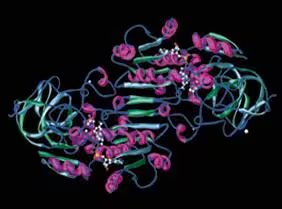
Example: Hemoglobin is a transport protein that carries oxygen in the blood.
Additional info: The diversity of protein function arises from the vast array of possible amino acid sequences and resulting structures.
Nucleic Acids: Storage and Expression of Hereditary Information
Structure and Function
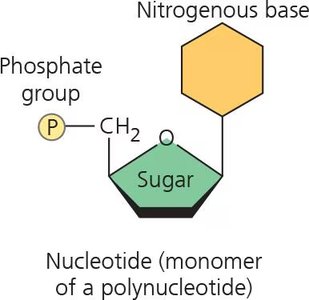
Nucleic acids (DNA and RNA) are polymers of nucleotides.
Each nucleotide consists of a phosphate group, a sugar (deoxyribose in DNA, ribose in RNA), and a nitrogenous base.
DNA is usually double-stranded, with bases cytosine (C), guanine (G), adenine (A), and thymine (T).
RNA is usually single-stranded, with bases C, G, A, and uracil (U).
Functions:
DNA stores hereditary information.
RNA functions in gene expression, including carrying instructions from DNA to ribosomes.
Complementary base pairing is essential for the structure of DNA and for accurate replication and transcription.
Genomics and Proteomics
Modern Biological Inquiry
Genomics is the study of whole sets of genes and their interactions.
Proteomics is the study of large sets of proteins, including their structures and functions.
Bioinformatics uses computational tools to analyze large biological data sets.
DNA sequence comparisons reveal evolutionary relationships; the more closely related two species are, the more similar their DNA sequences.
Example: Human DNA sequences are more similar to those of mice than to those of fish or fruit flies, reflecting evolutionary relationships.
