 Back
The Structure and Function of Large Biological Molecules: Carbohydrates and Lipids
Study Guide - Smart Notes
 Tailored notes based on your materials, expanded with key definitions, examples, and context.
The Structure and Function of Large Biological Molecules
Overview of Biological Macromolecules
Large biological molecules, or macromolecules, are essential for life and include carbohydrates, proteins, nucleic acids, and lipids. Most macromolecules are polymers, long chains built from repeating units called monomers, except for lipids, which are not true polymers.
Polymers: Carbohydrates, proteins, and nucleic acids are polymers made from monomers.
Lipids: Diverse group, not true polymers or macromolecules, but crucial for energy storage and membrane structure.
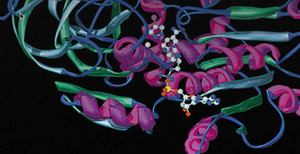
Macromolecules: Polymers Built from Monomers
Polymerization and Depolymerization
Macromolecules are synthesized and broken down by two key reactions: dehydration synthesis and hydrolysis.
Dehydration Synthesis: Removal of a water molecule to form a new bond, linking monomers into polymers.
Hydrolysis: Addition of a water molecule to break a bond, splitting polymers into monomers.
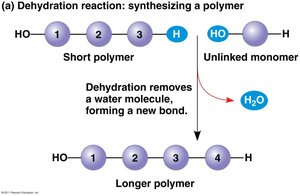
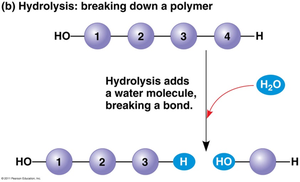
Example: The formation of maltose (a disaccharide) from two glucose molecules is a dehydration reaction, while its breakdown is hydrolysis.
Carbohydrates
Definition and Classification
Carbohydrates are organic molecules with the general formula (CH2O)n. They serve as fuel and building material in cells and are classified by the number of sugar units:
Monosaccharides: Simple sugars, single monomer units (e.g., glucose, fructose, ribose).
Disaccharides: Two monosaccharides joined by glycosidic linkages (e.g., maltose, sucrose, lactose).
Polysaccharides: Polymers of many monosaccharides (e.g., starch, glycogen, cellulose, chitin).
Monosaccharides
Monosaccharides are the simplest carbohydrates and serve as the building blocks for more complex sugars. They are hydrophilic and can exist as straight chains or rings. The structure varies by the location of the carbonyl group, the length of the carbon skeleton, and the spatial arrangement around asymmetric carbons.
Glucose: Major nutrient and energy source for cells.
Fructose, Ribose, Deoxyribose: Other important monosaccharides.
Disaccharides
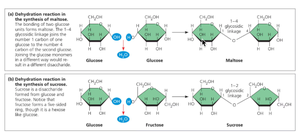
Disaccharides are formed by joining two monosaccharides via a glycosidic linkage (either 1,4 or 1,2). Common examples include:
Maltose: Glucose + glucose (1,4 linkage), used in brewing beer.
Sucrose: Glucose + fructose (1,2 linkage), main transport sugar in plants.
Lactose: Glucose + galactose (1,4 linkage), found in milk.
Polysaccharides
Polysaccharides are large carbohydrate polymers with storage or structural roles:
Storage Polysaccharides: Starch (plants), glycogen (animals).
Structural Polysaccharides: Cellulose (plant cell walls), chitin (exoskeletons of invertebrates).
The difference between starch and cellulose is the type of glucose monomer and the orientation of the hydroxyl group on carbon 1 (α for starch, β for cellulose).
Lipids
Definition and Types
Lipids are a diverse group of hydrophobic molecules, not true polymers or macromolecules. They are important for energy storage, membrane structure, insulation, protection, hormone production, vitamin absorption, water repellency, and nervous system function.
Types of Lipids: Triglycerides (fats and oils), phospholipids, waxes, steroids.
Triglycerides (Fats and Oils)
Triglycerides are composed of one glycerol molecule and three fatty acid tails. Fatty acids can be saturated (no double bonds, solid at room temperature) or unsaturated (one or more double bonds, liquid at room temperature).
Saturated Fats: Only single bonds, fully saturated with hydrogen.
Unsaturated Fats: One or more double bonds, fewer hydrogens.
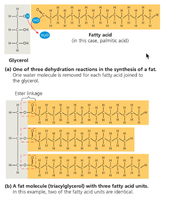
Health Note: Saturated and trans fats are associated with increased risk of cardiovascular disease. Trans fats are artificially produced and have been banned in many countries.
Phospholipids
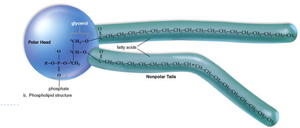
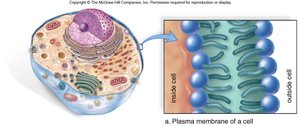
Phospholipids are amphipathic molecules with a hydrophilic (polar) head and two hydrophobic (nonpolar) tails. They are essential for forming cell membranes, creating a bilayer that separates the cell from its environment.
Structure: Glycerol backbone, phosphate group, two fatty acids.
Function: Main component of biological membranes.
Steroids
Steroids are lipids characterized by a carbon skeleton with four fused rings. Different chemical groups attached to the rings determine the specific steroid. Cholesterol is a key steroid, serving as a component of animal cell membranes and a precursor for sex hormones.
Examples: Cholesterol, testosterone, estrogen.
Summary Table: Carbohydrates vs. Lipids
Feature | Carbohydrates | Lipids |
|---|---|---|
Monomer | Monosaccharide | Fatty acid (not a true monomer) |
Polymer | Polysaccharide | Triglyceride (not a true polymer) |
Bond Type | Glycosidic linkage | Ester linkage |
Main Functions | Energy, structure | Energy storage, membranes, hormones |
Solubility | Hydrophilic | Hydrophobic |
