 Back
The Structure and Function of Large Biological Molecules
Study Guide - Smart Notes
 Tailored notes based on your materials, expanded with key definitions, examples, and context.
Large Biological Molecules
Introduction to Macromolecules
All living organisms are composed of four major classes of large biological molecules: carbohydrates, lipids, proteins, and nucleic acids. These macromolecules are essential for life and have unique properties that arise from the specific arrangement of their atoms.
Macromolecules are large, complex molecules.
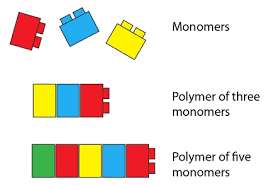
Most macromolecules are polymers, long chains made from repeating units called monomers.
Carbohydrates, proteins, and nucleic acids are true polymers; lipids are not.
Polymer Synthesis and Breakdown
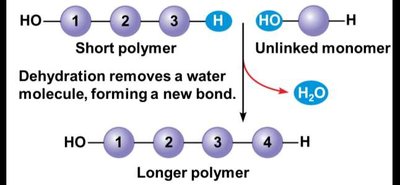
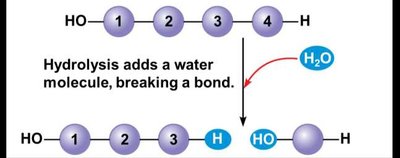
Polymers are assembled and disassembled by specific chemical reactions, often catalyzed by enzymes.
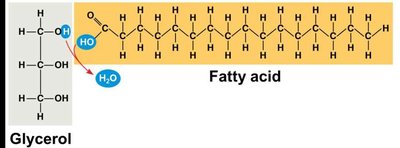
Dehydration reaction: Joins two monomers by removing a water molecule, forming a new bond.
Hydrolysis: Breaks a bond between monomers by adding a water molecule, splitting the polymer.
Carbohydrates
Types and Functions of Carbohydrates
Carbohydrates serve as fuel and building material. They include sugars and polymers of sugars, classified as monosaccharides, disaccharides, and polysaccharides.
Monosaccharides: Simple sugars (e.g., glucose, C6H12O6).
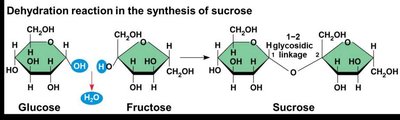
Disaccharides: Double sugars formed by joining two monosaccharides via a glycosidic linkage.
Polysaccharides: Polymers of many sugar units; serve storage or structural roles.
Monosaccharide Structure and Classification
Monosaccharides are classified by the location of their carbonyl group (aldose or ketose) and the number of carbons in their skeleton (triose, pentose, hexose).
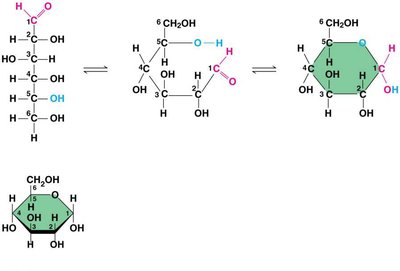
In aqueous solutions, many sugars form rings.
Monosaccharides are major cellular fuels and building blocks for other molecules.
Disaccharides and Glycosidic Linkages
Disaccharides are formed by dehydration reactions that join two monosaccharides. The covalent bond formed is called a glycosidic linkage.
Polysaccharides: Storage and Structure
Polysaccharides have storage and structural roles, determined by their sugar monomers and glycosidic linkages.
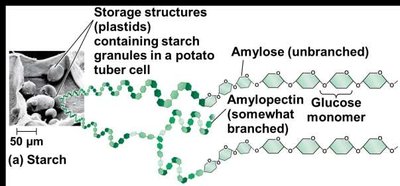
Starch: Storage polysaccharide in plants, composed of glucose monomers (amylose and amylopectin).
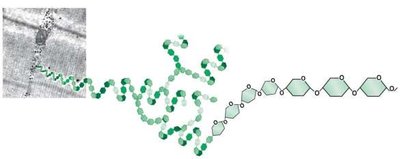
Glycogen: Storage polysaccharide in animals, highly branched, stored in liver and muscle cells.
Structural Polysaccharides
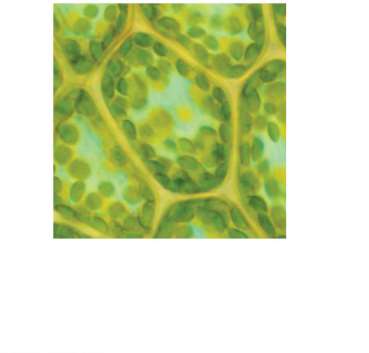
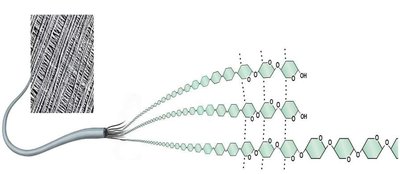
Cellulose is a major component of plant cell walls. It is a polymer of glucose, but with different glycosidic linkages than starch, making it indigestible to most animals.
Some microbes can digest cellulose, aiding herbivores in cellulose breakdown.
Lipids
Overview of Lipids
Lipids are a diverse group of hydrophobic molecules, including fats, phospholipids, and steroids. They are not true polymers and are characterized by their insolubility in water due to nonpolar hydrocarbon regions.
Fats: Structure and Function
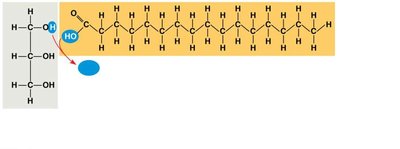
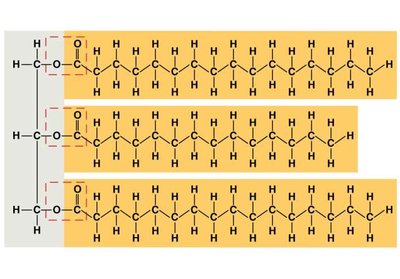
Fats are constructed from glycerol and fatty acids. Three fatty acids are joined to glycerol by ester linkages, forming a triglyceride.
Saturated fats: No double bonds, solid at room temperature, mostly animal fats.
Unsaturated fats: One or more double bonds, liquid at room temperature, mostly plant and fish fats.
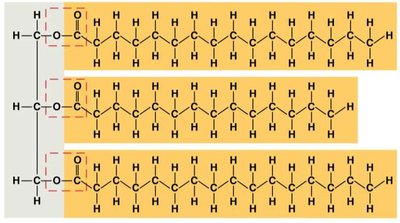
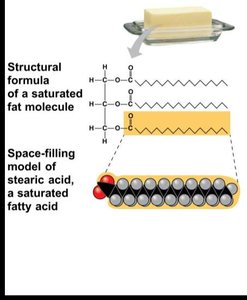
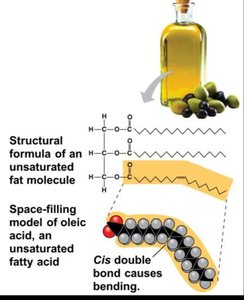
Fats are important for energy storage, cushioning organs, and insulation.
Phospholipids
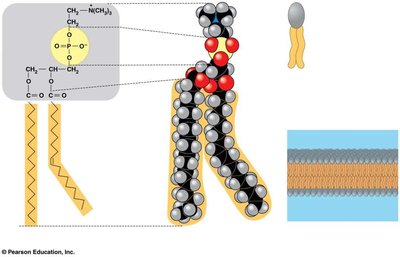
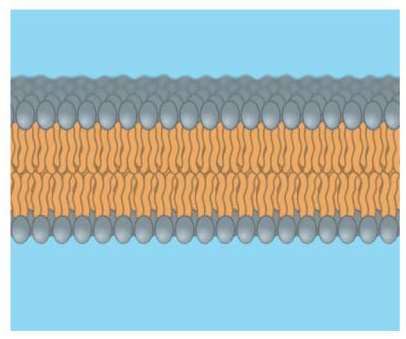
Phospholipids consist of two fatty acids and a phosphate group attached to glycerol. The hydrophilic head and hydrophobic tails allow them to form bilayers, which are the foundation of cell membranes.
Steroids
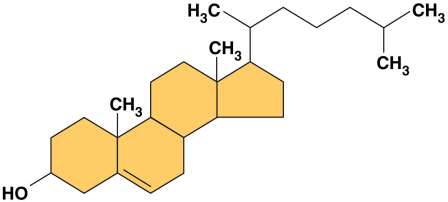
Steroids are lipids with a carbon skeleton of four fused rings. Cholesterol is an important steroid in animal cell membranes and a precursor for other steroids.
Proteins
Functions and Diversity of Proteins
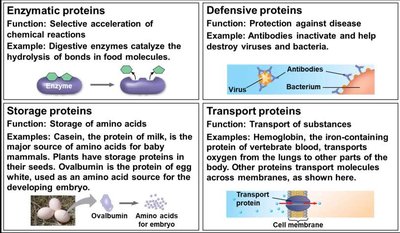
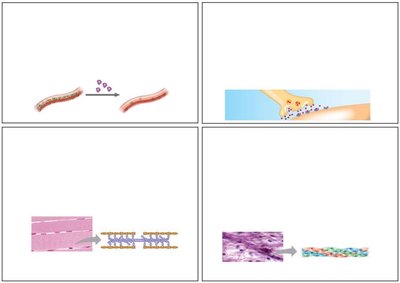
Proteins are the most diverse macromolecules, accounting for more than 50% of the dry mass of most cells. They perform a wide range of functions, including catalysis, defense, storage, transport, communication, movement, and structural support.
Amino Acids: The Building Blocks of Proteins
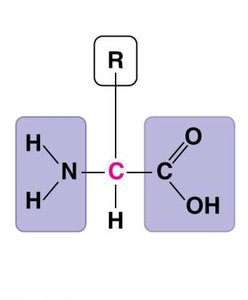
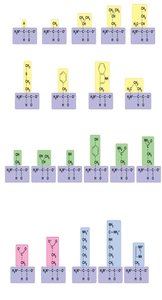
Amino acids are organic molecules with amino and carboxyl groups, differing in their side chains (R groups). There are 20 different amino acids.
Polypeptides and Protein Structure
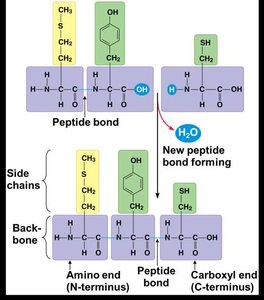
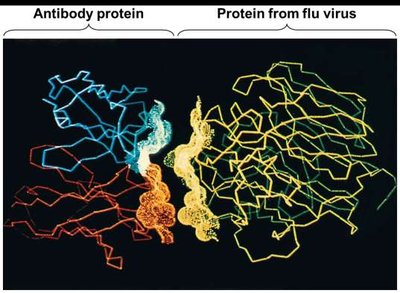
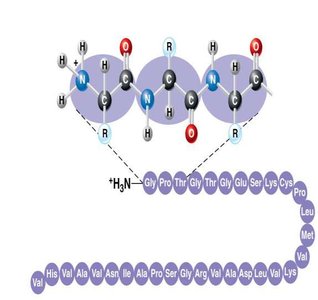
Amino acids are linked by peptide bonds to form polypeptides. The sequence of amino acids determines the protein's three-dimensional structure and function.
Levels of Protein Structure
Primary structure: Unique sequence of amino acids.
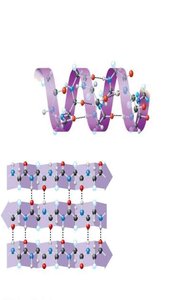
Secondary structure: Coils (α-helix) and folds (β-pleated sheet) due to hydrogen bonding.
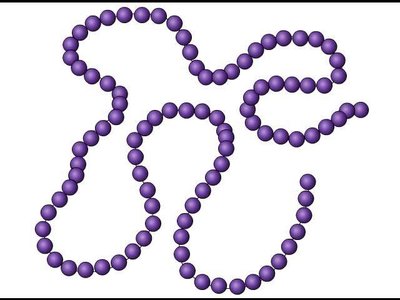
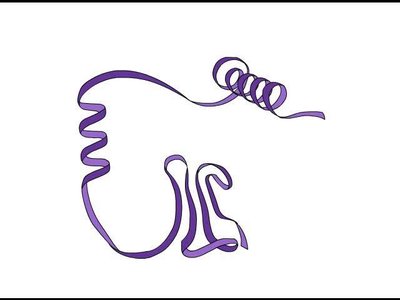
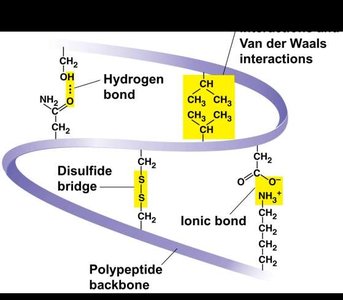
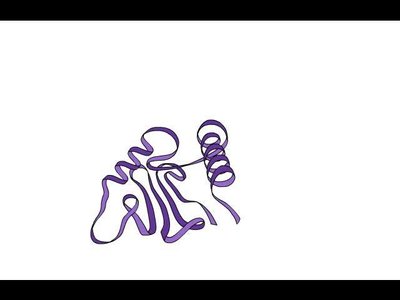
Tertiary structure: Overall 3D shape from interactions among R groups (hydrophobic interactions, disulfide bridges, ionic bonds, hydrogen bonds, van der Waals interactions).
Quaternary structure: Association of multiple polypeptide chains.
Protein Structure and Disease
Changes in primary structure can affect protein function. For example, sickle-cell disease results from a single amino acid substitution in hemoglobin.
Protein structure can also be affected by environmental factors (pH, temperature, salt concentration), leading to denaturation and loss of function.
Nucleic Acids
Roles and Types of Nucleic Acids
Nucleic acids store, transmit, and help express hereditary information. The two main types are DNA (deoxyribonucleic acid) and RNA (ribonucleic acid).
DNA contains instructions for its own replication and for RNA synthesis.
RNA is involved in protein synthesis and gene regulation.
Structure of Nucleic Acids
Nucleic acids are polymers called polynucleotides, made of nucleotide monomers. Each nucleotide consists of a nitrogenous base, a pentose sugar, and one or more phosphate groups.
Nitrogenous bases: Pyrimidines (cytosine, thymine, uracil) and purines (adenine, guanine).
Sugars: Deoxyribose in DNA, ribose in RNA.
Nucleotides are joined by phosphodiester linkages, forming a sugar-phosphate backbone.
DNA is double-stranded, forming a double helix with complementary base pairing (A-T, G-C). RNA is usually single-stranded and can fold into various shapes.
*Additional info: The structure and function of large biological molecules are foundational to understanding cell biology, metabolism, genetics, and physiology. Mastery of these concepts is essential for further study in biology and related sciences.*
