 Back
The Structure and Function of Large Biological Molecules
Study Guide - Smart Notes
 Tailored notes based on your materials, expanded with key definitions, examples, and context.
Chapter 5: The Structure and Function of Large Biological Molecules
The Molecules of Life
All living organisms are composed of four major classes of large biological molecules, known as macromolecules. These molecules are essential for life and include carbohydrates, lipids, proteins, and nucleic acids. Macromolecules are complex and vary greatly among different organisms, contributing to biological diversity.
Carbohydrates
Lipids
Proteins
Nucleic Acids
Polymers and Monomers
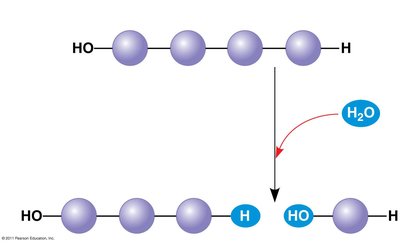
Most macromolecules are polymers, which are long molecules made up of repeating units called monomers. The diversity of polymers arises from the arrangement of a small set of monomers in various sequences.
Polymer: A long molecule consisting of many similar or identical building blocks linked by covalent bonds.
Monomer: The repeating unit that serves as the building block of a polymer.
Dehydration Reaction: A chemical reaction in which two monomers are covalently bonded to each other with the removal of a water molecule.
Hydrolysis Reaction: A chemical reaction that breaks the bonds between monomers by adding water, reversing the dehydration reaction.
Carbohydrates
Structure and Function
Carbohydrates are sugars and their polymers. They serve as fuel and building material in cells. Carbohydrates are classified based on the number of sugar units:
Monosaccharides: Simple sugars (e.g., glucose).
Disaccharides: Two monosaccharides joined by a glycosidic linkage (e.g., maltose, sucrose).
Polysaccharides: Polymers of many monosaccharides (e.g., starch, glycogen, cellulose, chitin).
Storage Polysaccharides
Storage polysaccharides are used to store energy:
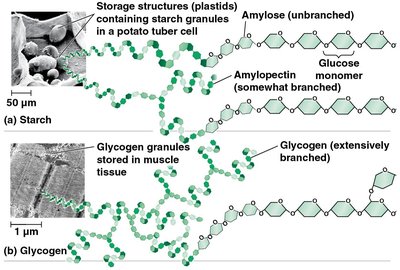
Starch: The main storage polysaccharide in plants, consisting of glucose monomers. Stored as granules in chloroplasts and plastids. Amylose is the simplest form (unbranched), while amylopectin is branched.
Glycogen: The main storage polysaccharide in animals, stored in liver and muscle cells. Glycogen is highly branched and can be rapidly hydrolyzed to release glucose.
Structural Polysaccharides
Some polysaccharides serve structural roles:
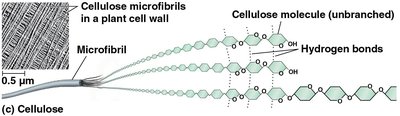
Cellulose: A major component of plant cell walls, composed of β-glucose monomers. The β-linkages result in straight, unbranched fibers that form strong microfibrils through hydrogen bonding.
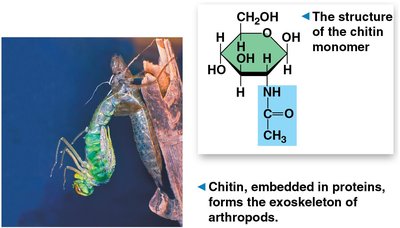
Chitin: Found in the exoskeleton of arthropods and the cell walls of fungi. Chitin is similar to cellulose but contains nitrogen-containing appendages.
Lipids
Structure and Types
Lipids are a diverse group of hydrophobic molecules that do not form true polymers. The most important lipids are fats, phospholipids, and steroids.
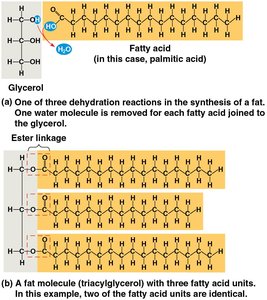
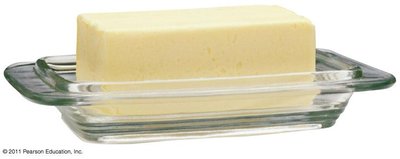
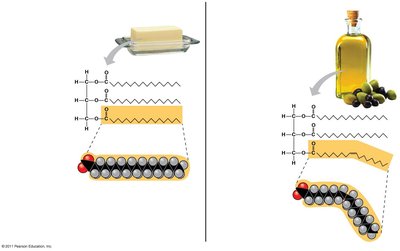
Fats (Triglycerides): Constructed from glycerol and three fatty acids. The fatty acids may be saturated (no double bonds, straight chains, solid at room temperature) or unsaturated (one or more double bonds, kinked chains, liquid at room temperature).
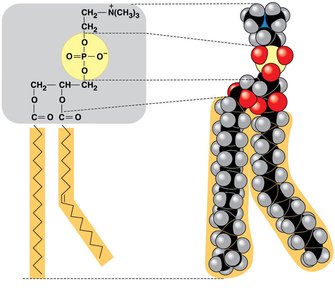
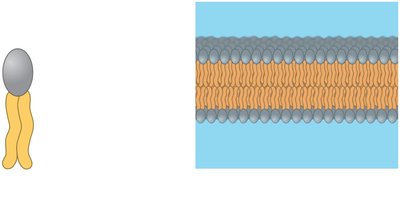
Phospholipids: Composed of two fatty acids, a glycerol, and a phosphate group. They have hydrophobic tails and a hydrophilic head, forming the basis of cell membranes.
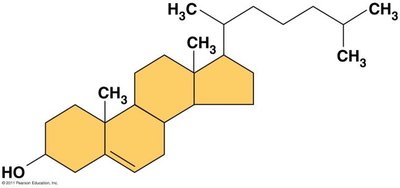
Steroids: Characterized by a backbone of four fused carbon rings. Cholesterol is a common steroid found in cell membranes and as a precursor for other steroids.

Functions of Lipids
Energy storage (more compact than carbohydrates)
Insulation and protection of organs
Major component of cell membranes (phospholipids)
Hormones and signaling molecules (steroids)
Proteins
Structure and Function
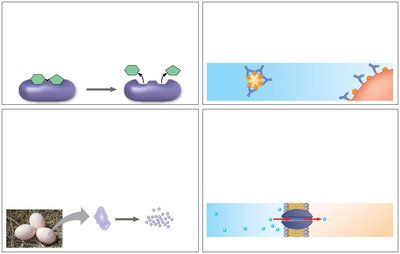
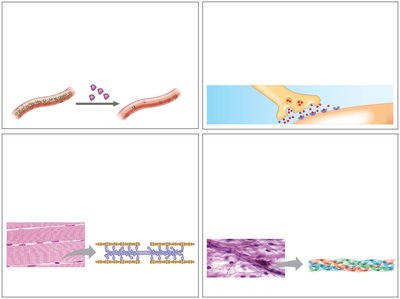
Proteins are the most diverse macromolecules, accounting for more than 50% of the dry mass of most cells. They perform a wide range of functions, including catalysis, defense, storage, transport, communication, movement, and structural support.
Enzymatic proteins: Accelerate chemical reactions (e.g., digestive enzymes).
Defensive proteins: Protect against disease (e.g., antibodies).
Storage proteins: Store amino acids (e.g., casein in milk).
Transport proteins: Transport substances (e.g., hemoglobin).
Hormonal proteins: Coordinate organismal activities (e.g., insulin).
Receptor proteins: Respond to chemical stimuli.
Contractile and motor proteins: Movement (e.g., actin, myosin).
Structural proteins: Support (e.g., collagen, keratin).
Amino Acids and Peptide Bonds
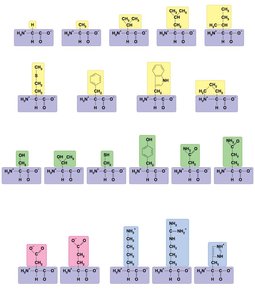
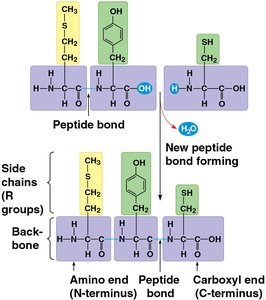
Proteins are polymers of amino acids. Each amino acid has a central carbon (α-carbon), an amino group, a carboxyl group, a hydrogen atom, and a variable side chain (R group). The properties of amino acids are determined by their R groups. Amino acids are linked by peptide bonds to form polypeptides.
Levels of Protein Structure
The structure of a protein determines its function and is organized into four levels:
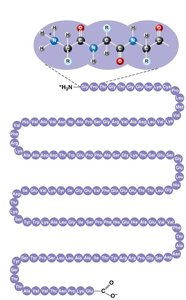
Primary structure: The unique sequence of amino acids in a polypeptide.
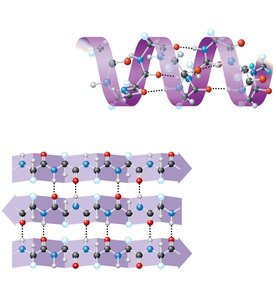
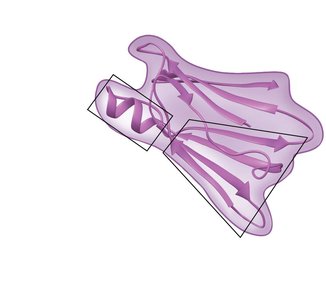
Secondary structure: Coils and folds (α-helix and β-pleated sheet) stabilized by hydrogen bonds.
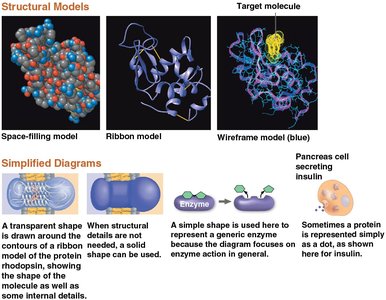
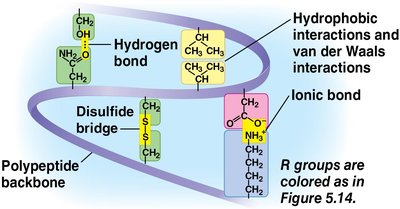
Tertiary structure: The overall 3D shape of a polypeptide, determined by interactions among R groups (hydrophobic interactions, hydrogen bonds, ionic bonds, disulfide bridges).
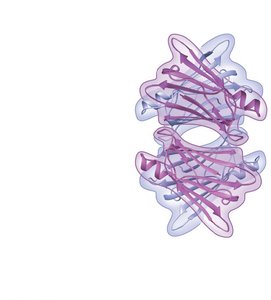
Quaternary structure: The association of multiple polypeptide chains to form a functional protein.
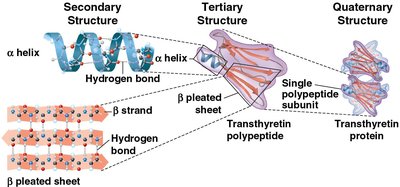
Protein Folding and Denaturation
Protein structure can be affected by physical and chemical conditions. Changes in pH, salt concentration, or temperature can cause a protein to denature, losing its native structure and function. Misfolded proteins are associated with diseases such as Alzheimer's and Parkinson's.
Nucleic Acids
Structure and Function
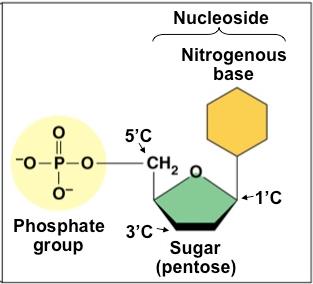
Nucleic acids store and transmit hereditary information. The two types are DNA (deoxyribonucleic acid) and RNA (ribonucleic acid). Both are polymers of nucleotides, which consist of a phosphate group, a pentose sugar, and a nitrogenous base.
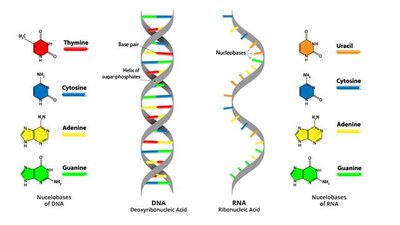
DNA: Double-stranded, contains deoxyribose, and the bases adenine (A), guanine (G), cytosine (C), and thymine (T).
RNA: Single-stranded, contains ribose, and the bases adenine (A), guanine (G), cytosine (C), and uracil (U).
Genetic Information
DNA encodes genetic information in the sequence of its bases. In humans, DNA is organized into chromosomes. Somatic cells contain 23 pairs of chromosomes (46 total). RNA plays a key role in protein synthesis by translating genetic information from DNA into proteins.
