 Back
The Structure and Function of Large Biological Molecules
Study Guide - Smart Notes
 Tailored notes based on your materials, expanded with key definitions, examples, and context.
Biomolecules: Introduction and Classification
Overview of Biomolecules
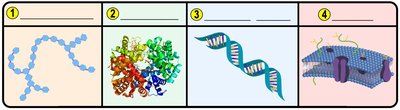
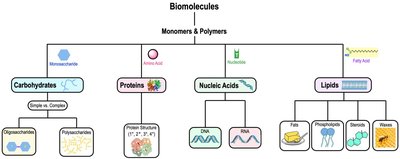
Biomolecules are organic molecules essential to life, forming the structural and functional basis of all living organisms. The four primary classes of biomolecules are carbohydrates, proteins, nucleic acids, and lipids. Each class has unique monomers and polymers, contributing to diverse biological roles.
Carbohydrates: Provide energy and structural support.
Proteins: Catalyze reactions, provide structure, and regulate processes.
Nucleic Acids: Store and transmit genetic information.
Lipids: Store energy, form membranes, and act as signaling molecules.
Monomers and Polymers
Definitions and Relationships
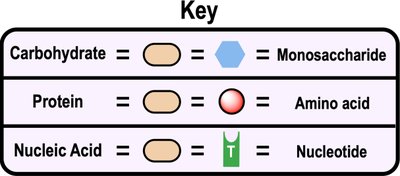
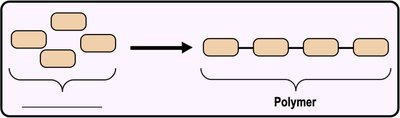
Monomers are the basic building blocks that can be linked together to form polymers. The process of linking monomers is fundamental to the structure and function of biomolecules.
Monomer: A single molecule that can join with others to form a polymer.
Polymer: A long chain of monomers linked by covalent bonds.
Carbohydrates, proteins, and nucleic acids form polymers from consistent monomers; lipids do not form true polymers.
Polymer Formation and Breakdown
Polymers are assembled and disassembled through two key reactions:
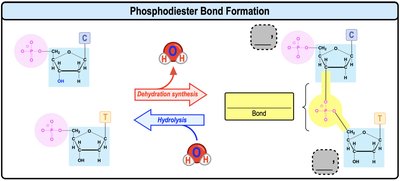
Dehydration Synthesis: Forms covalent bonds between monomers, releasing water and building polymers.
Hydrolysis: Breaks covalent bonds in polymers, using water to split them into monomers.
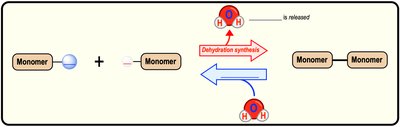
Equation for Dehydration Synthesis:
Equation for Hydrolysis:
Carbohydrates
Structure and Types
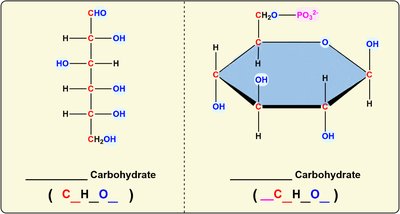
Carbohydrates are carbon-based molecules hydrated with many hydroxyl groups (-OH). They are also known as saccharides (Greek for "sugars"). Simple carbohydrates fit the formula (e.g., glucose), while complex carbohydrates may differ and include other atoms.
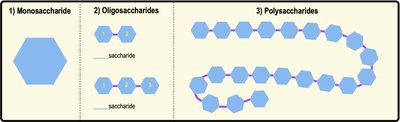
Size Classes of Carbohydrates
Monosaccharide: Single carbohydrate unit (e.g., glucose).
Oligosaccharide: 2 to ~20 covalently linked monosaccharides.
Polysaccharide: More than 20 covalently linked monosaccharides (e.g., starch, cellulose).
Formation and Breakdown of Polysaccharides
Polysaccharides are formed by dehydration synthesis, linking monosaccharides via glycosidic bonds. Hydrolysis breaks these bonds, releasing monosaccharides.
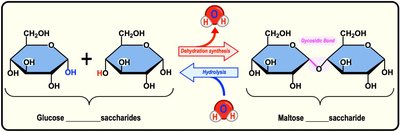
Equation for Glycosidic Bond Formation:
Functions of Carbohydrates
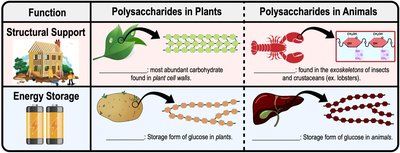
Carbohydrates serve structural and energy-storage functions:
Structural Support: Build cell walls (cellulose in plants, chitin in animals).
Energy Storage: Starch in plants, glycogen in animals.
Proteins
Structure and Formation
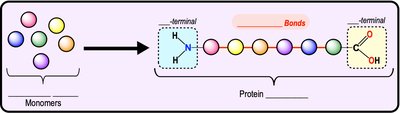
Proteins are polymers made of amino acid monomers linked by peptide bonds. Protein polymers have directionality, with N-terminal and C-terminal ends.
Amino Acid Structure
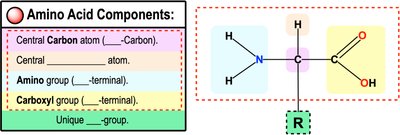
Amino acids are the monomers of proteins, each containing a central carbon, an amino group, a carboxyl group, and a unique R-group. There are 20 different amino acids used in living organisms.
Protein-Related Terms
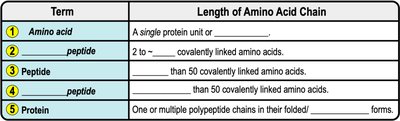
Terms describing amino acid chains vary by length:
Amino acid: Single unit.
Oligopeptide: 2 to ~50 linked amino acids.
Peptide: Less than 50 linked amino acids.
Polypeptide: More than 50 linked amino acids.
Protein: One or more polypeptide chains in their folded, functional forms.
Levels of Protein Structure
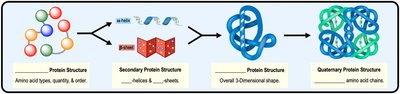
Proteins have four structural levels:
Primary: Amino acid sequence.
Secondary: Formation of α-helices and β-sheets via hydrogen bonding.
Tertiary: Overall 3D shape of a polypeptide.
Quaternary: Association of multiple polypeptide chains.
Denatured Proteins and Chaperones
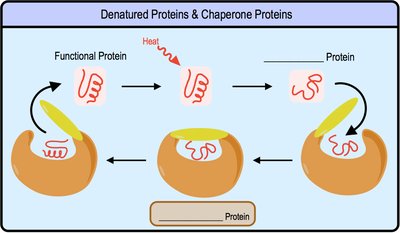
A protein's structure is critical for its function. Denatured proteins lose their functional shape due to environmental changes (pH, temperature, salt concentration). Chaperone proteins assist in refolding denatured proteins.
Nucleic Acids
Structure and Formation
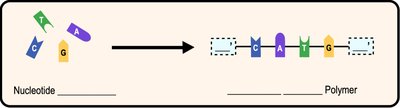
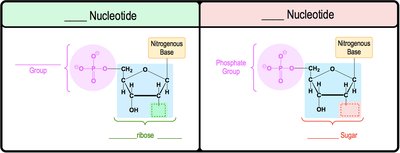
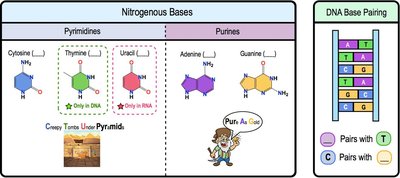
Nucleic acids are polymers that store and encode genetic information. Their monomers are nucleotides, which consist of a phosphate group, a pentose sugar, and a nitrogenous base. DNA and RNA use different sugars in their nucleotides.
Nitrogenous Bases
There are five nitrogenous bases, grouped as pyrimidines (single-ring) and purines (double-ring). In DNA, bases pair via hydrogen bonds: A with T, C with G.
Formation and Breakdown of Nucleic Acids
Dehydration synthesis links nucleotides via phosphodiester bonds, forming the sugar-phosphate backbone with directionality (5' phosphate end to 3' hydroxyl end).
DNA vs. RNA
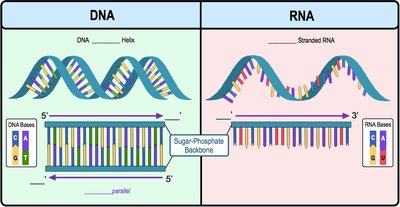
DNA: Stores genetic information, forms a double helix with antiparallel strands.
RNA: Functions in protein synthesis, usually single-stranded.
Lipids
Structure and Types
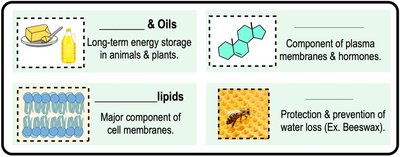
Lipids are hydrophobic biomolecules, insoluble in water, and highly diverse. They can be amphipathic (having both hydrophobic and hydrophilic regions) and do not form true polymers. Lipid types include fats and oils, phospholipids, steroids, and waxes.
Fatty Acids
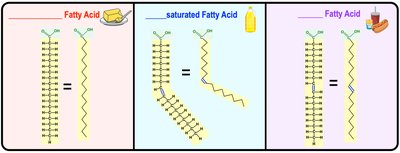
Fatty acids are hydrocarbon chains with a carboxylic acid group. Saturated fatty acids have only single C-C bonds and are solid at room temperature. Unsaturated fatty acids have one or more C=C double bonds, causing kinks and making them liquid at room temperature. Trans fats are artificial unsaturated fatty acids that are linear.
Triglycerides
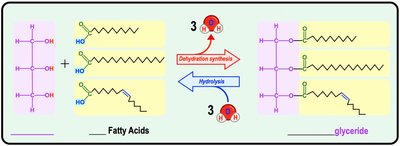
Triglycerides are lipids with three fatty acid chains covalently linked to a single glycerol molecule via dehydration synthesis.
Phospholipids
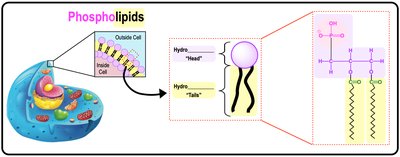
Phospholipids contain a phosphate group and are major components of cell membranes. They are amphipathic, with a hydrophilic head and hydrophobic tails.
Steroids and Waxes
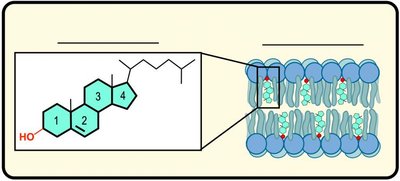
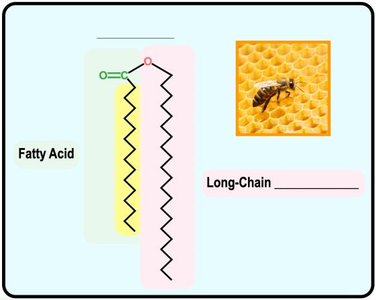
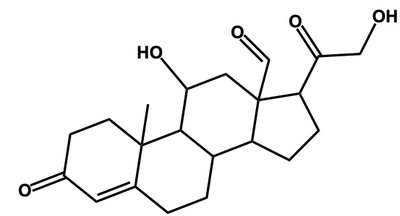
Steroids are lipids made of four fused carbon rings, such as cholesterol, which is important for animal cell membrane structure. Waxes are lipids used for protection and prevention of water loss.
Additional info: These notes expand on the original content by providing definitions, examples, and academic context for each biomolecule class, their monomers and polymers, and their biological functions. All included images directly reinforce the explanations and are relevant to the adjacent paragraphs.
