Back
The Structure and Function of Large Biological Molecules
Study Guide - Smart Notes
 Tailored notes based on your materials, expanded with key definitions, examples, and context.
Introduction to Biomolecules
Overview of Biomolecules
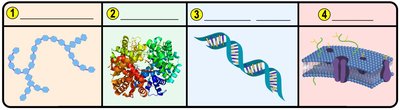
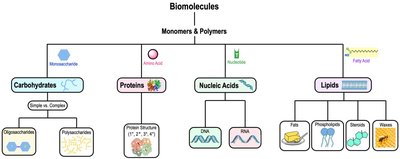
Biomolecules are organic molecules essential to living organisms, forming the foundation of biological structure and function. There are four primary classes of biomolecules: carbohydrates, proteins, nucleic acids, and lipids. Each class has unique structures and functions, but all are critical for life.
Carbohydrates: Serve as energy sources and structural materials.
Proteins: Perform a vast array of functions, including catalysis, structure, and signaling.
Nucleic Acids: Store and transmit genetic information.
Lipids: Provide energy storage, membrane structure, and signaling molecules.
Monomers and Polymers
Definitions and Relationships
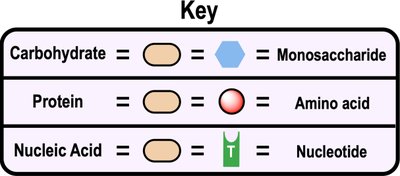
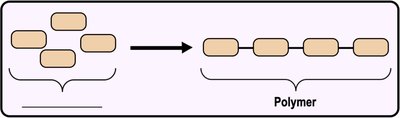
Many biomolecules are polymers, which are long chains of repeating units called monomers. The process of linking monomers to form polymers is central to biological macromolecule synthesis.
Monomer: The basic building block of a polymer (e.g., monosaccharide, amino acid, nucleotide).
Polymer: A large molecule composed of many monomers linked together (e.g., polysaccharide, polypeptide, nucleic acid).
Lipids are an exception; they do not form true polymers but are assembled from smaller components.
Polymerization and Depolymerization
Polymers are assembled and disassembled by two main types of reactions:
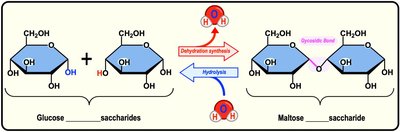
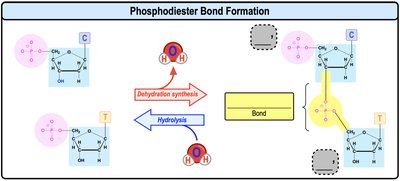
Dehydration Synthesis (Condensation Reaction): Forms covalent bonds between monomers, releasing a molecule of water for each bond formed.
Hydrolysis: Breaks covalent bonds in polymers by adding a molecule of water, splitting the polymer into monomers.
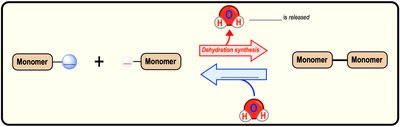
Example: Formation of a disaccharide from two monosaccharides via dehydration synthesis; breakdown via hydrolysis.
Carbohydrates
Structure and Classification
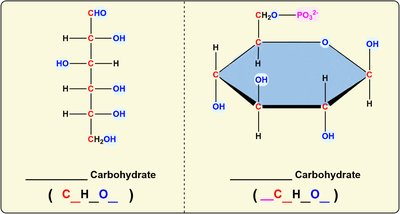
Carbohydrates are carbon-based molecules hydrated with many hydroxyl groups (-OH). They are also referred to as saccharides (from the Greek word for "sugar"). The general formula for simple carbohydrates is Cn(H2O)n, though some complex carbohydrates may include additional elements such as nitrogen or sulfur.
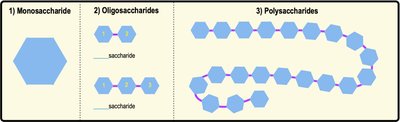
Monosaccharides: Single carbohydrate units (e.g., glucose).
Oligosaccharides: 2 to ~20 covalently linked monosaccharides.
Polysaccharides: More than 20 covalently linked monosaccharides (e.g., starch, cellulose).
Formation and Breakdown of Polysaccharides
Polysaccharides are formed by linking monosaccharides through dehydration synthesis, creating glycosidic bonds. Hydrolysis breaks these bonds, releasing monosaccharides.
Glycosidic Bond: The covalent bond that links monosaccharides in polysaccharides.
Functions of Carbohydrates
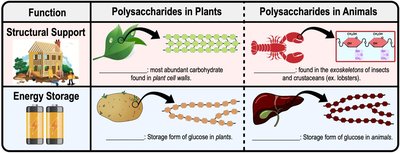
Carbohydrates serve two main functions:
Structural Support: Components of cell walls (e.g., cellulose in plants, chitin in arthropods).
Energy Storage: Storage forms of glucose (e.g., starch in plants, glycogen in animals).
Proteins
Structure and Formation
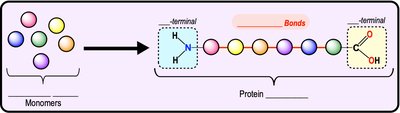
Proteins are polymers made of amino acid monomers linked by peptide bonds. Each protein has directionality, with an N-terminal (amino end) and a C-terminal (carboxyl end).
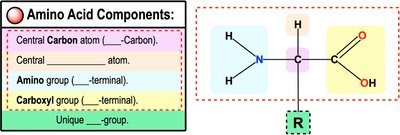
Amino Acid: The monomer of proteins, consisting of a central carbon, amino group, carboxyl group, hydrogen atom, and a unique R-group.
Peptide Bond: The covalent bond linking amino acids in a protein.
Protein-Related Terms
Proteins can be described by the length and complexity of their amino acid chains:
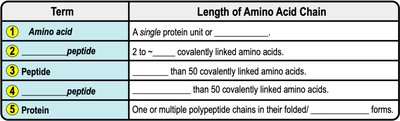
Amino acid: Single unit.
Oligopeptide: 2 to ~20 amino acids.
Peptide: Fewer than 50 amino acids.
Polypeptide: More than 50 amino acids.
Protein: One or more polypeptides in their folded, functional forms.
Levels of Protein Structure
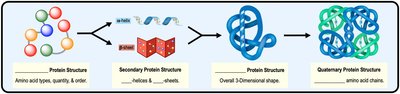
Proteins have a hierarchical structure with four levels:
Primary Structure: Sequence of amino acids.
Secondary Structure: Formation of α-helices and β-sheets via hydrogen bonding.
Tertiary Structure: Overall 3D shape of a single polypeptide chain.
Quaternary Structure: Association of multiple polypeptide chains into a functional protein.
Protein Denaturation and Chaperones
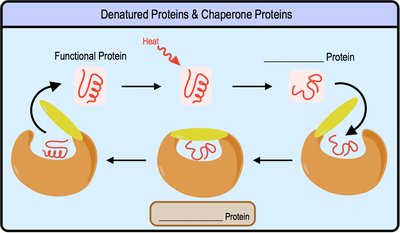
The shape of a protein is critical for its function. Denatured proteins lose their functional shape due to environmental changes (e.g., pH, temperature). Chaperone proteins assist in the proper folding or refolding of proteins.
Nucleic Acids
Structure and Function
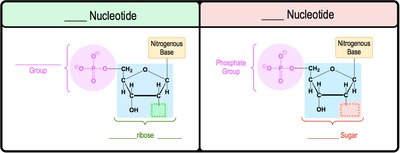
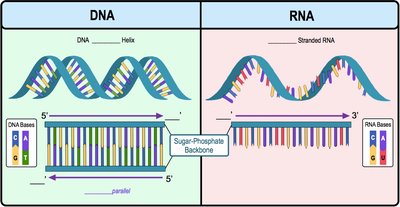
Nucleic acids are polymers that store and transmit genetic information. The monomers are nucleotides, each consisting of a phosphate group, a pentose sugar, and a nitrogenous base. Nucleic acids have directionality (5' to 3' ends).
Nucleotide Structure
Each nucleotide is composed of three components:
Phosphate group
Pentose sugar (deoxyribose in DNA, ribose in RNA)
Nitrogenous base (adenine, guanine, cytosine, thymine in DNA; uracil replaces thymine in RNA)
Nitrogenous Bases and Base Pairing
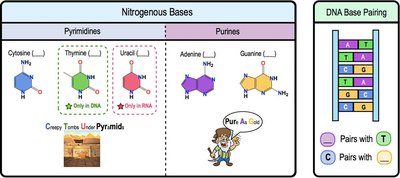
There are five nitrogenous bases, grouped as pyrimidines (single ring: cytosine, thymine, uracil) and purines (double ring: adenine, guanine). In DNA, bases pair specifically: A with T, C with G.
Formation and Structure of Nucleic Acids
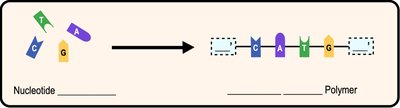
Nucleotides are linked by phosphodiester bonds via dehydration synthesis, forming a sugar-phosphate backbone with directionality (5' phosphate to 3' hydroxyl).
DNA vs. RNA
DNA: Double helix, stores genetic information, antiparallel strands, deoxyribose sugar.
RNA: Single-stranded, various functions (e.g., protein synthesis), ribose sugar.
Lipids
Structure and Types
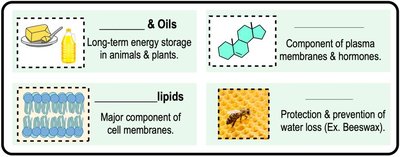
Lipids are hydrophobic biomolecules insoluble in water, with diverse structures and functions. They are not true polymers but are assembled from smaller components. Lipids include fats and oils, phospholipids, steroids, and waxes.
Fatty Acids
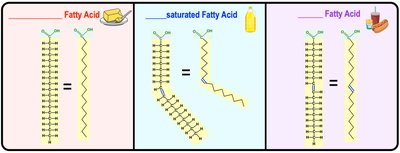
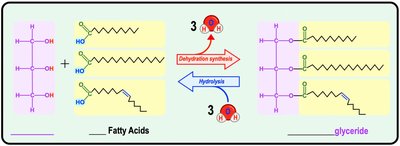
Fatty acids are hydrocarbon chains with a carboxylic acid group. They can be:
Saturated fatty acids: Only single C–C bonds, straight chains, solid at room temperature.
Unsaturated fatty acids: One or more C=C double bonds, kinked chains, liquid at room temperature.
Trans fats: Artificial unsaturated fats with linear structure, not kinked.
Triglycerides
Triglycerides are lipids with three fatty acid chains covalently linked to a single glycerol molecule via dehydration synthesis.
Phospholipids
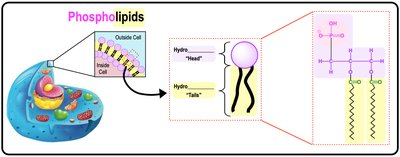
Phospholipids contain a phosphate group and are major components of all cell membranes. They are amphipathic, with a hydrophilic head and hydrophobic tails.
Steroids and Waxes
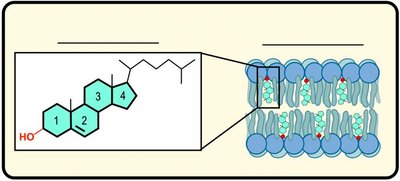
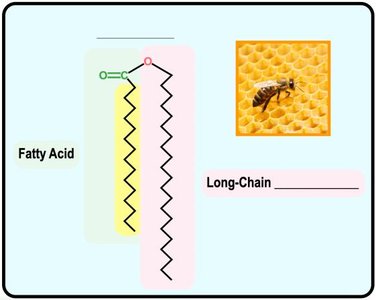
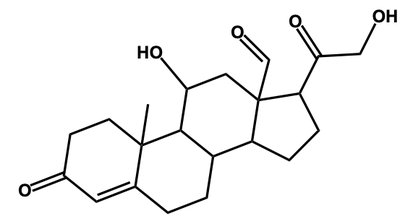
Steroids are lipids made of four fused carbon rings (e.g., cholesterol, important for animal cell membranes). Waxes are long-chain fatty acids bound to alcohols, used for protection and prevention of water loss (e.g., beeswax).