 Back
The Structure and Function of Large Biological Molecules
Study Guide - Smart Notes
 Tailored notes based on your materials, expanded with key definitions, examples, and context.
The Structure and Function of Large Biological Molecules
Introduction
Large biological molecules, or macromolecules, are fundamental to the structure and function of living organisms. The four major classes are carbohydrates, lipids, proteins, and nucleic acids. Each class has unique properties and roles in cellular processes.
Molecules of Life
Classes of Biological Macromolecules
Carbohydrates: Serve as fuel and building material.
Lipids: Diverse group of hydrophobic molecules, including fats, phospholipids, and steroids.
Proteins: Perform a wide range of functions, including catalysis, transport, and structural support.
Nucleic Acids: Store, transmit, and help express hereditary information.
Macromolecules are complex and their properties arise from the specific arrangement of their atoms.
Macromolecules as Polymers
Polymers and Monomers
A polymer is a long molecule made of repeating units called monomers. Carbohydrates, proteins, and nucleic acids are polymers, while lipids are not true polymers.
Synthesis and Breakdown of Polymers
Dehydration Reaction: Joins two monomers by removing a water molecule, forming a new bond.
Hydrolysis: Breaks a polymer into monomers by adding a water molecule, breaking a bond.
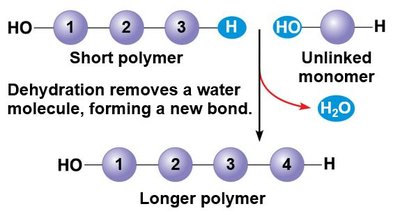
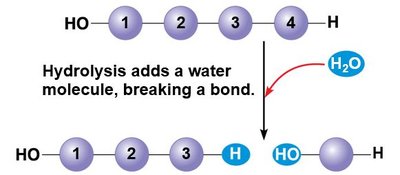
Enzymes are specialized macromolecules that speed up these chemical reactions.
Carbohydrates
Monosaccharides
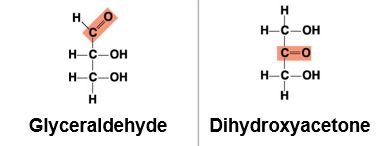
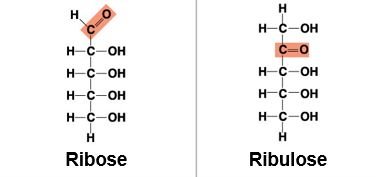
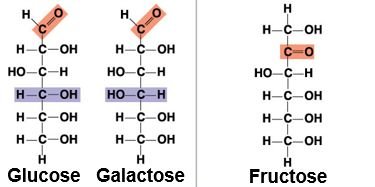
Monosaccharides are the simplest carbohydrates, typically with molecular formulas that are multiples of CH2O. Glucose is the most common monosaccharide. They are classified by the location of the carbonyl group (aldose or ketose) and the number of carbons in the skeleton.
Ring Structures
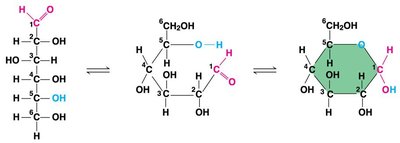
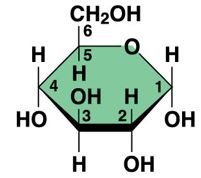
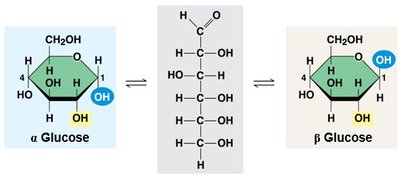
In aqueous solutions, many sugars form rings. Monosaccharides serve as major fuel for cells and as raw material for building molecules.
Disaccharides
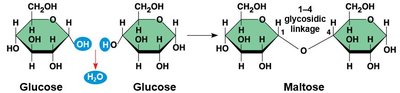
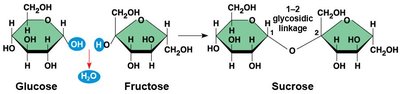
A disaccharide is formed when a dehydration reaction joins two monosaccharides, creating a glycosidic linkage.
Polysaccharides
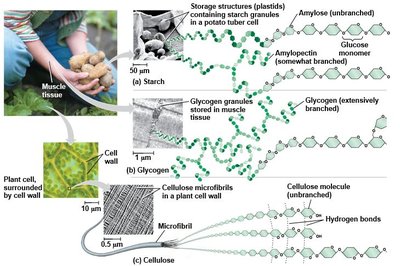
Polysaccharides are polymers of sugars with storage and structural roles. Examples include:
Starch: Storage in plants (amylose and amylopectin).
Glycogen: Storage in animals, mainly in liver and muscle cells.
Cellulose: Structural component of plant cell walls.
Chitin: Structural component in arthropods and fungi.
Structural Differences
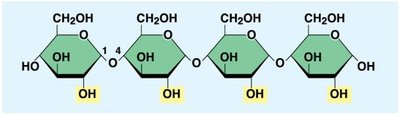
The architecture and function of a polysaccharide are determined by its sugar monomers and the positions of its glycosidic linkages. For example, starch (α configuration) is helical, while cellulose (β configuration) is straight and unbranched.
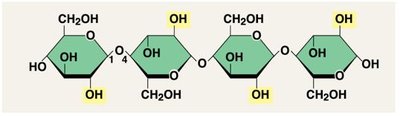
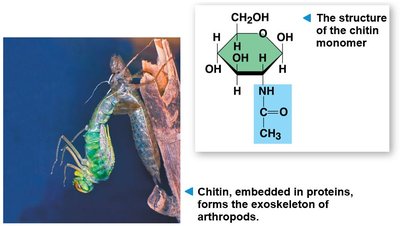
Chitin
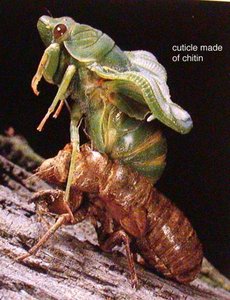
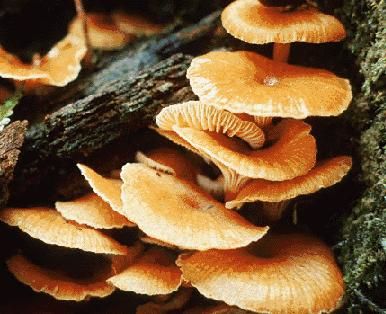
Chitin is a nitrogen-containing polysaccharide found in the exoskeleton of arthropods and the cell walls of fungi. It provides structural support and resembles keratin in function but is a carbohydrate.
Lipids
Overview
Lipids are hydrophobic molecules that do not form true polymers. The most important lipids are fats, phospholipids, and steroids.
Fats
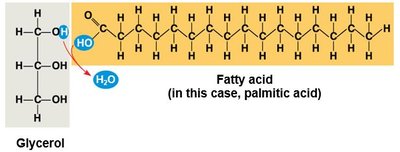
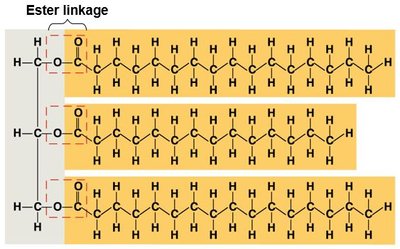
Fats are constructed from glycerol and fatty acids. Glycerol is a three-carbon alcohol, and fatty acids are long hydrocarbon chains with a carboxyl group. Three fatty acids join to glycerol by ester linkages to form a triacylglycerol (triglyceride).
Saturated vs. Unsaturated Fats
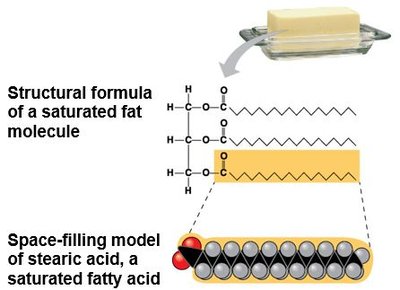
Saturated fatty acids: No double bonds, solid at room temperature, mostly animal fats.
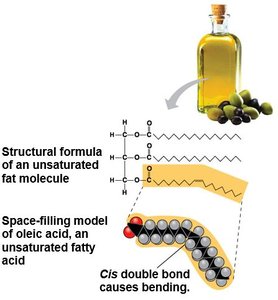
Unsaturated fatty acids: One or more double bonds, liquid at room temperature, mostly plant and fish fats.
Functions of Fats
Energy storage
Cushioning of organs
Insulation
Phospholipids
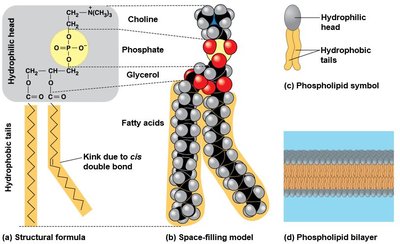
Phospholipids have two fatty acids and a phosphate group attached to glycerol. The hydrophilic head and hydrophobic tails allow them to form bilayers, which are the foundation of cell membranes.
Steroids
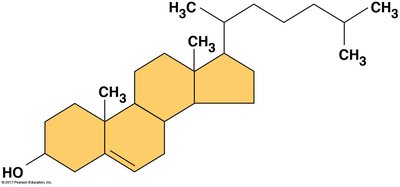
Steroids are lipids with a carbon skeleton of four fused rings. Cholesterol is an important steroid in animal cell membranes and a precursor for other steroids.
Proteins
Functions of Proteins
Proteins are the most diverse macromolecules, accounting for more than 50% of the dry mass of most cells. Functions include:
Enzymatic catalysis
Defense (antibodies)
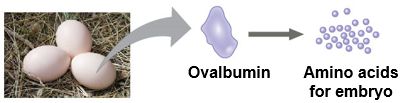
Storage (e.g., ovalbumin)
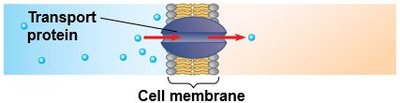
Transport (e.g., hemoglobin)
Cellular communication (hormones, receptors)
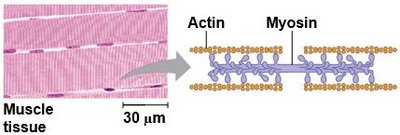
Movement (actin, myosin)
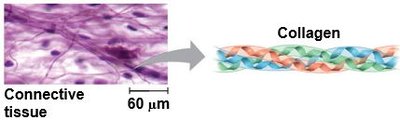
Structural support (collagen, keratin)
Amino Acids and Polypeptides
Proteins are polymers of amino acids, linked by peptide bonds to form polypeptides. Each protein has a unique sequence of amino acids, which determines its structure and function.
Levels of Protein Structure
Primary structure: Sequence of amino acids.
Secondary structure: Coils (α helix) and folds (β pleated sheet) due to hydrogen bonding.
Tertiary structure: Overall 3D shape due to interactions among R groups.
Quaternary structure: Association of multiple polypeptide chains.
Even a single amino acid change can affect protein function, as seen in sickle-cell disease.
Nucleic Acids
Roles and Structure
Nucleic acids store and transmit hereditary information. The two types are DNA and RNA. DNA provides instructions for its own replication and for protein synthesis via mRNA. The flow of genetic information is summarized as:
Components of Nucleic Acids
Nucleotides: Monomers consisting of a nitrogenous base, a pentose sugar, and one or more phosphate groups.
Nucleoside: Nitrogenous base + sugar.
Phosphodiester linkage: Bonds nucleotides together, forming a sugar-phosphate backbone.
DNA is double-stranded (double helix), with complementary base pairing (A-T, G-C). RNA is usually single-stranded and uses uracil (U) instead of thymine (T).
Genomics and Proteomics
Modern Biological Inquiry
Advances in genomics and proteomics have transformed biology. Genomics is the study of whole sets of genes, while proteomics is the study of large sets of proteins. Bioinformatics uses computational tools to analyze these large data sets, providing insights into evolution and function.
