 Back
The Structure and Function of Large Biological Molecules
Study Guide - Smart Notes
 Tailored notes based on your materials, expanded with key definitions, examples, and context.
Macromolecules: Structure and Function
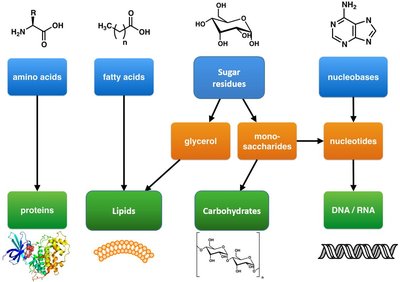
Overview of Macromolecules
Large biological molecules, or macromolecules, are essential for life and include carbohydrates, lipids, proteins, and nucleic acids. These molecules are typically polymers, constructed from smaller subunits called monomers, and play critical roles in cellular structure and metabolism.
Monomers: The simplest unit of an organic molecule (e.g., amino acids, monosaccharides, nucleotides, fatty acids).5
Polymers: Large molecules made by linking monomers together (e.g., proteins, polysaccharides, nucleic acids).
Nutrition: Macronutrients (carbohydrates, fats, proteins) are metabolized for energy and structure; micronutrients (vitamins, minerals) support metabolic processes.
Metabolism
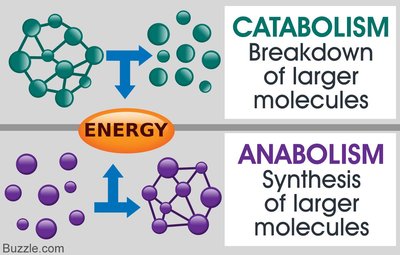
Metabolism encompasses all chemical reactions in living organisms, including both the breakdown and synthesis of macromolecules.
Catabolism: The breakdown of larger molecules into smaller units, releasing energy (e.g., cellular respiration).
Anabolism: The synthesis of larger molecules from smaller units, requiring energy (e.g., protein synthesis, photosynthesis).
Polymerization and Depolymerization
Dehydration Synthesis and Hydrolysis
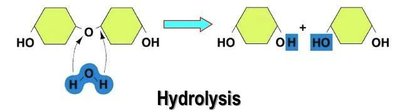
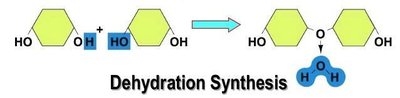
Polymers are assembled and disassembled by two key types of reactions:
Dehydration Synthesis: Monomers are joined together by covalent bonds, releasing a molecule of water as a byproduct.
Hydrolysis: Polymers are broken down into monomers by the addition of water, cleaving covalent bonds.
Carbohydrates: Structure and Function
Monomers and Polymers of Carbohydrates
Carbohydrates are sugars and their polymers, serving as fuel and structural materials in cells.
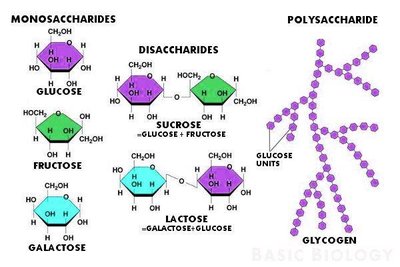
Monosaccharides: Simple sugars (e.g., glucose, fructose, galactose) with the general formula .
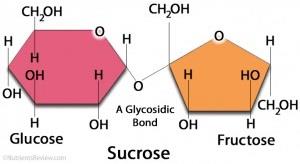
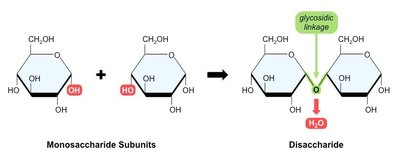
Disaccharides: Composed of two monosaccharides joined by a glycosidic linkage (e.g., sucrose, lactose, maltose).
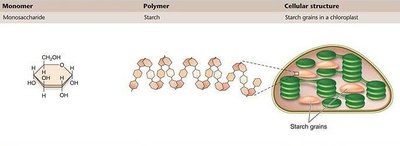
Polysaccharides: Long chains of monosaccharide units (e.g., starch, glycogen, cellulose, chitin).

Types of Carbohydrates
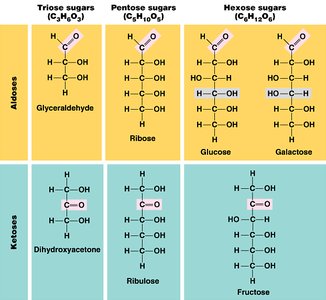
Monosaccharides: Single sugar units, classified by the number of carbons (triose, pentose, hexose) and the presence of an aldehyde (aldose) or ketone (ketose) group.
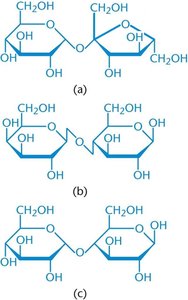
Disaccharides: Formed by dehydration synthesis; examples include sucrose (glucose + fructose), lactose (galactose + glucose), and maltose (glucose + glucose).
Polysaccharides: Storage (starch, glycogen) and structural (cellulose, chitin) roles.
Monosaccharide Structure: Linear and Ring Forms
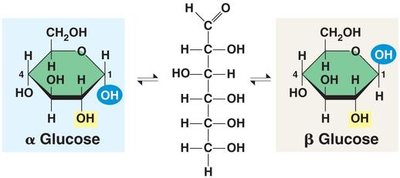
Monosaccharides can exist in linear or ring forms. In aqueous solutions, the ring form is more stable. Glucose can exist as alpha (α) or beta (β) isomers, differing in the orientation of the hydroxyl group at carbon 1.
Glycosidic Linkages
Monosaccharides are joined by glycosidic linkages to form disaccharides and polysaccharides. The type of linkage affects the properties and digestibility of the carbohydrate.
Major Polysaccharides
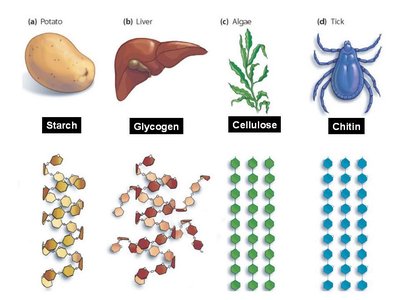
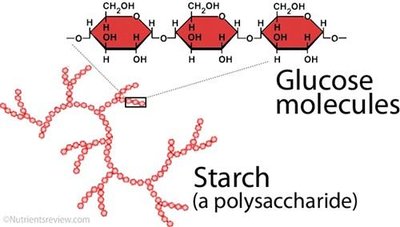
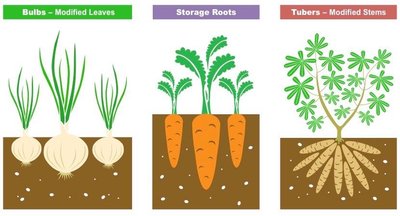
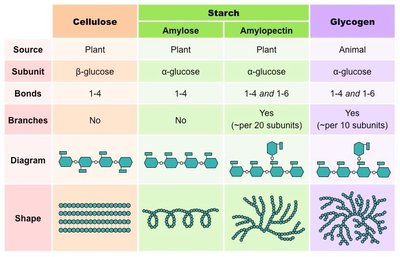
Starch: Storage polysaccharide in plants, composed of α-glucose units; found in bulbs, roots, tubers, seeds, and grains.
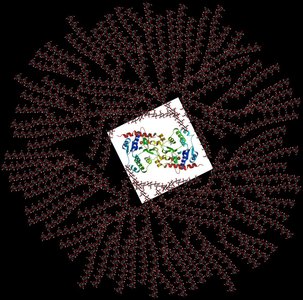
Glycogen: Storage polysaccharide in animals and fungi, highly branched, stored in liver and muscles for short-term energy.
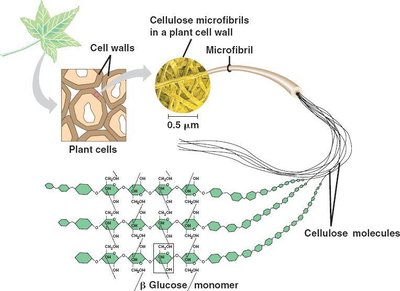
Cellulose: Structural polysaccharide in plant cell walls, composed of β-glucose units, forms strong fibers via hydrogen bonding.
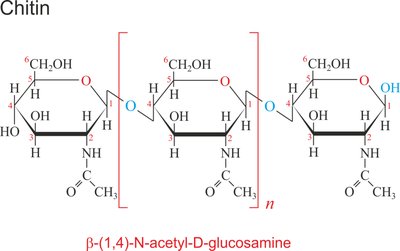
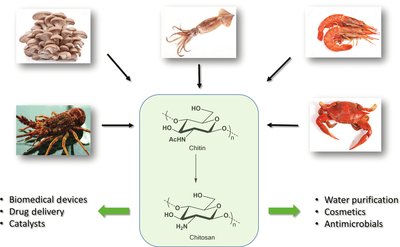
Chitin: Structural polysaccharide in fungi and arthropods, similar to cellulose but with nitrogen-containing groups.
Medical Conditions Related to Carbohydrate Metabolism
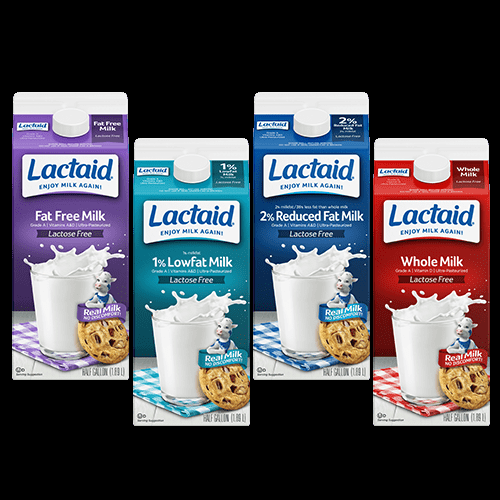
Carbohydrate Metabolism Disorders: Inability to process certain sugars (e.g., galactosemia, fructose intolerance), glycogen storage disorders, malabsorption (e.g., lactose intolerance), diabetes, and allergies (e.g., alpha-gal syndrome).
Alpha-gal Syndrome: An allergy to mammalian meat caused by a sugar (alpha-gal) introduced by tick bites, leading to immune reactions.

Lipids: Structure and Function
Overview of Lipids
Lipids are a diverse group of hydrophobic molecules, including fats, phospholipids, and steroids. They are not true polymers but are assembled from smaller molecules.
Fatty Acids: Long hydrocarbon chains with a carboxyl group; building blocks of many lipids.
Triglycerides: Composed of glycerol and three fatty acids, joined by ester bonds; function as long-term energy storage in animals.
Phospholipids: Major component of cell membranes, with hydrophilic heads and hydrophobic tails, forming bilayers.
Steroids: Lipids with a characteristic four-ring structure; include cholesterol and hormones.
Types of Dietary Fats
Saturated Fats: No double bonds; solid at room temperature; found in animal fats.
Unsaturated Fats: One or more double bonds; liquid at room temperature; found in plant oils. Includes cis and trans isomers.
Cholesterol and Steroids
Cholesterol: Essential for cell membrane structure and precursor for steroid hormones, vitamin D, and bile salts.
HDL vs LDL: High-density lipoprotein (HDL) is considered "good" cholesterol; low-density lipoprotein (LDL) is "bad" cholesterol.
Medical Conditions Related to Lipid Metabolism
Lipid Metabolism Disorders: Include lipoprotein disorders, fatty acid oxidation defects, mitochondrial and lysosomal storage diseases (e.g., Tay-Sachs disease).
Tay-Sachs Disease: A recessive genetic disorder resulting in the accumulation of GM2 ganglioside due to a defective enzyme, leading to neurological impairment.
Summary Table: Major Carbohydrates
Type | Monomer | Polymer | Function | Example |
|---|---|---|---|---|
Monosaccharide | Glucose | — | Energy source | Blood sugar |
Disaccharide | Glucose + Fructose | Sucrose | Transport | Table sugar |
Polysaccharide | Glucose | Starch, Glycogen, Cellulose, Chitin | Storage, Structure | Plant starch, Animal glycogen, Plant cell wall, Fungal cell wall |
Additional info: This guide covers the structure and function of carbohydrates and lipids, including their roles in nutrition, metabolism, and human health. For further study, review the chemical structures and metabolic pathways associated with each macromolecule.
