 Back
BackThe Structure and Function of the Brain: Mapping, Lateralization, and Disorders
Study Guide - Smart Notes
 Tailored notes based on your materials, expanded with key definitions, examples, and context.
The Brain: Structure and Function
Mapping Brain Areas
The human brain is a complex organ responsible for sensory perception, motor control, language, learning, memory, and consciousness. Early attempts to map the brain, such as phrenology, suggested that specific regions corresponded to distinct faculties, though modern neuroscience has refined these ideas.
Phrenology: Proposed by Franz Joseph Gall, this theory suggested that the shape of the skull reflected the underlying brain's faculties. Although now discredited, it initiated interest in brain localization.
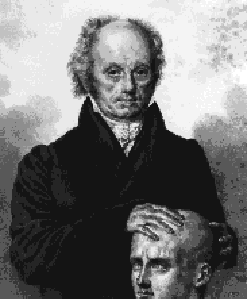
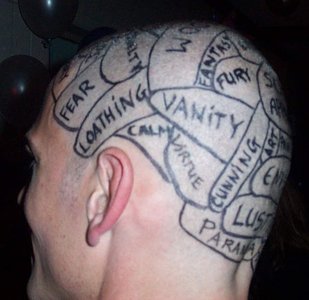
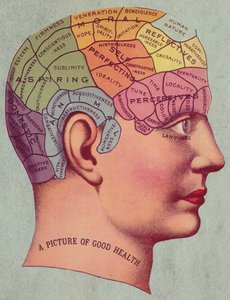
Modern Mapping: Brain regions are mapped based on function, including sensory, motor, and language areas.
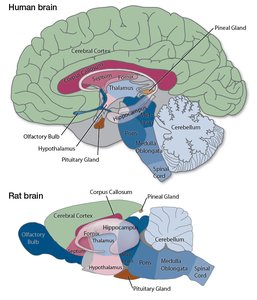
Major Brain Regions and Their Functions
The brain is divided into several major regions, each with specialized functions:
Medulla & Pons: Control basic physical functions such as breathing and circulation.
Cerebellum: Coordinates motor commands and balance.
Diencephalon: Includes the thalamus, hippocampus, hypothalamus, and posterior pituitary; involved in sensory relay, memory, and endocrine regulation.
Telencephalon (Cerebrum): Largest part in humans; responsible for sensory perception, learning, memory, and conscious behavior.
Cerebral Cortex: Sensory and Motor Representation
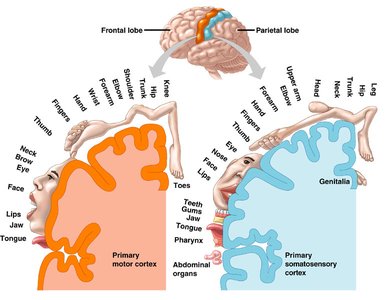
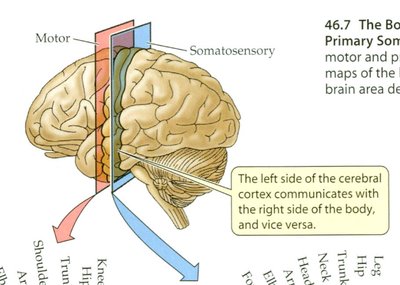
The cerebral cortex is involved in higher-order information processing. Specific regions are dedicated to sensory and motor functions, with areas of fine control (e.g., hands, face) having greater representation.
Motor Cortex: Controls voluntary movements; areas with fine motor control have larger cortical representation.
Somatosensory Cortex: Receives touch and pressure information; areas capable of fine discrimination (e.g., lips, fingers) are more represented.
Neural Plasticity
Neural plasticity refers to the brain's ability to reorganize itself by forming new neural connections. For example, after amputation of a finger in monkeys, the cortical area previously dedicated to that finger is reassigned to other fingers.
Example: Sensory homunculus and cortical remapping after injury.
Language Areas of the Cortex
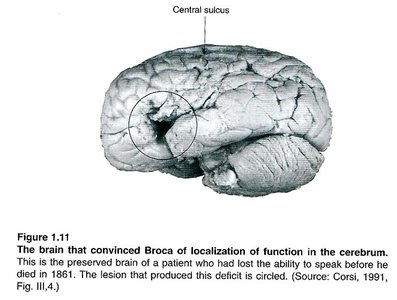
Language processing involves several interconnected regions, primarily in the left hemisphere for most people. Damage to these areas can result in aphasia, affecting speech production or comprehension.
Broca's Area: Responsible for speech production; damage leads to telegraphic speech (Broca's aphasia).
Wernicke's Area: Responsible for language comprehension; damage leads to fluent but meaningless speech (Wernicke's aphasia).
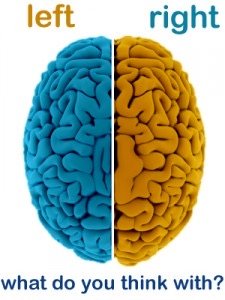
Left/Right Lateralization of the Brain
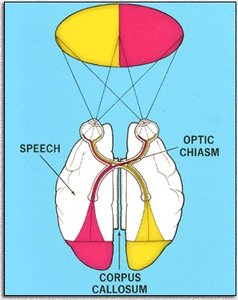
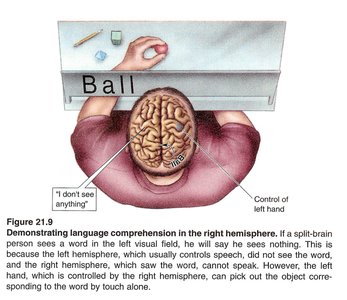
The brain exhibits lateralization, with certain functions more dominant in one hemisphere. Motor and sensory functions are contralateral: the left hemisphere controls the right side of the body and vice versa. Visual fields are also processed contralaterally.
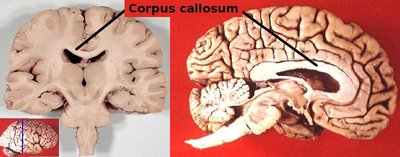
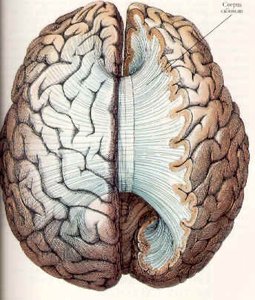
Corpus Callosum: Major neural highway connecting the hemispheres; cutting it (in split-brain patients) prevents direct communication.
Split-Brain Studies: Reveal functional specialization and independence of hemispheres.
Learning and Memory
Learning involves changes at synapses, including long-term potentiation (LTP), which strengthens synaptic transmission. Memory formation is an example of neural plasticity, with short-term memory accessed via the hippocampus and long-term memory stored in the cerebral cortex.
Synaptic Remodeling: High activity recruits new synapses; inactivity leads to loss.
LTP: Involves recruitment of AMPA and NMDA receptors, increased neurotransmitter release, and receptor phosphorylation.
Memory Consolidation: Occurs during sleep; electrical stimulation of temporal lobe can elicit specific memories (Penfield's work).
Poisons and Anaesthetics
Certain poisons and anaesthetics act on the nervous system by inhibiting action potentials.
Tetrodotoxin: Inhibits voltage-gated Na+ channels, stopping action potentials.
Anaesthetics: Novocaine and lidocaine act locally to block action potentials.
Diseases and Disorders of the Nervous System
Several diseases affect the nervous system by disrupting action potentials or neurotransmitter function.
Multiple Sclerosis: Autoimmune attack on myelin sheaths impairs nerve signal transmission.
Parkinson's Disease: Degeneration of dopamine-containing neurons in the substantia nigra causes motor and cognitive symptoms; treated with L-DOPA and dopamine agonists.
Depression: Often involves serotonin; SSRIs inhibit serotonin reuptake, increasing its synaptic presence.
Schizophrenia: Linked to dopamine and glutamate neurotransmission; drugs may block dopamine receptors.
The Brain as a Computer: Psychoactive Drugs and Reality
Psychoactive drugs alter synaptic transmission, affecting perception, mood, and cognition. Examples include cocaine (dopamine/norepinephrine transporter inhibitor), LSD (serotonin agonist), and amphetamines (dopamine release and transporter inhibition).
Neurotransmitters: Major influence on perception of reality and mental health.
Summary Table: Major Brain Regions and Functions
Region | Main Function |
|---|---|
Medulla & Pons | Basic physical functions (breathing, circulation) |
Cerebellum | Motor coordination |
Diencephalon | Sensory relay, memory, endocrine regulation |
Telencephalon (Cerebrum) | Sensory perception, learning, memory, consciousness |
Motor Cortex | Voluntary movement |
Somatosensory Cortex | Touch and pressure information |
Broca's Area | Speech production |
Wernicke's Area | Language comprehension |
Key Equations and Concepts
Action Potential:
Long-Term Potentiation (LTP):
Additional info:
Neural plasticity is essential for learning, memory, and recovery from injury.
Brain lateralization is measurable but both hemispheres contribute to most processes.
Split-brain studies provide insight into hemispheric specialization.
