 Back
The Urinary System: Structure, Function, and Medical Terminology
Study Guide - Smart Notes
 Tailored notes based on your materials, expanded with key definitions, examples, and context.
The Urinary System
Overview
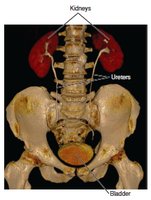
The urinary system is essential for removing waste products from the body, regulating fluid and electrolyte balance, and maintaining homeostasis. It consists of the kidneys, ureters, bladder, and urethra, each with specialized functions in the production, storage, and elimination of urine.
Kidneys: Filter blood to remove waste and maintain fluid/electrolyte balance.
Ureters: Transport urine from the kidneys to the bladder.
Bladder: Stores urine until excretion.
Urethra: Conducts urine from the bladder to the outside of the body.
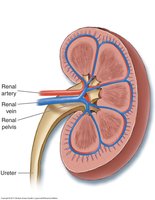
Anatomy and Physiology
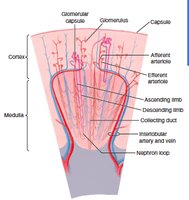
Kidney Structure and Nephron Function
The kidneys are bean-shaped organs that filter blood and produce urine. Each kidney contains about one million nephrons, the functional units responsible for filtration and reabsorption.
Renal cortex: Outer region of the kidney.
Renal medulla: Inner region containing renal pyramids.
Renal pelvis: Funnel-shaped structure collecting urine before it enters the ureter.
Nephron: Microscopic unit consisting of a glomerulus, Bowman's capsule, proximal and distal convoluted tubules, nephron loop (loop of Henle), and collecting duct.
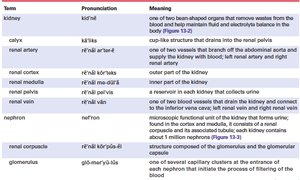
Major Terms and Definitions
Term | Pronunciation | Meaning |
|---|---|---|
Kidney | kid'ne | One of two bean-shaped organs that remove wastes from the blood and help maintain fluid and electrolyte balance in the body. |
Renal artery | re'nal ar'ter-e | Blood vessel that branches off the abdominal aorta and supplies the kidney with blood. |
Renal vein | re'nal van | Blood vessel that carries filtered blood away from the kidney. |
Nephron | nef'ron | Functional and structural unit of the kidney that forms urine. |
Glomerulus | glo-mer'u-lus | Cluster of capillaries in the nephron where filtration of blood begins. |
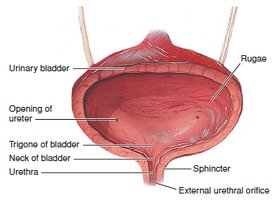
Urinary Bladder Structure
The urinary bladder is a muscular sac that stores urine until it is expelled from the body. It contains specialized regions such as the trigone and is lined with rugae to allow expansion.
Word Parts and Medical Terminology
Combining Forms
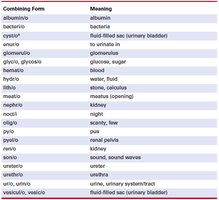
Combining forms are used to construct medical terms related to the urinary system. Understanding these helps in deciphering complex terminology.
Combining Form | Meaning |
|---|---|
albumin/o | albumin |
bacteri/o | bacteria |
cyst/o, vesic/o | fluid-filled sac (urinary bladder) |
glomerul/o | glomerulus |
nephr/o, ren/o | kidney |
pyel/o | renal pelvis |
ur/o, urin/o | urine, urinary system/tract |
Prefixes and Suffixes
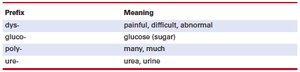
Prefixes and suffixes modify the meaning of root words in medical terms.
Prefix | Meaning |
|---|---|
dys- | painful, difficult, abnormal |
gluco- | glucose (sugar) |
poly- | many, much |
ur/o- | urea, urine |
Suffix | Meaning |
|---|---|
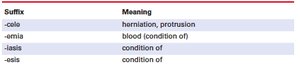
-cele | hernia, protrusion |
-emia | blood (condition of) |
-iasis, -osis | condition of |
-lith | stone, calculus |
-lysis | destruction, breakdown, separation |
-ptosis | prolapse, drooping, sagging |
-scopy | viewing or examining with an instrument |
-stomy | surgical opening |
-tripsy | crushing |
-uria | urine, urination |
Adjectives and Related Terms
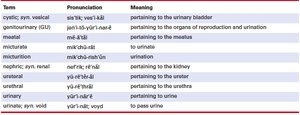
Adjectives and related terms describe the location, function, or condition of urinary system structures.
Term | Pronunciation | Meaning |
|---|---|---|
cystic, vesical | sis'tik, ves'i-kal | Pertaining to the urinary bladder |
nephric, renal | nef'rik, re'nal | Pertaining to the kidney |
ureteral | yu-re'ter-al | Pertaining to the ureter |
urethral | yu-re'thral | Pertaining to the urethra |
urinary | yu'ri-nar'e | Pertaining to urine |
Medical Conditions
Common Diseases and Disorders
The urinary system can be affected by a variety of diseases and disorders, including infections, obstructions, and congenital abnormalities.
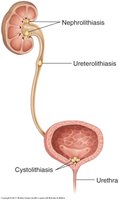
Cystitis: Inflammation of the bladder.
Nephrolithiasis: Presence of kidney stones.
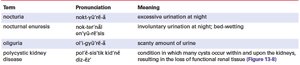
Polycystic kidney disease: Condition in which many cysts occur within and upon the kidneys, resulting in loss of functional renal tissue.
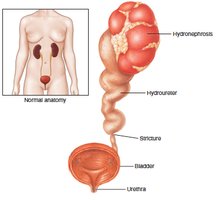
Hydronephrosis: Dilation of the renal pelvis and calyces due to obstruction of urine flow.
Diagnostic Tests and Procedures
Laboratory Tests
Laboratory tests are essential for diagnosing and monitoring urinary system disorders.
Test | Meaning |
|---|---|
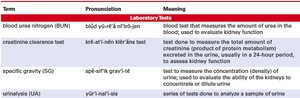
Blood urea nitrogen (BUN) | Measures the amount of urea in the blood; used to evaluate kidney function. |
Creatinine clearance test | Measures the total amount of creatinine excreted in the urine to assess kidney function. |
Specific gravity (SG) | Measures the concentration of solutes in urine. |
Urinalysis (UA) | Series of tests to analyze a sample of urine. |
Imaging and Diagnostic Procedures
Imaging techniques and diagnostic procedures help visualize the urinary tract and identify abnormalities.
Procedure | Meaning |
|---|---|
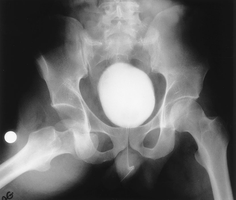
Cystogram | Radiographic image of the bladder filled with contrast dye. |
Intravenous pyelogram (IVP) | X-ray or CT scan of the kidneys, ureters, and bladder after injection of contrast dye. |
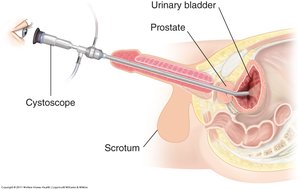
Cystoscopy | Examination of the bladder using a cystoscope. |
Surgical Interventions and Therapeutic Procedures
Common Procedures
Surgical and therapeutic procedures are used to treat urinary system diseases, remove obstructions, or replace kidney function.
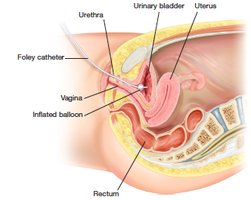
Catheterization: Insertion of a tube through the urethra into the bladder to drain urine.
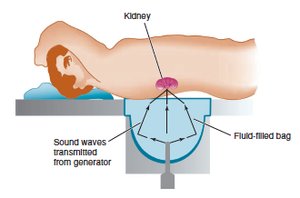
Extracorporeal shock wave lithotripsy (ESWL): Non-invasive procedure to break up kidney stones using focused ultrasound energy.
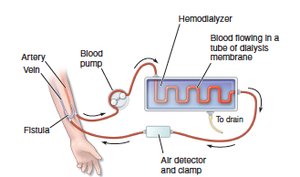
Hemodialysis: Removal of wastes from the blood by pumping it through a machine that acts as an artificial kidney.
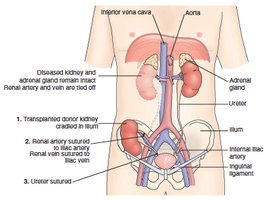
Kidney transplant: Surgical placement of a donor kidney into a recipient.
Summary
The urinary system is vital for waste elimination, fluid and electrolyte balance, and blood pressure regulation. Understanding its anatomy, physiology, and associated medical terminology is essential for recognizing and treating urinary system disorders.
