 Back
The Working Cell: Membrane Structure, Transport, and Cellular Energetics
Study Guide - Smart Notes
 Tailored notes based on your materials, expanded with key definitions, examples, and context.
The Working Cell
Structure and Function of Biological Membranes
Biological membranes are essential for maintaining cellular integrity and regulating interactions with the environment. The plasma membrane, common to all cells, and internal membranes in eukaryotic cells, provide compartmentalization and control over cellular processes.
Membrane Functions: Separate the cell from the environment, give structure to organelles, control entry and exit of substances, facilitate cell-cell and cell-pathogen interactions, enable hormonal signaling, and compartmentalize chemical reactions.
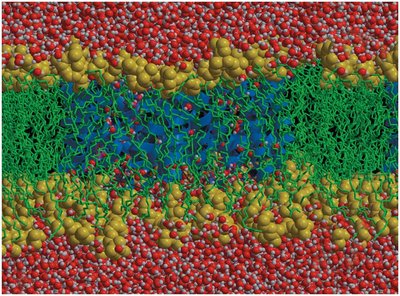
Phospholipid Bilayer: The fundamental structure of membranes, consisting of hydrophilic heads and hydrophobic tails.
Fluid Mosaic Model: Describes the membrane as a dynamic lipid bilayer with embedded proteins.
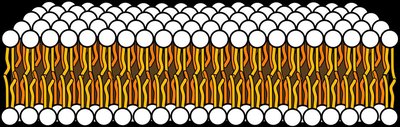
Example: The plasma membrane regulates nutrient uptake and waste removal in all cells.
Diffusion: Physical Process and Biological Relevance
Diffusion is the passive movement of molecules from areas of high concentration to low concentration, driven by kinetic energy and Brownian motion. It is fundamental to many cellular processes.
Concentration Gradient: The difference in concentration across a space.
Equilibrium: Achieved when molecules are evenly distributed.
Temperature Dependence: Higher temperatures increase diffusion rates.
Independent Diffusion: Different solutes diffuse independently.
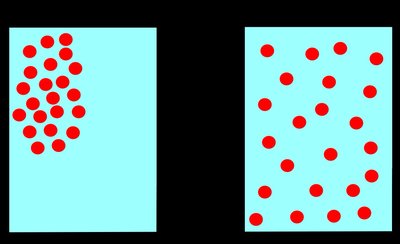
Example: Oxygen diffuses from the lungs into the bloodstream.
Diffusion Across Biological Membranes
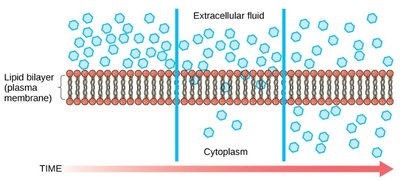
Diffusion across membranes is critical for cellular homeostasis. Lipid-soluble molecules can diffuse directly, while others require protein channels.
Simple Diffusion: Lipid-soluble molecules move down their concentration gradient without protein assistance.
Facilitated Diffusion: Hydrophilic molecules require protein channels to cross the membrane.
Osmosis: Movement of Water
Osmosis is the movement of water across a selectively permeable membrane from an area of lower solute concentration (higher water potential) to higher solute concentration (lower water potential).
Tonicity: Refers to the total solute concentration in a solution.
Water Potential: The tendency of water to move from one area to another.
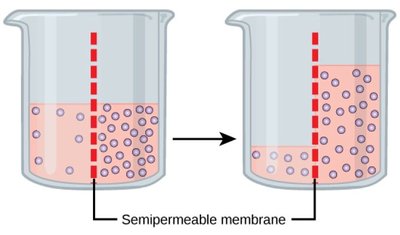
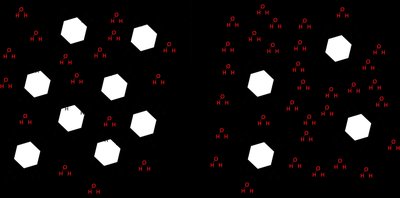
Example: Water moves into plant roots by osmosis.
Osmosis in Cells: Effects on Red Blood Cells and Plant Cells
The effect of osmosis depends on the tonicity of the surrounding solution. Cells may swell, shrink, or remain unchanged depending on whether the solution is hypotonic, hypertonic, or isotonic.
Hypertonic: Cells lose water and shrink.
Isotonic: No net movement of water; cells retain their shape.
Hypotonic: Cells gain water and may swell or burst.
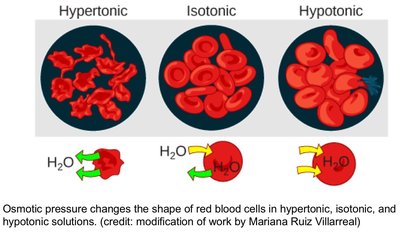
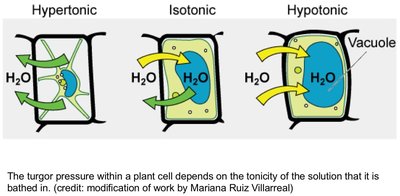
Example: Red blood cells burst in pure water (hemolysis); plant cells become turgid.
Biological Transport Mechanisms
Cells use various transport mechanisms to move substances across membranes, including simple diffusion, facilitated diffusion, active transport, and bulk transport (exocytosis/endocytosis).
Simple Diffusion: Passive, protein-independent, for lipid-soluble molecules.
Facilitated Diffusion: Passive, protein-mediated, for hydrophilic molecules.
Active Transport: Protein-mediated, requires energy (often ATP), moves substances against their concentration gradient.
Bulk Transport: Exocytosis (secretion) and endocytosis (uptake).
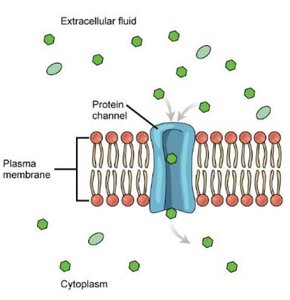
Aquaporins: Facilitated Diffusion of Water
Aquaporins are specialized protein channels that greatly increase the rate of water transport across membranes, especially in cells where rapid water movement is necessary.
Regulation: Cells can regulate water permeability by controlling aquaporin expression.
Examples: High permeability in red blood cells; regulated permeability in kidney collecting ducts.
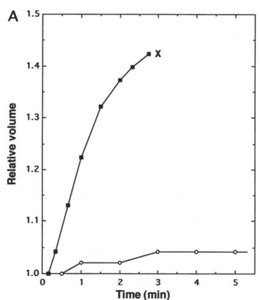
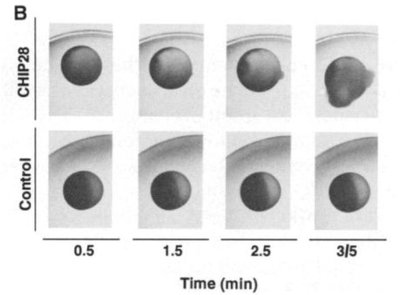
Osmosis in Red Blood Cells and Frog Oocytes
Red blood cells placed in pure water swell and burst due to osmosis, while frog oocytes do not burst because of their protective vitelline envelope.
Hemolysis: Red blood cells lack a rigid cell wall, so water influx causes them to burst.
Vitelline Envelope: Frog oocytes have a tough glycoprotein matrix that limits water entry and prevents bursting.


Additional info: Plant cells also resist bursting due to their rigid cell wall, becoming turgid instead.
Cellular Energetics and Enzymes
Energy and Thermodynamics in Biology
Energy is the capacity to do work or cause change. Biological systems obey the laws of thermodynamics, which govern energy transformations.
First Law: Energy cannot be created or destroyed, only transformed.
Second Law: Every energy transformation increases entropy (disorder) in the universe; some energy is lost as heat.
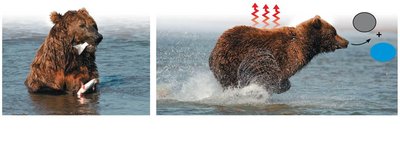
Example: Cells use chemical energy from food, releasing heat and increasing entropy.
Free Energy and Spontaneity of Reactions
Free energy (Gibbs free energy, G) determines whether a reaction is spontaneous. The change in free energy () is calculated as:
Equation:
Spontaneous Reaction: (energy released)
Non-spontaneous Reaction: (energy absorbed)
Additional info: Living organisms maintain order by expending energy, increasing entropy in their surroundings.
Types of Energy and Cellular Work
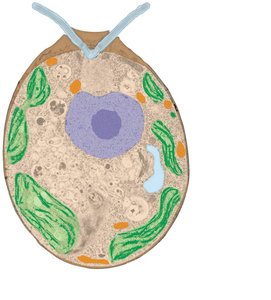
Cells use kinetic, potential, and chemical energy to perform work such as movement, biosynthesis, and maintaining ion gradients.
Kinetic Energy: Energy of motion.
Potential Energy: Stored energy, e.g., in chemical bonds or ion gradients.
Chemical Energy: Energy stored in molecules like ATP.
Chemical Reactions: Exergonic and Endergonic
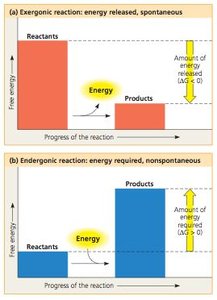
Chemical reactions either release (exergonic) or store (endergonic) energy. Exergonic reactions are spontaneous, while endergonic reactions require energy input.
Exergonic: ; products have lower free energy than reactants.
Endergonic: ; products have higher free energy than reactants.
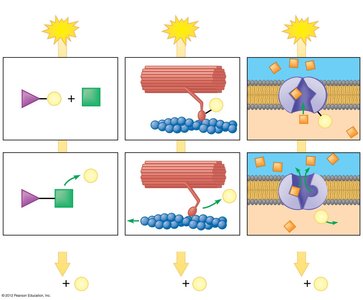
Reaction Coupling: Endergonic reactions are driven by coupling to exergonic reactions, often ATP hydrolysis.
ATP: The Energy Currency of the Cell
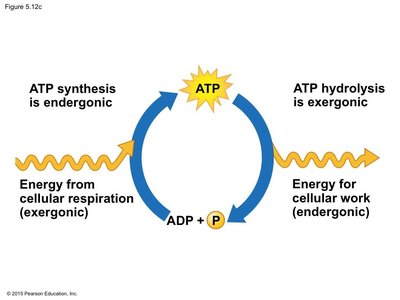
ATP (adenosine triphosphate) stores and transfers energy for cellular work. Hydrolysis of ATP releases energy for chemical, mechanical, and transport work.
ATP Cycle: ATP is regenerated from ADP and phosphate using energy from cellular respiration.
Phosphorylation: Transfer of a phosphate group to a molecule, making it more reactive.
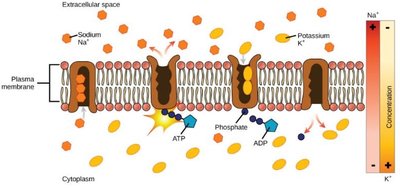
Active Transport: Na+/K+ ATPase
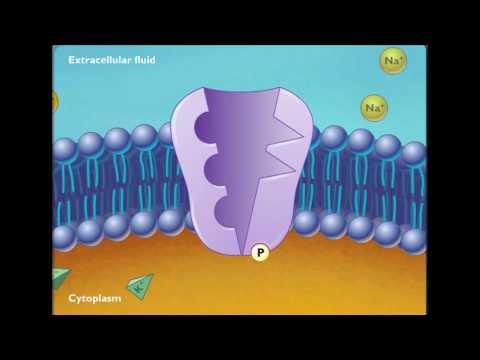
The Na+/K+ ATPase uses ATP to pump sodium out of the cell and potassium into the cell, maintaining essential ion gradients.
Mechanism: 3 Na+ out, 2 K+ in per ATP hydrolyzed.
Importance: Maintains membrane potential and cellular homeostasis.
Secondary Active Transport
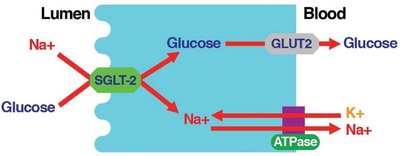
Cells use ion gradients (potential energy) to drive the transport of other molecules against their concentration gradients, such as glucose and iodide.
Examples: Na+/glucose cotransporter in the gut and kidney; Na+/iodide cotransporter in the thyroid.
Mechanism: Relies on the Na+ gradient established by ATPase.
Thermodynamics vs. Kinetics
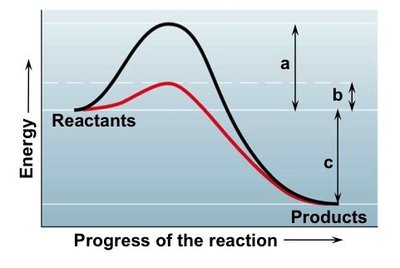
Thermodynamics determines if a reaction is energetically favorable, while kinetics determines the rate of the reaction. Catalysts, such as enzymes, speed up reactions by lowering activation energy without affecting free energy.
Enzymes: Biological catalysts, usually proteins, that increase reaction rates.
Activation Energy: The energy barrier that must be overcome for a reaction to proceed.
Properties and Regulation of Enzymes
Enzymes are highly specific, have active sites, and can be regulated by activators and inhibitors. Many drugs act by inhibiting enzymes or transporters.
Induced Fit Model: Enzyme changes shape to fit the substrate.
Enzyme Cycling: Enzymes are not consumed and can catalyze multiple reactions.
Regulation: Enzymes can be turned on or off for metabolic control.
Example: Aspirin inhibits cyclooxygenase; statins inhibit HMG-CoA reductase.
Cellular Respiration and Fermentation
Overview of Cellular Respiration
Cellular respiration is the process by which cells harvest chemical energy from glucose, producing ATP, CO2, and H2O. It consists of glycolysis, pyruvate oxidation, the citric acid cycle, and oxidative phosphorylation.
Net Equation:
ATP Yield: 32 ATP per glucose molecule.
Fermentation: Metabolism Without Oxygen
Fermentation allows cells to generate ATP in the absence of oxygen by regenerating NAD+ through the reduction of pyruvate.
Lactate Fermentation: Pyruvate is reduced to lactate; occurs in muscle cells and bacteria.
Alcohol Fermentation: Pyruvate is reduced to ethanol and CO2; occurs in yeast.
Regeneration of NAD+: Essential for continued glycolysis.
Photosynthesis and the Carbon Cycle
Photosynthesis: Using Light to Make Food
Photosynthesis is the process by which autotrophs convert CO2 and water into glucose and O2 using the energy of sunlight. It is essential for life on Earth.
Autotrophs: Producers that make their own food (plants, algae, cyanobacteria).
Heterotrophs: Consumers that depend on autotrophs for energy and raw materials.
Leaf Anatomy and Chloroplast Structure
The leaf is the main photosynthetic tissue, containing mesophyll cells and chloroplasts with inner/outer membranes, stroma, and thylakoids.
Functional Compartments: Thylakoid space, thylakoid membrane, stroma.
Photosynthetic Pigments and Light Reactions
Chlorophylls and carotenoids absorb light energy, which is used in the light reactions to produce ATP and NADPH.
Adaptations to Hot, Dry Climates
Plants adapted to hot, dry environments use C4 or CAM photosynthesis to minimize water loss and photorespiration.
C3 Photosynthesis: Regular pathway; common in many plants.
C4 Photosynthesis: Carbon fixation and Calvin cycle occur in separate cells.
CAM Photosynthesis: Carbon fixation occurs at night; Calvin cycle during the day.
Global Significance of Photosynthesis and the Carbon Cycle
Photosynthesis sustains life by providing food, organic material, and oxygen. The carbon cycle describes the movement of carbon between the atmosphere, organisms, and the environment.
Greenhouse Effect: Atmospheric CO2 and other gases trap heat, contributing to global warming.
Human Impact: Fossil fuel combustion increases atmospheric CO2, raising global temperatures.
Additional info: Policy changes and individual actions can help mitigate global warming.
