 Back
BackUnit 1 (1,34,36,37)
Study Guide - Smart Notes
 Tailored notes based on your materials, expanded with key definitions, examples, and context.
Themes in Biology
Major Themes in Modern Biology
Biology is unified by several key themes that guide our understanding of life and its processes. These themes are foundational for undergraduate biology education and are recognized in the AAAS Vision and Change guidelines.
Evolution: The process by which populations of organisms change over generations, leading to the diversity and unity of life.
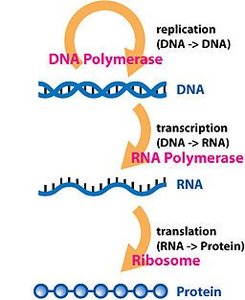
Flow of Information: Genetic information is stored in DNA and transferred from generation to generation, and from DNA to proteins within cells.
Structure and Function: Biological structures are adapted to their functions, and similar molecules can be used for different purposes in different organisms.
Transfer and Transformation of Matter and Energy: Life depends on the cycling of matter and the flow of energy through ecosystems.
Interactions within and between Biological Systems: Organisms interact with each other and their environment, forming complex systems at multiple levels.
Structure and Function
Adaptation of Biological Structures
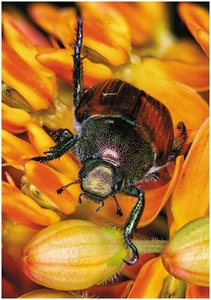
The relationship between structure and function is a central theme in biology. Similar molecules can be adapted for different functions in various organisms. For example, the insect exoskeleton and plant cellulose are both made of similar molecules but serve distinct purposes.
Exoskeleton: Provides protection and support for insects.
Cellulose: Forms the structural component of plant cell walls.
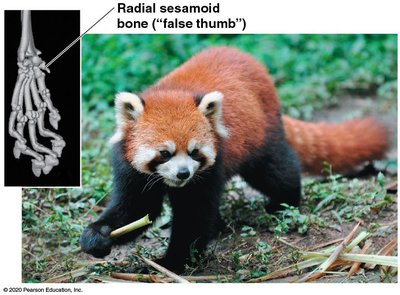
Forelimb Adaptations: The forelimb bones of certain animals, such as the red panda, are adapted for grasping.
Transfer and Transformation of Matter and Energy
Energy Flow and Chemical Cycling in Ecosystems
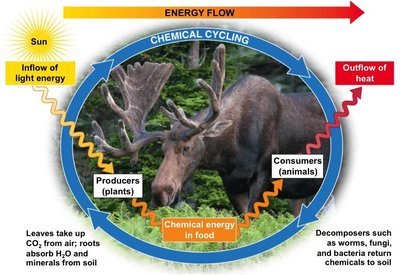
Life depends on the transfer and transformation of matter and energy. Energy flows from the sun to producers (plants), then to consumers (animals), and is eventually lost as heat. Matter cycles through ecosystems via processes such as photosynthesis, consumption, and decomposition.
Producers: Plants convert solar energy into chemical energy through photosynthesis.
Consumers: Animals obtain energy by eating plants or other animals.
Decomposers: Organisms such as fungi and bacteria break down dead material, returning nutrients to the soil.
Interactions Within and Between Systems
Biological Systems and Their Interactions
Biological systems exist at multiple levels, from molecules within a cell to organ systems within an organism, and from individual organisms to entire communities. Interactions within and between these systems are essential for life.
Cellular Systems: All molecules within a cell interact to maintain cellular function.
Organ Systems: Multiple organs work together to sustain an organism.
Ecological Systems: Organisms interact within communities, forming ecosystems.
Evolution and the Modern Synthesis
Evolution by Natural Selection
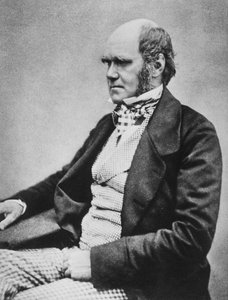
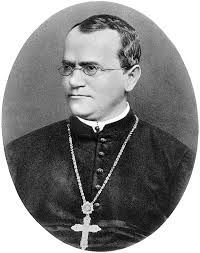
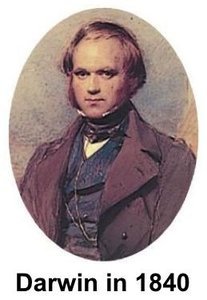
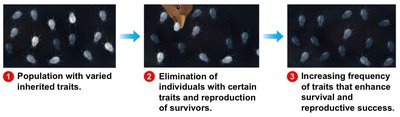
Evolution is a fundamental concept in biology, explaining both the diversity and unity of life. The modern synthesis integrates Darwin's theory of natural selection with Mendel's laws of heredity, defining evolution as a change in the genetic makeup of a population over time.
Charles Darwin: Proposed evolution by natural selection, explaining how heritable variation and environmental pressures lead to adaptation.
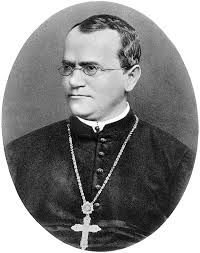
Gregor Mendel: Discovered the principles of heredity, including the law of segregation and the law of independent assortment.
Modern Synthesis: Combines genetics and evolutionary biology, emphasizing changes in allele frequencies within populations.
Genetics and the Structure of DNA
The Double Helix and the Flow of Genetic Information
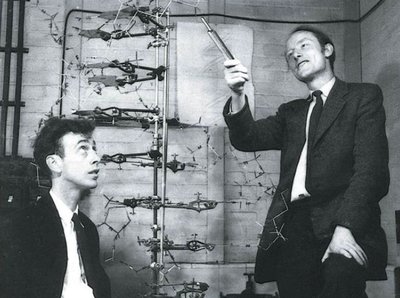
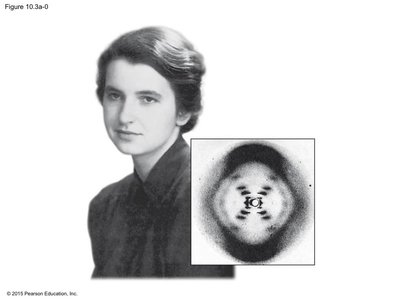
The discovery of the structure of DNA by Watson and Crick, based on data from Rosalind Franklin, revealed the mechanism for the generation-to-generation flow of genetic information. DNA replication, transcription, and translation are central to the flow of information in biology.
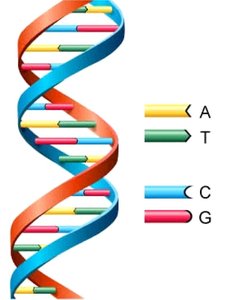
DNA Structure: Double helix composed of nucleotide pairs (A-T, C-G).
Replication: DNA is copied for cell division.
Transcription: DNA is transcribed into RNA.
Translation: RNA is translated into proteins, which carry out cellular functions.
Introduction to Biology
What is Life?
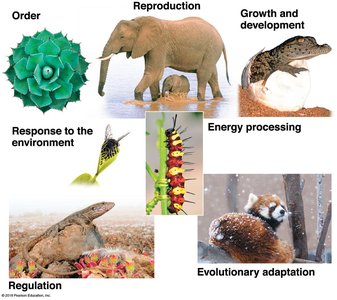
Life is difficult to define due to its diversity, but scientists have identified several characteristics common to all known life forms.
Reproduction
Growth and Development
Order (Pattern or Body Plan)
Evolutionary Adaptation
Energy Utilization
Regulation
Response to Environment
Cells and DNA
The Hierarchy of Life and Emergent Properties
Biological Organization and Emergent Properties
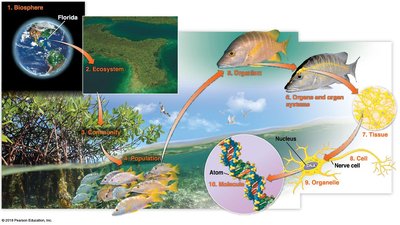
Life is organized into a hierarchy, from molecules to the biosphere. Emergent properties arise at each level due to increased structural complexity.
Emergent Property: A new feature or function that arises from the arrangement and interaction of parts within a system.
Example: Sodium and chlorine are dangerous alone, but together form table salt (NaCl).
Cell: The basic unit of life; life emerges at the cellular level.
The Cell: Prokaryotes vs. Eukaryotes
Cellular Complexity and Classification
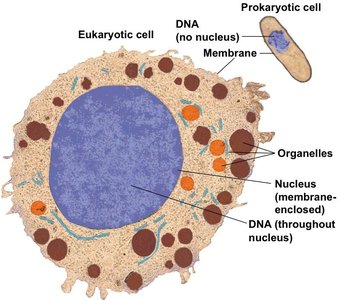
Cells are the fundamental units of life and are used to classify organisms. There are two main types: prokaryotic and eukaryotic cells.
Eukaryotes: Complex cells with a nucleus and organelles; can be unicellular or multicellular.
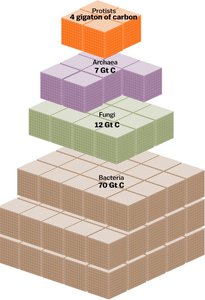
Prokaryotes: Simple, unicellular organisms without a nucleus; include bacteria and archaea.
The Three Domains of Life
Bacteria, Archaea, and Eukarya
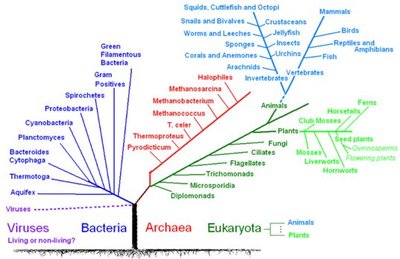
Life is classified into three domains based on cellular structure and genetic differences.
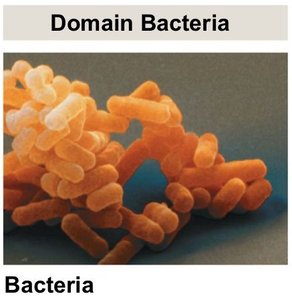
Bacteria: Prokaryotic, diverse, and abundant.
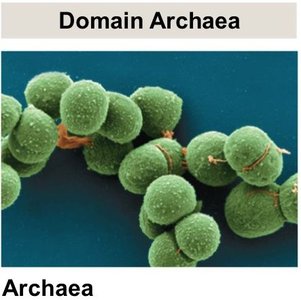
Archaea: Prokaryotic, often found in extreme environments.
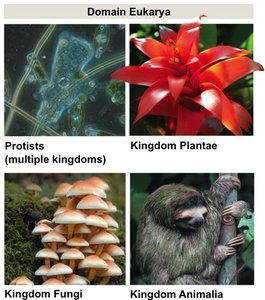
Eukarya: Eukaryotic, includes protists, plants, fungi, and animals.
Ecology and the Biosphere
Biological Hierarchy and Environmental Interactions
Ecology is the study of interactions among organisms and between organisms and their environment. The biosphere encompasses all ecosystems and living organisms on Earth.
Biological Hierarchy: Organism, population, community, ecosystem, landscape, biosphere.
Biotic Factors: Living components such as plants and animals.
Abiotic Factors: Non-living components such as soil, water, temperature, and energy.
Physical and Chemical Factors Influencing Life
Abiotic Factors and Adaptation
Physical and chemical factors such as energy, temperature, water, and nutrients influence the distribution and adaptation of living organisms.
Energy: Sunlight powers most ecosystems; exceptions exist (e.g., deep-sea tube worms).
Temperature: Most life exists between 0 and 45℃; some bacteria and archaea are exceptions.
Inorganic Nutrients: Elements like nitrogen and phosphorus are essential for plant growth.
Other Factors: Oxygen, salinity, current, tides, water, wind, and fire.
Adaptation: Organisms are adapted to their abiotic and biotic environments through natural selection.
Terrestrial and Aquatic Biomes
Major Biomes and Their Characteristics
Biomes are large ecological areas with distinct climate, vegetation, and animal life. Terrestrial biomes are named for their plant life, while aquatic biomes are defined by water characteristics.
Tropical Rainforest: Warm, high precipitation, diverse life.
Savanna: Warm, seasonal precipitation, grasses and scattered trees.
Desert: Low precipitation, variable temperatures.
Chaparral: Evergreen shrubs, adapted to fire.
Temperate Grasslands: Cold winters, converted to farmland.
Temperate Forests: Deciduous trees, seasonal temperatures.
Coniferous Forests/Taiga: Evergreen trees, cold winters.
Tundra: Permafrost, treeless.
Polar Ice: Extreme cold, little precipitation.
Intertidal Zone: Transition between land and water, variable conditions.
Wetlands: Transition between aquatic and terrestrial ecosystems.
Estuary: Where freshwater merges with ocean, highly productive.
Population Ecology
Population Structure and Dynamics
Population ecology studies how and why populations change over time, focusing on population size, density, dispersion, and factors affecting growth.
Population: Group of individuals of a single species in a given area.
Population Growth: (growth = births - deaths), (growth rate = per capita rate × population size).
Limiting Factors: Environmental factors restrict population growth, leading to logistic growth: , where K is carrying capacity.
Density-Dependent Factors: Competition for resources, nesting sites.
Density-Independent Factors: Weather, natural disasters.
Human Population: Continues to increase, but growth rate is slowing; demographic transition affects population structure.
Survivorship Curve Type | Description | Examples |
|---|---|---|
Type I | Survival decreases with age | Large mammals |
Type II | Survival is constant throughout life | Small mammals |
Type III | Survival increases with age | Sea turtles, fishes, invertebrates |
Age Structure: Number of individuals in different age groups affects future population growth. Population momentum means effects of birth rate changes are delayed.
Additional info: Academic context was added to clarify the relationship between structure and function, the flow of genetic information, and the ecological hierarchy. Equations were formatted in LaTeX as required.
