 Back
Themes in Biology & The Scientific Method: Foundational Concepts for General Biology
Study Guide - Smart Notes
 Tailored notes based on your materials, expanded with key definitions, examples, and context.
Themes in Biology
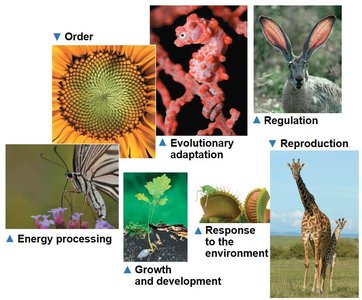
Properties of Life
Biology is the scientific study of life, and living organisms are recognized by a set of distinct properties. These properties define what it means to be alive and are shared across all forms of life.
Order: Living things exhibit complex but ordered organization, from cellular structures to whole organisms.
Regulation: Organisms maintain stable internal conditions (homeostasis) despite external changes.
Energy Processing: All life requires energy, which is obtained and transformed through processes like photosynthesis and cellular respiration.
Growth and Development: Organisms grow and develop according to instructions encoded in their DNA.
Evolutionary Adaptation: Populations evolve over generations through natural selection, adapting to their environments.
Response to the Environment: Living things respond to environmental stimuli.
Reproduction: Organisms reproduce, passing genetic information to offspring.
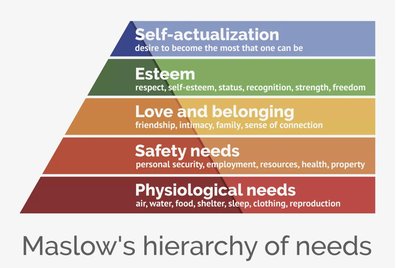
Maslow’s Hierarchy of Needs
Maslow’s hierarchy of needs is a psychological model describing human motivation, from basic physiological requirements to self-actualization. While not a biological property, it illustrates how biological needs (such as food, water, and reproduction) form the foundation for higher-level behaviors.
Physiological needs: Air, water, food, shelter, sleep, clothing, reproduction
Safety needs: Security, employment, resources, health, property
Love and belonging: Friendship, intimacy, family, sense of connection
Esteem: Respect, self-esteem, status, recognition, strength, freedom
Self-actualization: Desire to become the most that one can be
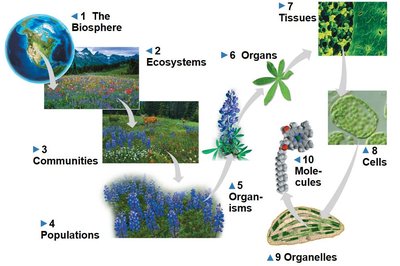
Levels of Biological Organization
Hierarchical Structure of Life
Biological organization is structured in a hierarchy, from the smallest molecular components to the entire biosphere. Each level builds upon the previous, demonstrating increasing complexity.
The Biosphere: All life on Earth and the environments they inhabit
Ecosystems: Communities of organisms interacting with their physical environment
Communities: Different populations living together in a defined area
Populations: Groups of individuals of the same species
Organisms: Individual living entities
Organs and Organ Systems: Structures with specific functions within organisms
Tissues: Groups of cells working together
Cells: Basic unit of life
Organelles: Functional components within cells
Molecules: Chemical structures consisting of two or more atoms
Structure and Function
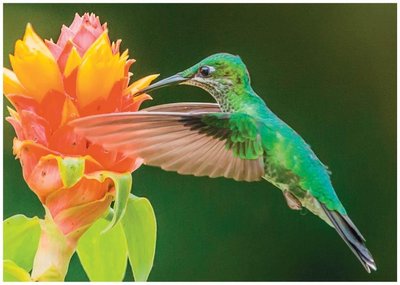
At every level of biological organization, there is a correlation between structure and function. Understanding the structure of a biological entity provides insight into its function, and vice versa.
Example: The shape of a bird’s beak is adapted to its feeding habits.
The Cell: Basic Unit of Life
Cell Structure and Function
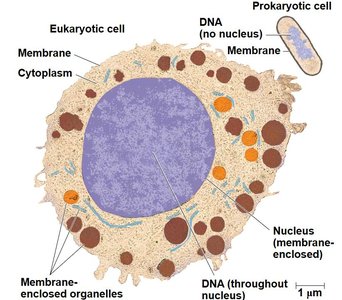
The cell is the smallest unit capable of performing all activities required for life. Cells are enclosed by membranes that regulate the passage of materials.
Eukaryotic cells: Have membrane-enclosed organelles, including a nucleus.
Prokaryotic cells: Lack a nucleus and membrane-enclosed organelles; generally smaller and simpler.
Cell Division
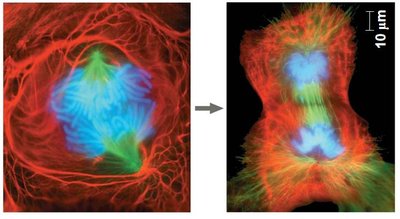
Cells divide to produce new cells, enabling growth, development, and reproduction. This process is fundamental to life.
Genetic Information and Genomics
DNA and Chromosomes
Within cells, chromosomes contain genetic material in the form of DNA. Genes are units of inheritance that encode information for building molecules within the cell.
DNA: Deoxyribonucleic acid, the universal genetic material
Genes: Segments of DNA that code for proteins
Genomics and Proteomics
Genomics is the study of entire sets of genes, while proteomics focuses on the complete set of proteins expressed by a cell, tissue, or organism.
Genome: The complete set of genetic instructions
Proteome: The entire set of proteins expressed
Bioinformatics: Computational tools for analyzing large volumes of biological data
Energy and Matter in Biological Systems
Energy Flow and Chemical Cycling
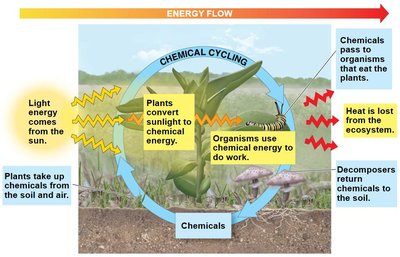
Life depends on the transfer and transformation of energy and matter. Energy from the sun is captured by producers and passed to consumers, while matter cycles through ecosystems.
Producers: Organisms (like plants) that convert sunlight to chemical energy
Consumers: Organisms that feed on other organisms
Decomposers: Organisms that return chemicals to the environment
Interactions in Ecosystems
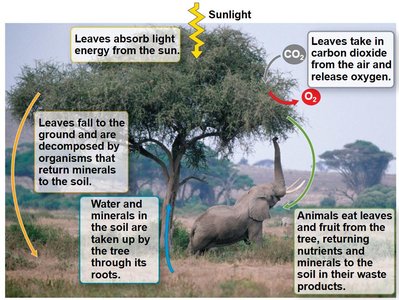
Organisms interact with each other and their physical environment, affecting nutrient cycles and energy flow. Human activities have significant impacts, such as climate change and habitat alteration.
Example: Trees absorb sunlight and carbon dioxide, animals eat leaves and return nutrients to the soil.
Classification and Diversity of Life
Species Naming and Classification
Biologists classify life using a hierarchical system. Each species is given a two-part name: genus and specific epithet (e.g., Homo sapiens).
Genus: Capitalized, indicates the group
Specific epithet: Lowercase, unique to the species
Formatting: Entire name italicized or underlined
The Three Domains of Life
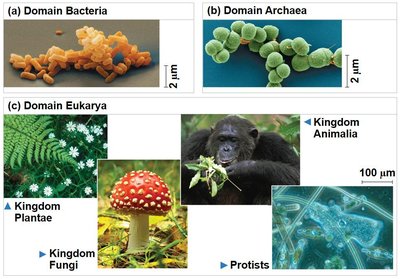
All organisms are classified into three domains: Bacteria, Archaea, and Eukarya. Prokaryotes include Bacteria and Archaea, while Eukarya includes protists, plants, fungi, and animals.
Domain Bacteria: Prokaryotic, diverse
Domain Archaea: Prokaryotic, often found in extreme environments
Domain Eukarya: Eukaryotic, includes four major groups
Unity and Diversity
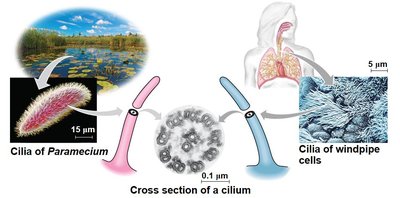
Despite the diversity of life, unity is evident in features such as the universal genetic code and cell structure. For example, cilia are found in both single-celled organisms and human cells.
The Scientific Method
Scientific Inquiry and Hypotheses
Science is a process of inquiry involving observation, hypothesis formation, experimentation, and analysis. Hypotheses must be testable and falsifiable.
Observation: Gathering data about natural phenomena
Hypothesis: Tentative explanation based on observations
Experiment: Controlled test of a hypothesis
Prediction: "If...then" statements based on hypotheses
Variables and Controls
Experiments involve independent, dependent, and standardized variables. Control groups are essential for comparison.
Independent variable: Manipulated factor
Dependent variable: Measured outcome
Standardized variables: Kept constant
Statistical Analysis
Data are analyzed statistically to determine significance. The p-value indicates the probability that results are due to chance.
p-value: If less than 0.05, reject the null hypothesis
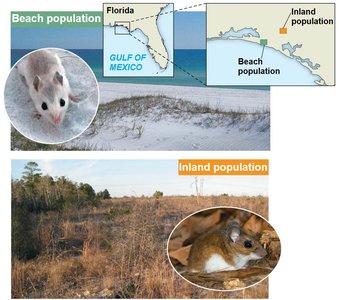
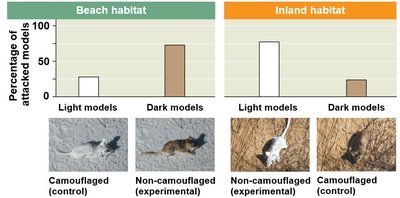
Case Study: Mouse Coloration and Predation
Researchers investigated whether camouflage affects predation rates in mouse populations. Models matching the environment were attacked less frequently, supporting the hypothesis that camouflage reduces predation.
Theories in Science
A scientific theory is broader than a hypothesis, supported by extensive evidence, and can generate new hypotheses.
Example: Theory of evolution by natural selection
Collaboration and Diversity in Science
Science advances through collaboration, repetition, and the inclusion of diverse viewpoints. Reliable studies are characterized by large sample sizes, thorough analysis, and peer review.
Model organisms: Used for research (e.g., Drosophila melanogaster)
Diversity: Enhances scientific progress and innovation
