 Back
Themes in the Study of Life: Introduction to Biology and Cell Theory
Study Guide - Smart Notes
 Tailored notes based on your materials, expanded with key definitions, examples, and context.
Principles of Biology and Levels of Organization
Introduction to Biology
Biology is the scientific study of life, encompassing the structure, function, growth, origin, evolution, and distribution of living organisms. Biologists investigate life from multiple perspectives, asking questions about cellular composition, organization, energy acquisition, communication, gene expression, and reproduction.
Definition: Biology is derived from the Greek words 'bios' (life) and 'logos' (study).
Key Questions: What are cells composed of? How do cells obtain energy? How do cells communicate and reproduce?
Unifying Principles of Life
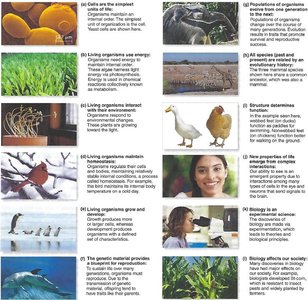
All living organisms share a set of unifying principles that define life and distinguish living things from non-living matter. These principles apply across all fields of biology.
Cells are the simplest units of life. All organisms are composed of one or more cells, which are the basic units of structure and function.
Living organisms use energy. Organisms acquire energy from their environment and use it to maintain internal order and carry out life processes.
Living organisms interact with their environment. Organisms respond to environmental changes and stimuli to survive and reproduce.
Living organisms maintain homeostasis. Homeostasis is the regulation of internal conditions to maintain a stable state despite external changes.
Living organisms grow and develop. Growth results in an increase in size and mass, while development involves changes in the organism's structure and function over time.
Genetic material provides a blueprint for reproduction. DNA contains the instructions for the structure, function, and regulation of an organism's cells and is passed from one generation to the next.
Populations of organisms evolve from one generation to the next. Evolution is the process by which populations change over time through genetic variation and natural selection.
All species (past and present) are related by evolutionary history. The unity and diversity of life are explained by descent from common ancestors and evolutionary processes.
Levels of Biological Organization
Biological systems are organized into a hierarchy of structural levels, each building on the levels below it. This organization allows for the emergence of new properties at each level.
Molecule → Organelle → Cell → Tissue → Organ → Organ System → Organism → Population → Community → Ecosystem → Biosphere
Unity and Diversity of Life
Cell Theory
The cell theory is a fundamental concept in biology, stating that all living things are composed of cells, the cell is the basic unit of life, and all cells arise from preexisting cells.
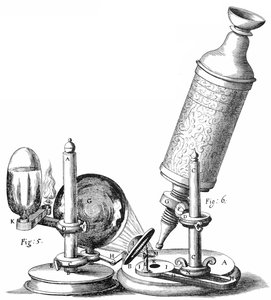
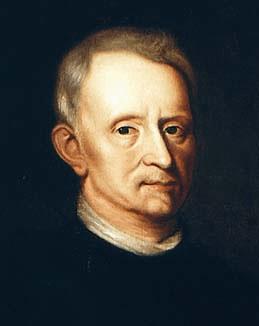
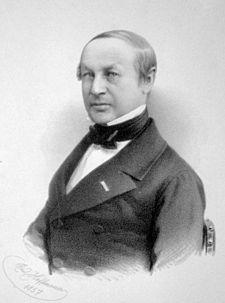
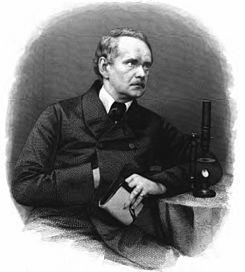
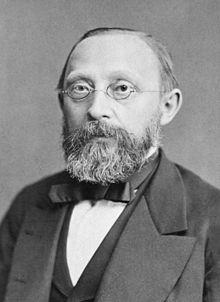
Historical Figures: Robert Hooke, Antoni van Leeuwenhoek, Matthias Schleiden, Theodor Schwann, Rudolf Virchow.
Three Tenets of Cell Theory:
All organisms are composed of one or more cells.
The cell is the structural and functional unit of life.
Cells arise only by division from preexisting cells.

Prokaryotes vs. Eukaryotes
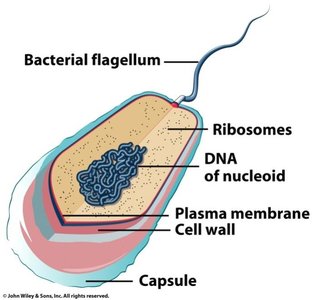
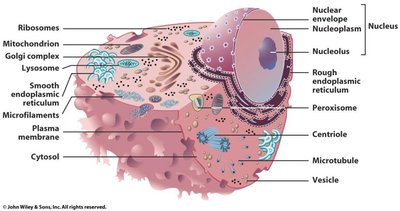
Cells are classified into two basic types based on their structural characteristics: prokaryotic and eukaryotic cells.
Prokaryotes: Lack a membrane-bound nucleus; include Bacteria and Archaea.
Eukaryotes: Possess a membrane-bound nucleus; include Eukarya (plants, animals, fungi, protists).
Phylogenetic Tree of Life
All living organisms can be grouped into three domains: Bacteria, Archaea, and Eukarya. The phylogenetic tree illustrates evolutionary relationships among these domains, supporting the unity and diversity of life.
Unity: All life shares a common ancestor (LUCA: Last Universal Common Ancestor).
Diversity: Evolutionary processes such as mutation, natural selection, and horizontal gene transfer generate diversity among organisms.
Vertical Descent and Horizontal Gene Transfer
Genetic information is passed from parent to offspring through vertical descent, while horizontal gene transfer involves the movement of genetic material between unrelated organisms.
Vertical Descent: Inheritance of genetic material from ancestors; leads to accumulation of mutations and evolution of new species.
Horizontal Gene Transfer (HGT): Transfer of genes between organisms in a manner other than traditional reproduction; common in prokaryotes.
Biology as a Scientific Discipline
The Nature of Science
Science is a systematic approach to understanding the natural world through observation, inquiry, experimentation, and evidence-based reasoning.
Discovery-Based Science: Involves collecting data without a preconceived hypothesis, often leading to hypothesis-driven research.
Hypothesis Testing (Scientific Method):
Observation of natural processes
Proposal of a hypothesis or prediction
Experimental testing of the hypothesis
Evaluation of data
Reject or fail to reject the hypothesis
Hypotheses vs. Theories: Hypotheses are testable explanations; theories are broad explanations supported by extensive evidence.
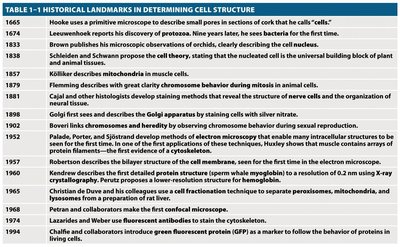
Historical Landmarks in Cell Biology
Major discoveries in cell biology have shaped our understanding of life at the cellular level. The development of microscopy and experimental techniques has been crucial in advancing the field.
Year | Discovery |
|---|---|
1665 | Hooke uses a primitive microscope to describe small pores in cork as "cells". |
1674 | Leeuwenhoek reports discovery of protozoa and later bacteria. |
1833 | Brown observes the cell nucleus. |
1838-1839 | Schleiden and Schwann propose cell theory. |
1855 | Virchow states cells arise from preexisting cells. |
Other years | Further advances in microscopy, cell structure, and molecular biology. |
Summary Table: Prokaryotic vs. Eukaryotic Cells
Feature | Prokaryotic Cell | Eukaryotic Cell |
|---|---|---|
Nucleus | Absent | Present |
Membrane-bound organelles | Absent | Present |
Domains | Bacteria, Archaea | Eukarya |
Size | Generally smaller | Generally larger |
Conclusion
The study of life is unified by core principles that define living organisms and their interactions with the environment. The cell theory, the distinction between prokaryotic and eukaryotic cells, and the scientific method form the foundation of modern biology. Understanding these concepts is essential for further exploration of biological systems and processes.
