 Back
Themes in the Study of Life: Introduction to Biology and Cell Theory
Study Guide - Smart Notes
 Tailored notes based on your materials, expanded with key definitions, examples, and context.
Themes in the Study of Life
Principles of Biology and Levels of Organization
Biology is the scientific study of life, encompassing a wide range of questions about living organisms, their structure, function, and interactions. The discipline is unified by several core principles that apply to all fields of biology and are foundational for understanding life at all levels of organization.
Cells are the simplest units of life: All living organisms are composed of cells, which are the basic structural and functional units. Cells can be unicellular or multicellular, and their organization is fundamental to life.
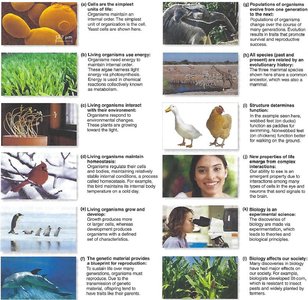
Levels of Biological Organization: Life is organized hierarchically, from molecules and organelles to cells, tissues, organs, organisms, populations, communities, ecosystems, and the biosphere.
Unity and Diversity of Life
Biological diversity is vast, yet all living organisms share certain unifying traits. The unity of life is reflected in the common ancestry and fundamental cellular processes, while diversity arises from evolutionary mechanisms.
Phylogenetic Tree of Life: Life is classified into three domains: Bacteria, Archaea, and Eukarya. Prokaryotes (Bacteria and Archaea) lack a nucleus, while Eukaryotes (Eukarya) possess a membrane-bound nucleus.
Vertical Descent with Mutation: Genetic mutations are passed from parent to offspring, leading to evolutionary change and diversity. Natural selection acts on these mutations, favoring advantageous traits.
Horizontal Gene Transfer: Genetic material can also be transferred between organisms that are not parent and offspring, contributing to genetic diversity.
Biology as a Scientific Discipline
Biology is a science rooted in inquiry, observation, and experimentation. Scientific inquiry involves asking questions, making observations, designing investigations, and proposing explanations based on evidence.
Discovery-Based Science: Involves collecting data without a preconceived hypothesis, often leading to hypothesis testing.
Hypothesis Testing (Scientific Method): The process includes observation, hypothesis formulation, experimental testing, data evaluation, and acceptance or rejection of the hypothesis.
Hypotheses vs. Theories: Hypotheses are tentative explanations tested by experiments; theories are broad explanations supported by extensive evidence.
Cell Theory and the History of Cell Biology
The Three Tenets of Cell Theory
Cell theory is a fundamental concept in biology, stating:
All organisms are composed of one or more cells.
The cell is the structural unit of life.
Cells arise only by division from preexisting cells.
Historical Landmarks in Cell Biology
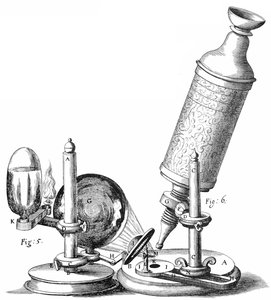
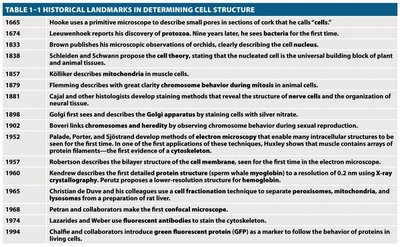
The development of cell theory and cell biology was enabled by advances in microscopy and experimental tools. Key figures include Robert Hooke, Antoni van Leeuwenhoek, Theodor Schwann, Matthias Schleiden, and Rudolf Virchow.
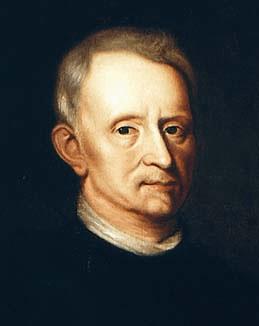
Robert Hooke: Used a primitive microscope to describe cells in cork.
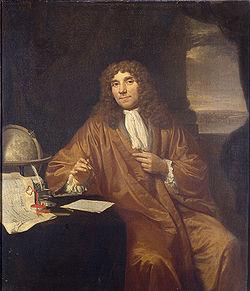
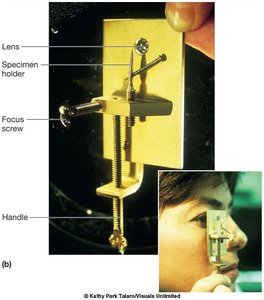
Antoni van Leeuwenhoek: Improved microscopes and observed protozoa and bacteria.
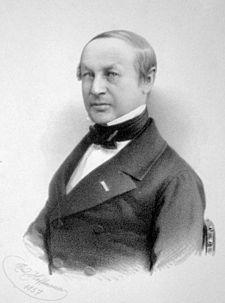
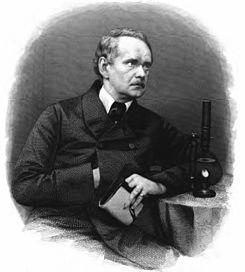
Theodor Schwann and Matthias Schleiden: Formulated cell theory, stating that all living things are composed of cells.
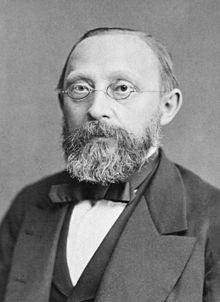
Rudolf Virchow: Proposed that cells arise only from preexisting cells.
Historical Landmarks Table
The following table summarizes key milestones in cell biology:
Year | Milestone |
|---|---|
1665 | Hooke describes cells in cork |
1674 | Leeuwenhoek discovers protozoa and bacteria |
1833 | Brown observes cell nucleus |
1838-1839 | Schleiden and Schwann propose cell theory |
1855 | Virchow states cells arise from preexisting cells |
1952 | Palade and Sjöstrand develop electron microscopy |
1994 | Chalfie et al. introduce GFP as a protein marker |
Additional info: See full table for more milestones. |
Prokaryotes vs. Eukaryotes
Cell Types and Structure
Cells are classified as prokaryotic or eukaryotic based on their internal structure.
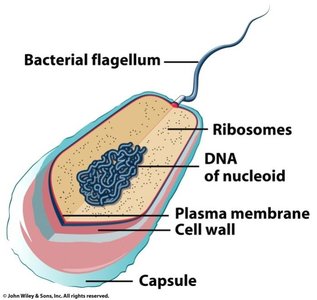
Prokaryotes: Lack a membrane-bound nucleus; include Bacteria and Archaea.
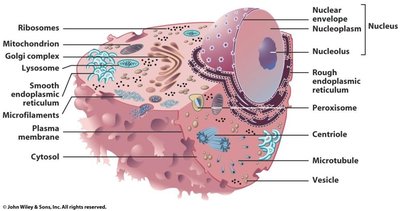
Eukaryotes: Possess a membrane-bound nucleus and complex organelles; include plants, animals, fungi, and protists.
Unifying Principles of Life
Key Principles Defining Life
Eight major principles define life and are central to biological study:
Cells are the simplest units of life.
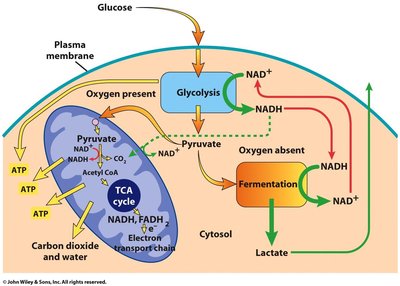
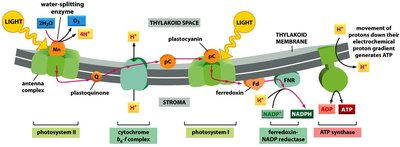
Living organisms use energy. Energy is required for cellular processes, obtained through photosynthesis, respiration, or fermentation.
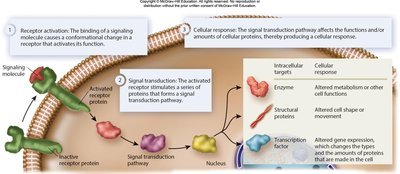
Living organisms interact with the environment. Organisms respond to environmental changes and stimuli.
Living organisms maintain homeostasis. Homeostasis is the regulation of internal conditions to maintain stability.
Living organisms grow and develop. Growth and development are regulated by genetic instructions.
Genetic material is the blueprint for reproduction. DNA encodes genetic information passed to offspring.
Structure determines function. Biological structures are adapted to their functions.
New properties of life emerge from complex interactions. Emergent properties arise from the organization and interaction of components.
Scientific Inquiry in Biology
Discovery-Based Science and Hypothesis Testing
Scientific inquiry in biology involves both discovery-based science and hypothesis-driven experimentation. The scientific method is a systematic approach to understanding natural phenomena.
Observation of natural processes
Proposal of a hypothesis or prediction
Experimental testing of the hypothesis
Evaluation of data
Acceptance or rejection of the hypothesis
Hypotheses are never proven, only supported or refuted. Theories are broad explanations substantiated by extensive evidence.
Summary Table: Principles of Life
Principle | Description |
|---|---|
Cellular Organization | All living things are composed of cells |
Energy Utilization | Organisms require energy for life processes |
Interaction with Environment | Organisms respond to environmental stimuli |
Homeostasis | Maintenance of stable internal conditions |
Growth and Development | Organisms grow and develop according to genetic instructions |
Genetic Information | DNA is the blueprint for reproduction |
Structure and Function | Biological structures are adapted to their functions |
Emergent Properties | Complex interactions produce new properties |
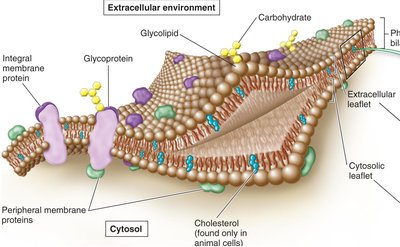
Example: The cell membrane's structure determines its function in regulating transport and communication between the cell and its environment.
Additional info: These principles are foundational for all subsequent chapters in General Biology, including cell structure, metabolism, genetics, evolution, and ecology.
