 Back
Thermodynamics and Enzyme Function in Cellular Metabolism
Study Guide - Smart Notes
 Tailored notes based on your materials, expanded with key definitions, examples, and context.
Thermodynamics in Biological Systems
Free Energy and Spontaneity
Biological reactions are governed by the principles of thermodynamics, particularly the concept of free energy (ΔG). The sign and magnitude of ΔG determine whether a reaction is spontaneous, nonspontaneous, or at equilibrium.
Spontaneous Process: ΔG is negative; the reaction releases energy and occurs without external input.
Nonspontaneous Process: ΔG is positive; the reaction requires energy input to proceed.
Equilibrium Process: ΔG is zero; no net change occurs.
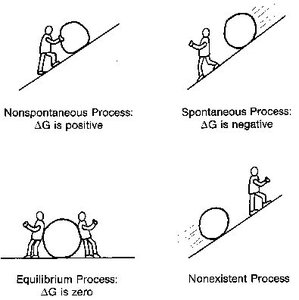
Example: Cellular respiration is a spontaneous process, while photosynthesis is nonspontaneous and requires energy input.
ATP: The Energy Currency of the Cell
Structure and Function of ATP
Adenosine Triphosphate (ATP) is a nucleotide that serves as the primary energy carrier in cells. Its structure consists of three phosphate groups, a ribose sugar, and an adenine base.
Triphosphate group: Contains high-energy bonds that release energy when hydrolyzed.
Ribose sugar: Differentiates ATP from deoxyribonucleotides (DNA building blocks).
Adenine base: A nitrogenous base common to both DNA and RNA.
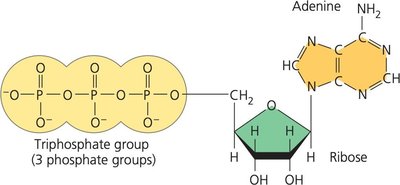
ATP Hydrolysis and Energy Release
ATP hydrolysis is an exergonic reaction that releases energy for cellular work. The reaction is:
ATP + H2O → ADP + Pi + Energy
ΔG = -7.3 kcal/mol (energy released)
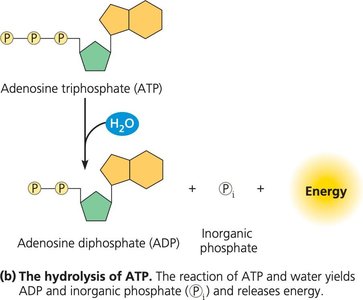
Example: Muscle contraction and active transport use energy from ATP hydrolysis.
The ATP Cycle
Cells continuously regenerate ATP from ADP and inorganic phosphate (Pi) through cellular respiration and catabolic reactions. This cycle is essential for maintaining energy flow in living organisms.
ATP synthesis: Requires energy input (endergonic).
ATP hydrolysis: Releases energy (exergonic).
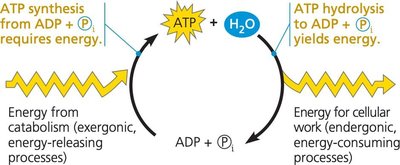
Coupling Reactions: Energy Transfer in Cells
Coupling Endergonic and Exergonic Reactions
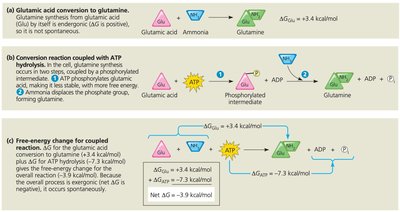
Cells couple endergonic reactions (ΔG > 0) with exergonic reactions (ΔG < 0), such as ATP hydrolysis, to drive processes that would not occur spontaneously.
Example: Synthesis of glutamine from glutamic acid and ammonia is endergonic, but when coupled with ATP hydrolysis, the overall reaction becomes exergonic.
Phosphorylated intermediate: ATP transfers a phosphate group to a substrate, making it less stable and more reactive.
Free Energy Change in Coupled Reactions
The net free energy change for coupled reactions must be negative for the process to proceed spontaneously:
Formula:
Example: Glutamine synthesis coupled with ATP hydrolysis: kcal/mol
Enzymes: Biological Catalysts
Activation Energy and Reaction Rates
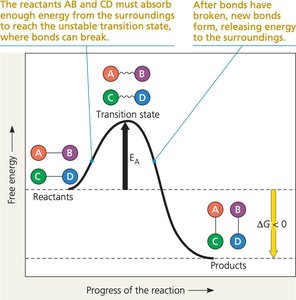
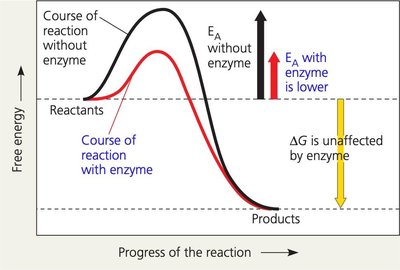
All chemical reactions require an initial input of energy, called activation energy (EA), to break and form bonds. Enzymes lower this barrier, increasing reaction rates without altering the overall thermodynamics (ΔG).
Activation energy: The minimum energy required to initiate a reaction.
Transition state: The unstable intermediate during bond breaking/forming.
Enzyme Structure and Function
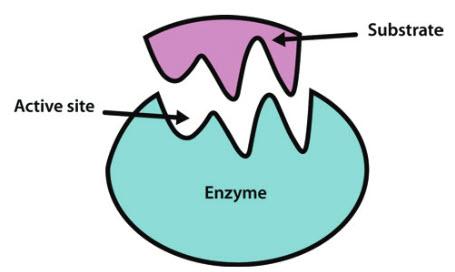
Enzymes are proteins that act as biological catalysts. They are highly specific for their substrates, determined by their primary structure and the arrangement of amino acid side chains (R groups).
Active site: The region of the enzyme where substrate binding and catalysis occur.
Substrate specificity: Enzymes only catalyze reactions with specific substrates.
How Enzymes Lower Activation Energy
Enzymes facilitate reactions by:
Orienting substrates correctly
Straining substrate bonds
Providing a favorable microenvironment (e.g., via R groups)
Forming brief covalent bonds with substrates
Enzyme-Catalyzed Reaction Example: Hydrolysis of Sucrose
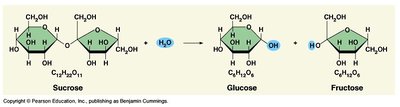
The enzyme sucrase catalyzes the hydrolysis of sucrose (a disaccharide) into glucose and fructose. This reaction involves bond breaking and forming, facilitated by the enzyme's active site.
Hydrolysis: Addition of water to break a bond.
Products: Glucose and fructose.
The Catalytic Cycle of Enzymes
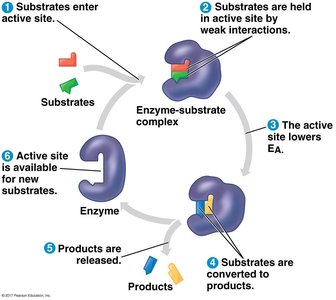
The catalytic cycle describes the sequence of events during enzyme action:
Substrate enters the active site.
Enzyme-substrate complex forms via weak interactions.
Active site lowers activation energy.
Substrate is converted to product.
Product is released; enzyme is free for new substrates.
Protein Structure and Enzyme Function
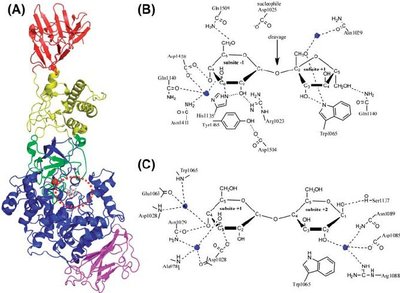
The three-dimensional structure of enzymes is determined by their amino acid sequence and chemical properties. This structure is critical for substrate specificity and catalytic activity.
Levels of protein structure: Primary, secondary, tertiary, and quaternary.
Chemical properties: Hydrogen bonding, ionic interactions, hydrophobic effects.
Summary Table: Key Concepts in Thermodynamics and Enzyme Function
Concept | Definition | Example |
|---|---|---|
Spontaneous Reaction | ΔG < 0; occurs without energy input | Cellular respiration |
Nonspontaneous Reaction | ΔG > 0; requires energy input | Photosynthesis |
ATP Hydrolysis | ATP → ADP + Pi + Energy | Muscle contraction |
Enzyme | Biological catalyst, usually a protein | Sucrase |
Activation Energy | Energy required to start a reaction | Bond breaking/forming |
Active Site | Region of enzyme for substrate binding | Sucrase active site |
Additional info: Enzyme regulation, environmental factors (temperature, pH), and inhibitors can affect enzyme activity, but these topics are covered in more detail in subsequent chapters.
