 Back
BackTracing Evolutionary History & The Evolution of Invertebrate Diversity
Study Guide - Smart Notes
 Tailored notes based on your materials, expanded with key definitions, examples, and context.
Tracing Evolutionary History
Plate Tectonics and Continental Drift
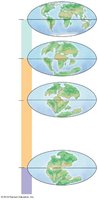
Plate tectonics describes the movement of Earth's continents over geological time. This movement, known as continental drift, has played a significant role in shaping the distribution of species and evolutionary history.
Continental Drift: The gradual movement of continents across the Earth's surface through geological time.
Impact on Evolution: Explains why similar species are found on different continents, as ancestral populations were separated by drifting landmasses.
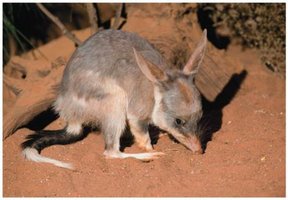
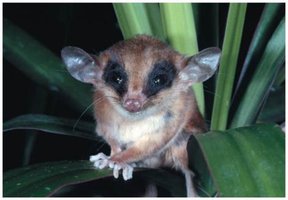
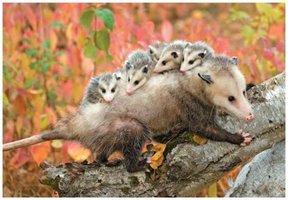
Example: Marsupials in Australia and the Americas share a common ancestor from before the continents separated.
Mass Extinctions
Mass extinctions are events in which a significant proportion of Earth's species become extinct in a relatively short period. These events have dramatically altered the course of evolution.
Permian Extinction: Occurred about 251 million years ago, eliminating 96% of marine species and many terrestrial species.
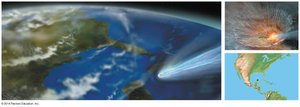
Cretaceous Extinction: Occurred about 65 million years ago, famously causing the extinction of non-avian dinosaurs, likely due to an asteroid impact.
Evolutionary Impact: Mass extinctions open ecological niches, allowing surviving groups to diversify.
Adaptive Radiations
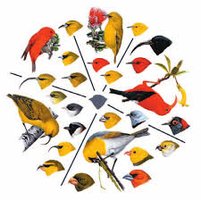
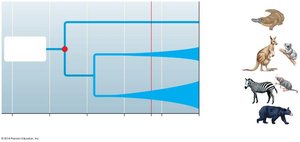
Adaptive radiation is the rapid evolution of diversely adapted species from a common ancestor, often following mass extinction events or the colonization of new habitats.
Definition: Periods of evolutionary change in which groups of organisms form many new species whose adaptations allow them to fill different ecological roles.
Example: Mammals diversified after the extinction of dinosaurs.
Evo-Devo: Evolutionary Developmental Biology
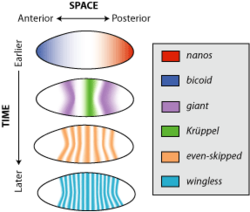
"Evo-devo" explores how changes in developmental genes lead to evolutionary changes in organismal form and function.
Developmental Genes: Control the rate, timing, and spatial pattern of changes in an organism's form as it develops from a zygote to an adult.
Homeotic Genes: Master regulatory genes that determine the placement and organization of body parts.
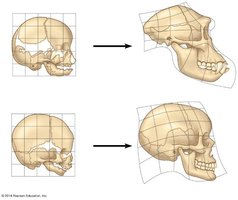
Example: Differences in skull shape between humans and chimpanzees are due to changes in developmental timing and rate.
Refinement and Exaptation of Traits
Structures can be refined over evolutionary time or coopted for new functions (exaptation).
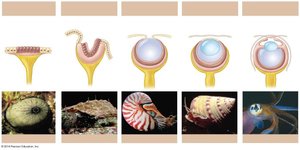
Refinement: Gradual modification of structures for improved function (e.g., evolution of the eye).
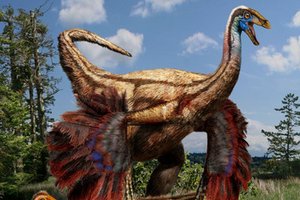
Exaptation: Structures evolved for one function are adapted for another (e.g., feathers originally for thermoregulation, later for flight).
Phylogeny and Systematics
Phylogeny is the evolutionary history of a species or group. Systematics is the study of biological diversity in an evolutionary context.
Homology: Similarity due to shared ancestry (e.g., forelimbs of mammals).
Analogy: Similarity due to convergent evolution, not common ancestry (e.g., wings of bats and birds).
Cladistics: Method of systematics that groups organisms by common descent into clades.
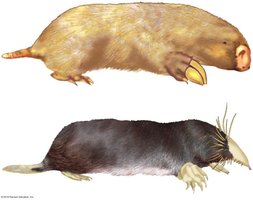
Phylogenetic Trees
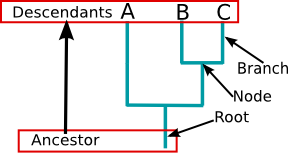
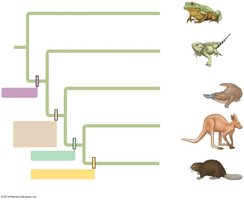
Phylogenetic trees are branching diagrams that depict hypotheses about evolutionary relationships.
Clade: A group of species that includes an ancestral species and all its descendants (monophyletic group).
Shared Ancestral Character: Trait present in the ancestor of a group.
Shared Derived Character: Trait unique to a particular clade.
Parsimony: The simplest explanation (fewest evolutionary changes) is preferred.

The Evolution of Invertebrate Diversity
Characteristics of Animals
All animals, including invertebrates and vertebrates, share several fundamental characteristics.
Heterotrophy: Obtain energy by consuming other organisms.
Mobility: Most animals are capable of movement at some stage of life.
Multicellularity: Composed of multiple cells.
Diploidy: Most animals have two sets of chromosomes (diploid).
Sexual Reproduction: Most reproduce sexually.
Absence of Cell Wall: Animal cells lack rigid cell walls.
Cells Organized into Tissues: Specialized cells form tissues.
Blastula Formation: Early embryonic stage unique to animals.
Animal Development: From Zygote to Adult
Animal development involves a series of stages from fertilization to the formation of a mature adult.
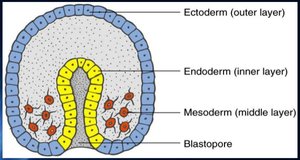
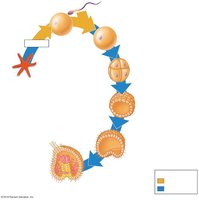
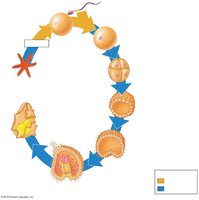
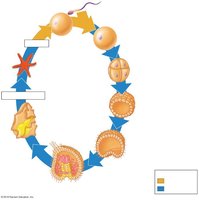
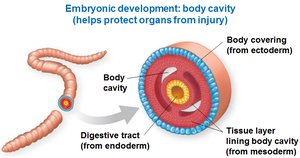
Blastula: A hollow ball of cells formed after several rounds of cell division.
Gastrula: Formed from the blastula, consists of embryonic layers: ectoderm, endoderm, and (in most animals) mesoderm.
Embryonic Layers:
Ectoderm: Forms skin and nervous system.
Endoderm: Forms digestive tract.
Mesoderm: Forms muscles and internal organs.
Metamorphosis: Transformation from larva to adult in some animals.
Protostomes vs. Deuterostomes
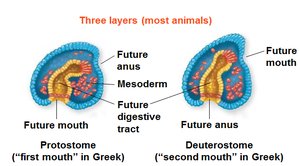
Animals with three embryonic layers are classified based on the fate of the first opening formed during gastrulation.
Protostomes: The first opening becomes the mouth (e.g., mollusks, annelids).
Deuterostomes: The first opening becomes the anus (e.g., echinoderms, chordates, including humans).
Body Cavities and Symmetry
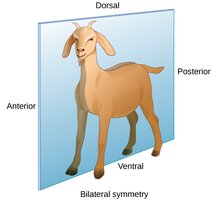
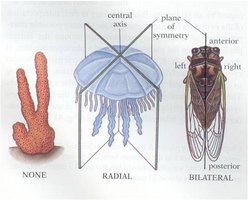
Most animals possess a body cavity (coelom) and exhibit either radial or bilateral symmetry.
Coelom: Fluid-filled body cavity that cushions internal organs.
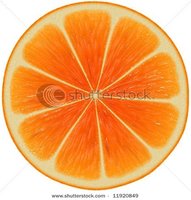
Radial Symmetry: Body parts arranged around a central axis (e.g., jellyfish).
Bilateral Symmetry: Body has left and right mirror-image sides (e.g., most animals).
Cambrian Explosion and Animal Diversification
The Cambrian explosion (535–525 million years ago) marks a period of rapid diversification of animal body plans.
Possible Causes: Predator-prey relationships, increased atmospheric oxygen, and evolution of regulatory genes (e.g., Hox genes).
Invertebrate Diversity: Invertebrates make up over 96% of animal species and include groups such as sponges, cnidarians, flatworms, mollusks, annelids, nematodes, arthropods, and echinoderms.
Phylogenetic Relationships Among Invertebrates
Modern phylogenetic trees for invertebrates are constructed using both morphological and molecular data.
Major Groups: Sponges, cnidarians, flatworms, mollusks, annelids, nematodes, arthropods, echinoderms, and chordates.
Key Innovations: True tissues, bilateral symmetry, body cavities, and segmentation.
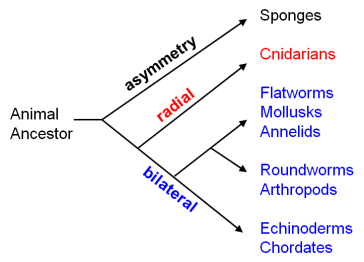
Summary Table: Major Invertebrate Groups
Group | Key Features | Examples |
|---|---|---|
Sponges | No true tissues, asymmetrical | Sponges |
Cnidarians | Radial symmetry, stinging cells | Jellyfish, corals |
Flatworms | Bilateral symmetry, no body cavity | Planarians, tapeworms |
Mollusks | Soft body, often with shell | Snails, clams, squids |
Annelids | Segmented body | Earthworms, leeches |
Nematodes | Round, unsegmented body | Roundworms |
Arthropods | Exoskeleton, jointed appendages | Insects, spiders, crustaceans |
Echinoderms | Radial symmetry (adults), water vascular system | Sea stars, sea urchins |
