 Back
BackTracing Evolutionary History: The Origin and Diversification of Life on Earth
Study Guide - Smart Notes
 Tailored notes based on your materials, expanded with key definitions, examples, and context.
Tracing Evolutionary History
Introduction to Macroevolution
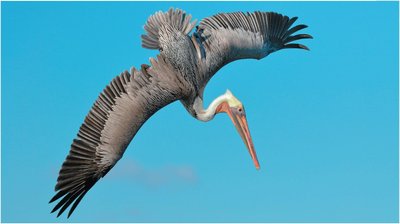
Macroevolution refers to evolutionary changes that occur above the species level, encompassing the origin of new groups of organisms and the impact of mass extinctions on biodiversity. The evolution of birds from reptiles is a classic example of macroevolution, illustrating how major structural and functional innovations arise over geological time.
Early Earth and the Origin of Life
Conditions on Early Earth
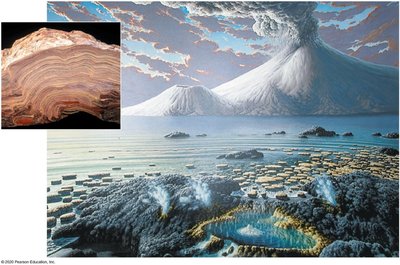
Earth formed approximately 4.6 billion years ago. The earliest evidence of life comes from fossil stromatolites, layered structures formed by prokaryotes, dating back 3.5 billion years. These findings suggest that life originated before this time.
Stages in the Origin of Life
The origin of life on Earth is hypothesized to have occurred in four main stages:
Abiotic synthesis of small organic molecules (e.g., amino acids, nitrogenous bases)
Joining of these molecules into polymers (e.g., proteins, nucleic acids)
Packaging of molecules into protocells
Origin of self-replicating molecules enabling inheritance
Abiotic Synthesis of Organic Molecules
In the 1920s, Oparin and Haldane proposed that early Earth's reducing atmosphere could have facilitated the formation of organic molecules. Stanley Miller's 1953 experiment simulated early Earth conditions and demonstrated that amino acids and other organic molecules could form abiotically.

Formation of Polymers, Protocells, and Self-Replicating RNA
Following the abiotic synthesis of monomers, the next steps likely included:
Abiotic synthesis of polymers on hot surfaces or clay
Formation of protocells: Membrane-bound droplets that maintained an internal chemistry distinct from their surroundings
Self-replicating RNA: Short RNA molecules capable of self-replication, acting as both genetic material and catalysts (ribozymes)


Major Events in the History of Life
Key Events in Life's History
Life's history is marked by several major events, including the origin of single-celled and multicellular organisms and the colonization of land. For much of Earth's history, life consisted solely of single-celled organisms.

Geologic Time and Radiometric Dating
Radiometric dating uses the decay of radioactive isotopes to determine the age of rocks and fossils. The geologic record divides Earth's history into eons, eras, and periods, separated by major transitions often caused by mass extinctions.



Mechanisms of Macroevolution
Continental Drift and Plate Tectonics
Plate tectonics describes the movement of Earth's crustal plates. About 250 million years ago, these movements formed the supercontinent Pangaea, profoundly affecting the distribution and diversification of organisms.

Mass Extinctions
The fossil record documents five major mass extinctions, each eliminating over 50% of Earth's species. The Permian extinction is linked to volcanic activity, while the Cretaceous extinction (which included most dinosaurs) may have been caused by an asteroid impact. Recovery of biodiversity after such events typically takes millions of years.
Adaptive Radiations
Adaptive radiations are periods of rapid evolutionary diversification, often following mass extinctions or the colonization of new habitats. These events result in the emergence of many new species from a common ancestor.
Genes and Evolutionary Development (Evo-Devo)
Evolutionary developmental biology ("evo-devo") studies how changes in developmental genes (such as homeotic genes) can lead to major evolutionary changes in body form. Changes in gene regulation, rather than gene sequence, often underlie morphological diversity.
Exaptation and Evolution of Novel Traits
Complex structures can evolve in stages from simpler versions or by co-opting existing structures for new functions, a process known as exaptation. For example, feathers may have initially evolved for insulation and later became adapted for flight.
Evolutionary Trends
Trends in the fossil record, such as increasing brain size in mammals, may result from species selection or natural selection, but do not imply that evolution is goal-directed.
Phylogeny and the Tree of Life
Taxonomy and Classification
Taxonomy is the science of naming and classifying organisms. Each species is given a binomial name (genus and specific epithet). Genera are grouped into broader categories: family, order, class, phylum, kingdom, and domain.
Phylogeny and Systematics
Phylogeny is the evolutionary history of a species or group. Systematics is the discipline that classifies organisms and determines their evolutionary relationships, often represented as phylogenetic trees.
Homology, Analogy, and Cladistics
Homologous structures indicate common ancestry, while analogous structures arise from convergent evolution. Cladistics groups organisms by common ancestry into clades (monophyletic groups), using shared derived and ancestral characters. The principle of parsimony favors the simplest evolutionary explanations.
Molecular Systematics and Molecular Clocks
Molecular systematics compares DNA and protein sequences to infer evolutionary relationships. Molecular clocks estimate divergence times based on the accumulation of genetic changes at relatively constant rates.
The Three Domains of Life
Life is classified into three domains: Bacteria, Archaea, and Eukarya. Horizontal gene transfer has played a significant role in the early evolution of life, complicating the construction of the tree of life.
Table: The Geologic Record (Summary)
Era | Period | Epoch | Age (mya) | Key Events |
|---|---|---|---|---|
Cenozoic | Quaternary | Holocene | 0.01 | Origin of Homo |
Cenozoic | Tertiary | Eocene | 56 | Major radiation of mammals, birds, insects |
Mesozoic | Cretaceous | 145 | Flowering plants appear, mass extinction at end | |
Paleozoic | Permian | 299 | Radiation of reptiles, mass extinction at end | |
Precambrian | Ediacaran | 635 | Diverse algae and soft-bodied invertebrates | |
Precambrian | ~4,000 | Origin of Earth |
Additional info: Table entries are summarized from the geologic record tables in the source material.
