 Back
Transcription and Gene Expression: From DNA to mRNA
Study Guide - Smart Notes
 Tailored notes based on your materials, expanded with key definitions, examples, and context.
Transcription and the Central Dogma of Molecular Biology
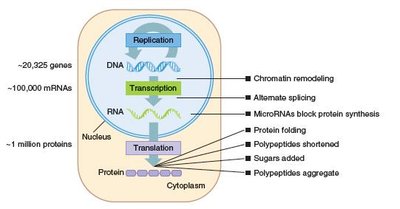
Overview of the Central Dogma
The central dogma of molecular biology describes the flow of genetic information within a biological system. It explains how genetic instructions stored in DNA are transcribed into messenger RNA (mRNA), which is then translated into proteins. Proteins are responsible for most cellular functions and structures.
DNA stores genetic information in the sequence of its nucleotide bases (A, T, C, G).
Transcription is the process of copying a gene's DNA sequence into mRNA.
Translation is the process where ribosomes use mRNA to synthesize proteins.
The sequence of DNA bases determines the sequence of RNA bases, which in turn determines the sequence of amino acids in a protein.
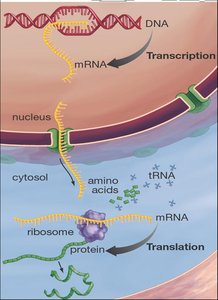
Key Steps in the Central Dogma
Transcription: DNA → mRNA (same language: nucleic acids)
Translation: mRNA → Protein (different language: nucleic acids to amino acids)
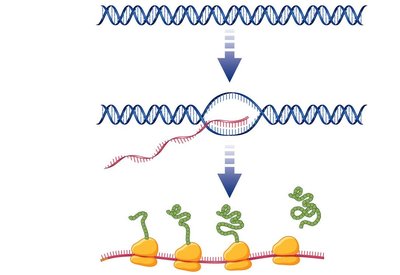
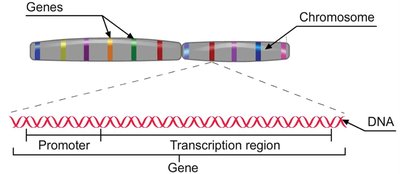
Gene Structure and Expression
Genes and Chromosomes
A gene is a sequence of DNA nucleotides that encodes the information to make a functional product, usually a protein. Genes are located on chromosomes, and each chromosome contains many genes.
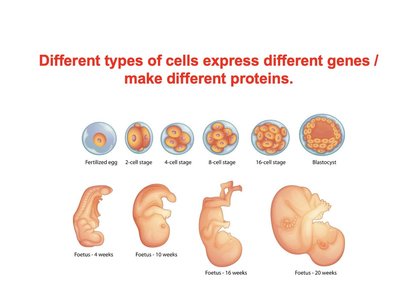
All cells in an organism contain the same DNA, but different cell types express different sets of genes.
Gene expression is regulated so that only the necessary proteins are produced in each cell type.
Cellular Differentiation and Gene Expression
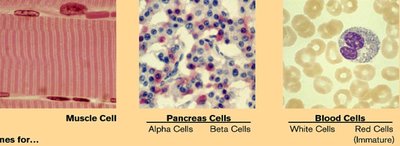
Although all cells in a multicellular organism contain the same DNA, they can differentiate into various cell types (e.g., muscle, pancreas, blood cells) by expressing different genes. This process is called cellular differentiation.
Different cell types express different genes, leading to the production of different proteins and cellular functions.
Gene expression is regulated at multiple levels, with transcription initiation being the most common control point.
Mechanism of Transcription
Initiation: Promoters and Transcription Factors
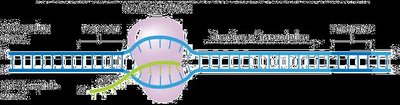
Transcription begins at specific DNA sequences called promoters. Transcription factors are proteins that bind to promoter regions and help recruit RNA polymerase, the enzyme responsible for synthesizing RNA.
The promoter determines where transcription starts and which DNA strand is used as the template.
Transcription factors regulate when, where, and how much a gene is transcribed.
Elongation: RNA Synthesis
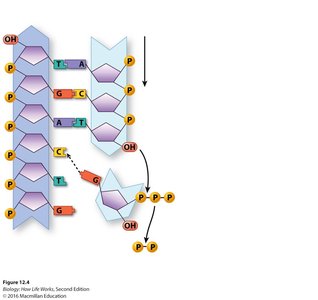
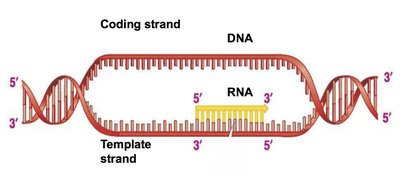
During elongation, RNA polymerase moves along the DNA template strand, synthesizing a complementary RNA strand in the 5' to 3' direction. The coding strand of DNA has the same sequence as the RNA (except RNA uses uracil (U) instead of thymine (T)).
RNA is synthesized antiparallel and complementary to the template DNA strand.
New nucleotides are added to the 3' end of the growing RNA molecule.
Termination: End of Transcription
Transcription ends when RNA polymerase reaches a terminator sequence in the DNA. The newly synthesized pre-mRNA is then released for processing.
mRNA Processing in Eukaryotes
5' Capping, Polyadenylation, and Splicing
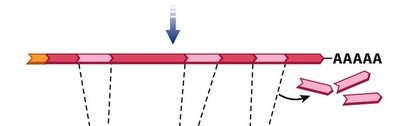
In eukaryotic cells, the primary RNA transcript (pre-mRNA) undergoes several modifications before becoming mature mRNA:
5' Cap: Addition of a modified guanine nucleotide to the 5' end, which stabilizes mRNA and helps with export and translation initiation.
Poly(A) Tail: Addition of a string of adenine nucleotides to the 3' end, which stabilizes mRNA and promotes translation.
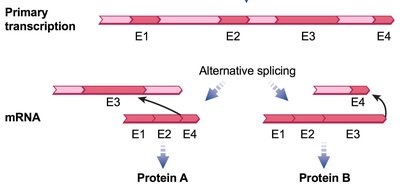
Splicing: Removal of non-coding sequences (introns) and joining of coding sequences (exons). Alternative splicing allows one gene to produce multiple proteins.
Directionality and Template Selection
Determining the Template Strand
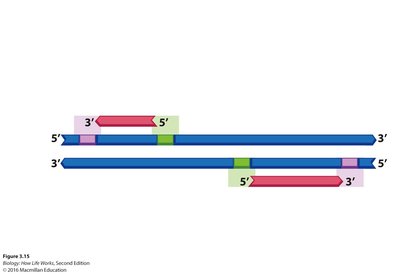
The template strand is the DNA strand that is read by RNA polymerase to synthesize RNA. The direction of transcription is determined by the location of the promoter and the orientation of the gene.
RNA is always synthesized in the 5' to 3' direction.
The template strand is read in the 3' to 5' direction.
Which DNA strand serves as the template can differ from gene to gene.
Summary Table: Key Steps and Components of Transcription
Step | Main Components | Description |
|---|---|---|
Initiation | Promoter, Transcription Factors, RNA Polymerase | Transcription factors bind to promoter; RNA polymerase recruited to start site. |
Elongation | RNA Polymerase, DNA Template Strand, NTPs | RNA polymerase synthesizes RNA 5' to 3', complementary to template strand. |
Termination | Terminator Sequence | RNA polymerase stops transcription and releases RNA transcript. |
Processing (Eukaryotes) | 5' Cap, Poly(A) Tail, Spliceosome | Pre-mRNA is capped, polyadenylated, and spliced to form mature mRNA. |
Key Terms and Concepts
Gene Expression: The process by which information from a gene is used to synthesize a functional gene product (protein or RNA).
Promoter: A DNA sequence where transcription machinery assembles to begin transcription.
Transcription Factor: A protein that binds to specific DNA sequences to regulate transcription.
RNA Polymerase: The enzyme that synthesizes RNA from a DNA template.
Introns: Non-coding regions of a gene that are removed during RNA processing.
Exons: Coding regions of a gene that are joined together to form mature mRNA.
Practice Questions
What is the direction of RNA synthesis during transcription?
How do transcription factors influence gene expression?
What modifications occur to eukaryotic mRNA before it leaves the nucleus?
How does alternative splicing increase protein diversity?
