 Back
Transcription, RNA Processing, and the Genetic Code: Study Notes for General Biology
Study Guide - Smart Notes
 Tailored notes based on your materials, expanded with key definitions, examples, and context.
Transcription and RNA Processing
Overview of Transcription
Transcription is the process by which a segment of DNA is used as a template to synthesize a complementary strand of RNA. This is a fundamental step in gene expression, allowing genetic information to be transferred from DNA to RNA, which can then be translated into proteins.
Template Strand: Only one strand of DNA is used as the template for RNA synthesis.
RNA Polymerase: The enzyme responsible for synthesizing RNA from the DNA template.
Directionality: RNA is synthesized in the 5’ → 3’ direction, while RNA polymerase moves along the DNA template in the 3’ → 5’ direction.
No Primer Needed: Unlike DNA polymerase, RNA polymerase does not require a primer to begin synthesis.
Initiation: Begins at a promoter sequence, which signals the start of a gene.
Termination: Ends at a terminator sequence, which signals the end of a gene.
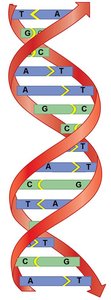
Transcription Process: Initiation, Elongation, Termination
Initiation: RNA polymerase binds to the promoter region, and the DNA helix is opened to allow transcription.
Elongation: RNA polymerase synthesizes the RNA strand by adding ribonucleotides complementary to the DNA template. The RNA strand separates from the DNA as it is synthesized.
Termination: RNA polymerase transcribes a terminator sequence, signaling the end of transcription. The RNA strand and polymerase are released from the DNA template.
Eukaryotic vs. Prokaryotic Transcription
Prokaryotes: Transcription and translation occur simultaneously in the cytoplasm.
Eukaryotes: Transcription occurs in the nucleus, and the resulting RNA undergoes processing before being exported to the cytoplasm for translation.
RNA Polymerase Types: Bacteria have one RNA polymerase; eukaryotes have three distinct types.
RNA Processing in Eukaryotes
After transcription, eukaryotic mRNA undergoes several modifications to become mature mRNA ready for translation.
5’ Cap: A modified guanine nucleotide is added to the 5’ end, protecting the mRNA from degradation and assisting in ribosome binding.
Poly-A Tail: A long stretch of adenine nucleotides is added to the 3’ end, also protecting the mRNA and aiding in export from the nucleus.
Splicing: Introns (non-coding regions) are removed, and exons (coding regions) are joined together. This process is catalyzed by snRNPs (small nuclear ribonucleoprotein particles).
Alternative Splicing: Different combinations of exons can be joined, allowing a single gene to produce multiple protein variants.
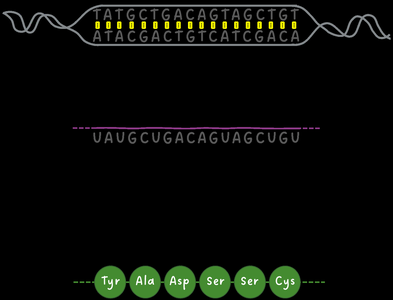
The Genetic Code
Structure and Features of the Genetic Code
The genetic code is the set of rules by which information encoded in mRNA is translated into proteins.
Codon: A sequence of three nucleotides in mRNA that specifies a particular amino acid.
Unambiguous: Each codon specifies only one amino acid.
Redundant: Multiple codons can specify the same amino acid, reducing the impact of mutations.
Start Codon: AUG specifies the start of translation and codes for methionine (Met).
Stop Codons: UAA, UAG, and UGA signal the end of translation; no amino acids correspond to these codons.
Non-overlapping and Contiguous: Codons are read one after another without overlap or gaps.
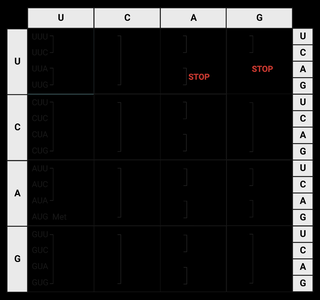
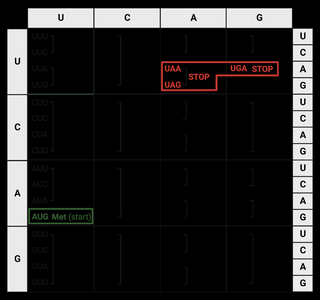
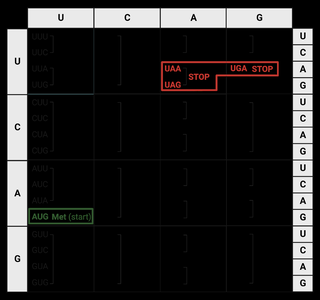
Genetic Code Table
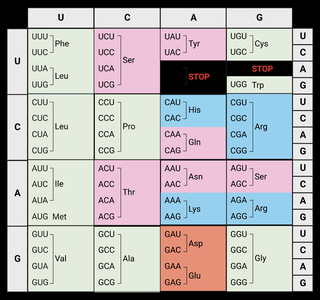
The genetic code table is used to determine which amino acid corresponds to each codon.
Codon | Amino Acid |
|---|---|
AUG | Met (Start) |
UUU, UUC | Phe |
UUA, UUG, CUU, CUC, CUA, CUG | Leu |
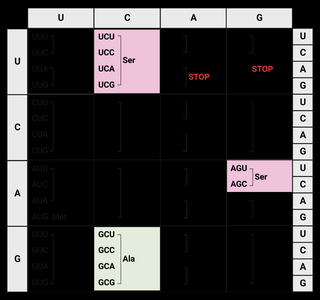
UCU, UCC, UCA, UCG, AGU, AGC | Ser |
UAA, UAG, UGA | Stop |
GCU, GCC, GCA, GCG | Ala |
UGG | Trp |
AAA, AAG | Lys |
GAU, GAC | Asp |
GAA, GAG | Glu |
Redundancy and Mutation Protection
Redundancy: Many amino acids are specified by multiple codons. For example, alanine is specified by GCU, GCC, GCA, and GCG.
Mutation Protection: Redundancy reduces the likelihood that a single nucleotide change will alter the amino acid sequence of a protein.
Translation Direction and Reading Frame
Reading Frame: Translation begins at the start codon (AUG), and nucleotides are grouped into codons from that point.
Direction: mRNA is translated from the 5’ (phosphate) end to the 3’ (hydroxyl) end.
Biotechnology Application: Production of Human Insulin
Genetically Engineered Insulin
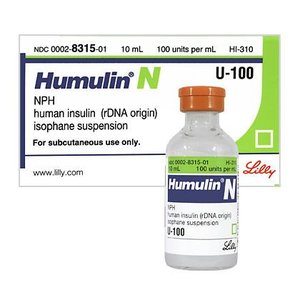
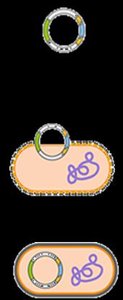
The human insulin gene can be inserted into bacteria, which then use the same genetic code to produce human insulin. This process is a key example of biotechnology and genetic engineering.
Gene Insertion: The human insulin gene is inserted into a bacterial plasmid.
Bacterial Expression: Bacteria transcribe and translate the human gene, producing insulin identical to human insulin.
Medical Application: Genetically engineered insulin is used to treat diabetes, replacing earlier methods that required large amounts of pig tissue.

Key Terms and Definitions
Codon: Three-nucleotide sequence in mRNA specifying an amino acid.
mRNA (messenger RNA): RNA molecule that carries genetic information from DNA to the ribosome.
RNA Polymerase: Enzyme that synthesizes RNA from a DNA template.
Promoter: DNA sequence signaling the start of a gene.
Terminator: DNA sequence signaling the end of a gene.
Introns: Non-coding regions of eukaryotic genes removed during RNA processing.
Exons: Coding regions of eukaryotic genes joined together during RNA processing.
snRNPs: Small nuclear ribonucleoprotein particles involved in RNA splicing.
Formulas and Equations
Transcription:
Translation:
Summary Table: Genetic Code Features
Feature | Description |
|---|---|
Codon Length | 3 nucleotides |
Unambiguous | Each codon specifies one amino acid |
Redundant | Multiple codons can specify the same amino acid |
Start Codon | AUG (Methionine) |
Stop Codons | UAA, UAG, UGA |
Reading Frame | Set by the first AUG |
Direction | 5’ → 3’ on mRNA |
Example: Transcription and Translation
Transcription: DNA template strand: ACTAGAAATCAGATACACCTGACGTATGCCGTACGAGCGTAGC
mRNA: UGAUCUUUAGUCUAUGUGGACGUAUGGCAUGCUCGCAUCG
Translation: Use the genetic code table to determine the amino acid sequence.
Additional info:
Alternative splicing allows for greater protein diversity from a single gene.
RNA processing is essential for mRNA stability and efficient translation in eukaryotes.
