 Back
CH 17 p. 1: Transcription, RNA Processing, and Translation: Mechanisms and Comparisons
Study Guide - Smart Notes
 Tailored notes based on your materials, expanded with key definitions, examples, and context.
Transcription, RNA Processing, and Translation
Overview: Information Flow in Cells
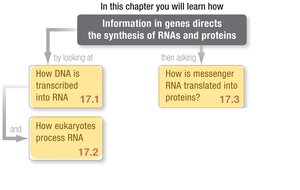
This chapter explores how genetic information is transcribed from DNA to RNA and subsequently translated into proteins. The central dogma of molecular biology describes this flow: DNA → RNA → Protein. The process involves transcription, RNA processing (in eukaryotes), and translation.
Transcription: DNA to RNA (Section 17.1)
Central Dogma and DNA Strands
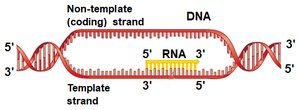
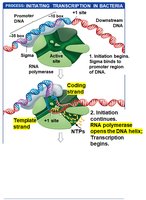
Transcription is the process by which an RNA copy of DNA information is made. The template strand of DNA is transcribed, while the non-template (coding) strand is not. The coding strand has the same sequence as the RNA (except T is replaced by U).
RNA Polymerase Function
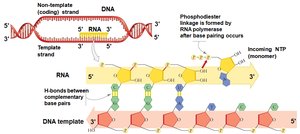
RNA polymerase catalyzes the synthesis of RNA by adding nucleoside triphosphates (NTPs) to the 3' end of the growing RNA chain. In bacteria, there is one type of RNA polymerase; in eukaryotes, there are at least three, each producing different kinds of RNA.
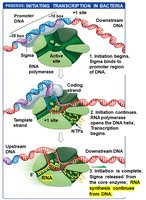
Transcription Initiation in Bacteria
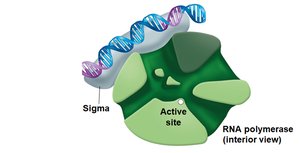
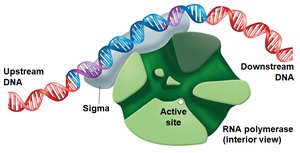
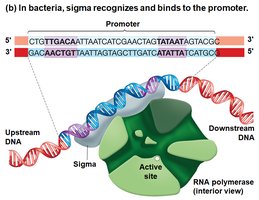
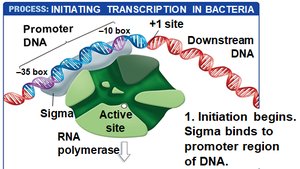
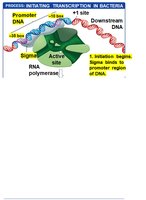
Transcription begins when RNA polymerase is activated by binding to a sigma protein, forming a holoenzyme. Sigma proteins recognize and bind to the promoter region upstream of the gene, which acts as a regulatory sequence.
Promoter Structure and Regulation
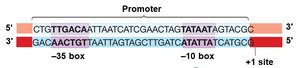
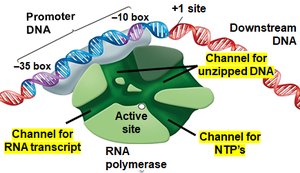
Promoters contain conserved sequences, notably the -10 box and -35 box, which are recognized by sigma proteins. Different sigma proteins recognize different promoters, allowing regulation of gene expression in response to environmental changes.
Initiation Phase: Template Strand Selection
The orientation and position of sigma protein binding to the promoter determine which DNA strand is used as the template. Sigma must bind both the -10 and -35 boxes for transcription to initiate.
Steps of Initiation
Sigma binds promoter
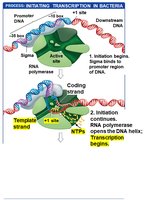
RNA polymerase unwinds and unzips DNA
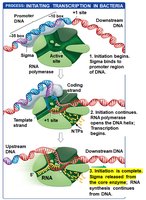
RNA polymerase adds NTPs complementary to the template strand
Sigma protein is released
RNA Polymerase Structure and Channels
RNA polymerase contains multiple channels for the DNA template, incoming NTPs, and the exiting RNA transcript, facilitating efficient transcription.
Elongation and Termination Phases
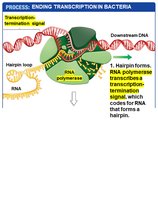
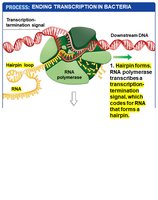
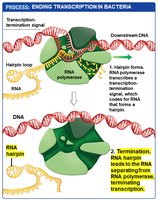
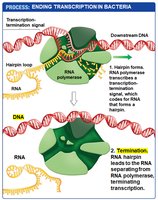
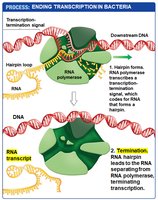
During elongation, RNA polymerase continues to add NTPs. Termination occurs when a transcription-termination signal in the DNA is transcribed, causing the RNA to fold into a hairpin structure, which disrupts the interaction with RNA polymerase and releases the RNA.
Comparison: Bacterial vs. Eukaryotic Transcription
While the basic steps are similar, there are key differences:
Location: Bacteria (cytoplasm), Eukaryotes (nucleus)
RNA polymerases: Bacteria (one type), Eukaryotes (multiple types)
Promoter diversity: Bacteria (-10 and -35 boxes), Eukaryotes (TATA box, more diversity)
Proteins recognizing promoters: Bacteria (sigma), Eukaryotes (basal transcription factors)
Termination: Bacteria (hairpin), Eukaryotes (poly(A) signal)
Product: Bacteria (mature mRNA), Eukaryotes (pre-mRNA, requires processing)
RNA Processing in Eukaryotes (Section 17.2)
Genes-in-Pieces Hypothesis
Eukaryotic genes are not continuous; they consist of exons (coding regions) and introns (non-coding regions). Introns are removed from the primary transcript, and exons are joined to form mature mRNA.
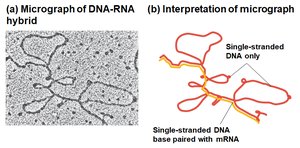
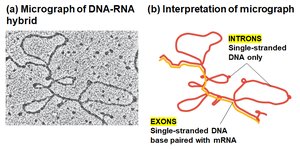
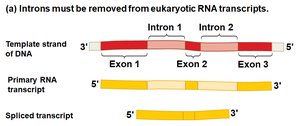
RNA Splicing Mechanism
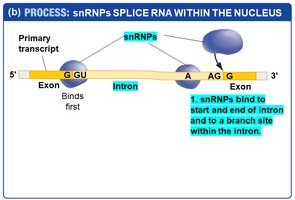
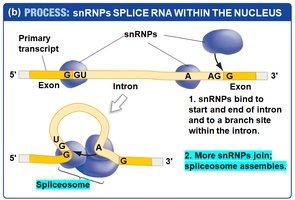
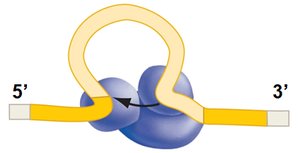
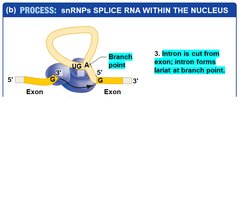
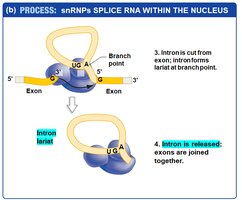
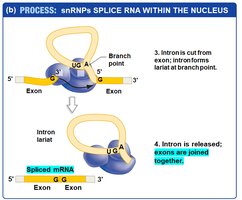
Splicing is catalyzed by small nuclear ribonucleoproteins (snRNPs), which assemble into a spliceosome. The process involves binding snRNPs to exon-intron boundaries and a branch point, cutting the intron, forming a lariat, and joining exons.
snRNPs bind to 5' and 3' exon-intron boundaries and branch point
Spliceosome forms
Intron is cut and forms a lariat
Exons are joined together
Adding Caps and Tails to mRNA
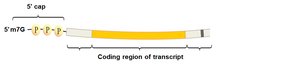
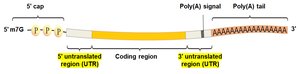
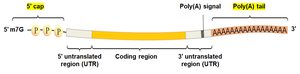
The 5' cap (modified guanine triphosphate) is added early in transcription. The poly(A) tail is added to the 3' end after cleavage at the poly(A) signal. These modifications are not coded by the DNA template.

Mature mRNA Transcript
Mature mRNA has a continuous coding region (introns removed), untranslated regions (UTRs) at both ends, a 5' cap, and a 3' poly(A) tail. UTRs stabilize mRNA and regulate translation; the cap and tail aid ribosome binding and protect against degradation.
Translation: RNA to Protein (Section 17.3)
Ribosomes and Protein Synthesis
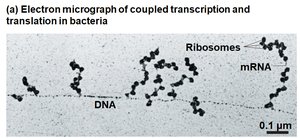
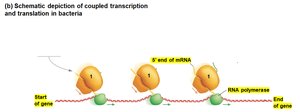
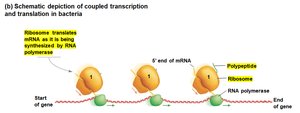
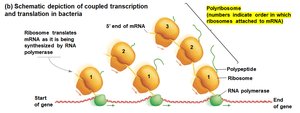
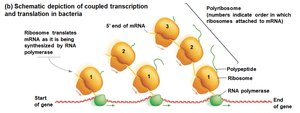
Translation occurs at the ribosome, where mRNA is decoded into a specific amino acid sequence. In bacteria, translation can begin before transcription ends, as both processes occur in the cytoplasm.
Polyribosomes
Multiple ribosomes can translate a single mRNA simultaneously, forming polyribosomes and increasing protein synthesis efficiency.
Translation: Bacteria vs. Eukaryotes
Both share most steps and molecules, but in eukaryotes, mRNA must be exported from the nucleus before translation, and initiation is more complex.
How mRNA Specifies Amino Acids
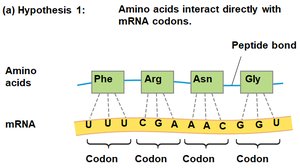
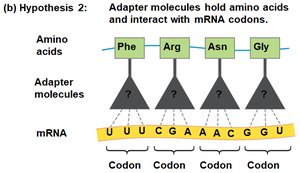
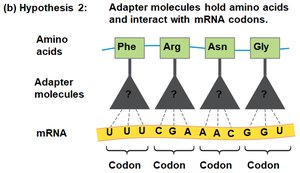
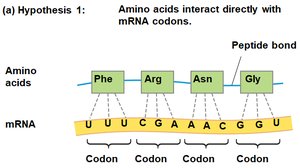
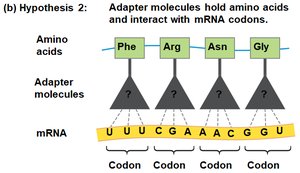
Translation is the process of converting the nucleotide sequence of mRNA into the amino acid sequence of a protein. Two hypotheses explain how mRNA codons specify amino acids:
Direct interaction: Amino acids interact directly with mRNA codons.
Adaptor molecule: An intermediary (such as tRNA) binds both amino acids and mRNA codons.
Summary Table: Transcription, RNA Processing, and Translation
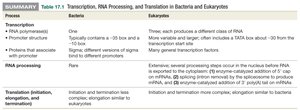
Process | Bacteria | Eukaryotes |
|---|---|---|
RNA polymerases | One | Three, each produces a different class of RNA |
Promoter structure | Typically contains a -10 box and -35 box | More variable and larger; often includes a TATA box about -30 from the start site |
Proteins that associate with promoters | Sigma; different versions of sigma bind to different promoters | Many general transcription factors |
RNA processing | Rare | Extensive; several processing steps occur in the nucleus before RNA is exported |
Translation (initiation, elongation, termination) | Initiation and termination less elaborate; elongation similar to eukaryotes | Initiation and termination more complex; elongation similar to bacteria |
