 Back
Translation and Mutations: Molecular Mechanisms of Protein Synthesis
Study Guide - Smart Notes
 Tailored notes based on your materials, expanded with key definitions, examples, and context.
Translation: The Process of Protein Synthesis
Overview of Translation
Translation is the cellular process by which the sequence of nucleotides in messenger RNA (mRNA) is converted into a sequence of amino acids, forming a polypeptide (protein). This process is fundamental to gene expression and occurs in both prokaryotic and eukaryotic cells.
mRNA: Provides the genetic code for protein synthesis.
tRNA: Serves as an adaptor, matching mRNA codons to their corresponding amino acids.
Ribosome: The catalytic machinery that assembles polypeptides.
Amino acids: The building blocks of proteins.
Cellular Components Required for Translation
Several cellular components are essential for translation:
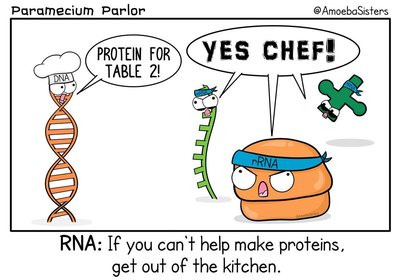
Ribosomes: Complexes of proteins and ribosomal RNAs (rRNAs) that facilitate the assembly of polypeptides.
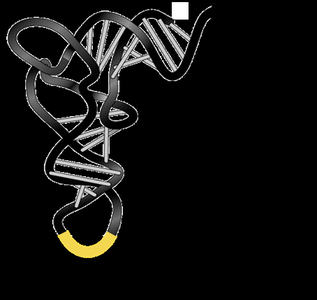
tRNAs: Each tRNA has a specific anticodon and is attached to a specific amino acid by highly accurate enzymes.
Enzymes: Aminoacyl-tRNA synthetases attach amino acids to their corresponding tRNAs.
Genetic Code and tRNA Function
Codons and Anticodons
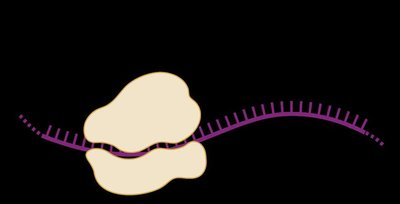
The genetic code consists of codons—three-nucleotide sequences in mRNA—that specify particular amino acids. tRNAs have complementary anticodons that pair with mRNA codons via hydrogen bonds.
Start codon (AUG): Signals the beginning of translation and codes for methionine.
Stop codons (UAA, UAG, UGA): Signal the end of translation; no tRNAs pair with stop codons.
Wobble position: Flexibility in base pairing at the third position of the codon allows fewer tRNAs than codons.
tRNA Specificity and Aminoacyl-tRNA Synthetases
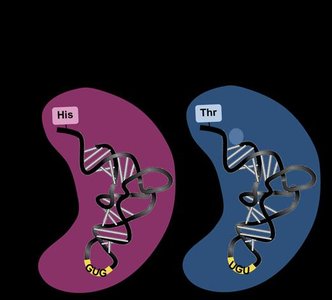
Each tRNA is attached to only one type of amino acid, determined by its anticodon and the specificity of aminoacyl-tRNA synthetases.
Enzyme accuracy: Ensures correct amino acid is attached to the correct tRNA.
Error consequences: Incorrect pairing results in the wrong amino acid being incorporated wherever that codon appears.
Translation Mechanism
Steps of Translation
Translation occurs in three main steps:
Initiation: Ribosome assembles at the start codon with the first tRNA.
Elongation: Ribosome moves along mRNA, adding amino acids to the growing polypeptide chain.
Termination: Ribosome reaches a stop codon, and the components disassemble.
Protein Structure and Function
Primary, Secondary, and Tertiary Structure
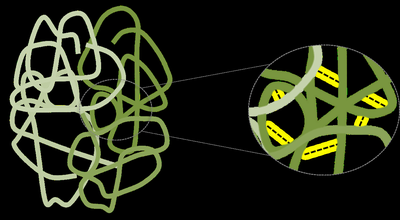
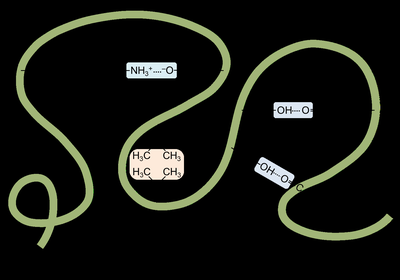
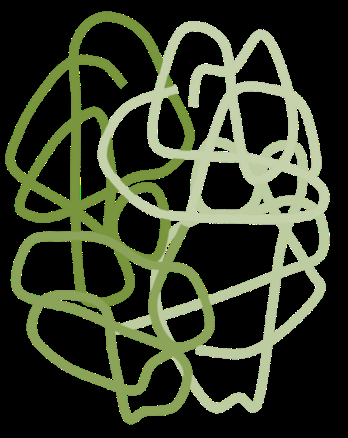
The sequence and composition of amino acids determine the three-dimensional shape of a protein, which is critical for its function. Noncovalent interactions such as hydrogen bonds, ionic bonds, and van der Waals forces contribute to protein folding.
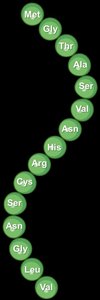
Primary structure: Linear sequence of amino acids.
Secondary structure: Local folding patterns (e.g., alpha helices, beta sheets).
Tertiary structure: Overall three-dimensional shape.
Mutations: Types and Effects
Definition and Importance
A mutation is a permanent change in the DNA sequence of an organism's genome. Mutations are random and not necessarily harmful; they provide genetic diversity and are the raw material for evolution.
Source of new alleles: Mutations create genetic variation.
Not all mutations affect protein sequence: Some are silent or occur in regulatory regions.
Types of Mutations
Substitution mutations: Change one base pair; can be silent, missense, or nonsense.
Silent mutation: Codon change does not alter amino acid.
Missense mutation: Codon change results in a different amino acid.
Nonsense mutation: Codon change results in a stop codon.
Insertions and deletions: Add or remove nucleotides, often causing frameshift mutations that alter all downstream amino acids.
Effects of Mutations
Mutations can affect protein structure and function in various ways:
Silent mutations: No effect on protein sequence.
Missense mutations: May alter protein function depending on the properties of the substituted amino acid.
Nonsense mutations: Usually result in truncated, nonfunctional proteins.
Frameshift mutations: Often severely disrupt protein structure and function.
Summary Table: Types of Mutations and Their Effects
Mutation Type | Change | Effect on Protein |
|---|---|---|
Silent | Codon change, same amino acid | No change in protein sequence |
Missense | Codon change, different amino acid | Possible change in protein function |
Nonsense | Codon change to stop codon | Truncated protein, usually nonfunctional |
Frameshift | Insertion/deletion, alters reading frame | Major change in protein sequence and function |
Applications and Examples
Mutation in lactase gene: Allows adults to digest lactose.
Mutation in HIV receptor gene: Provides partial immunity to HIV.
Mutation in hemoglobin gene: Causes sickle cell anemia (missense mutation).
Key Points and Review Questions
Enzymes that attach amino acids to tRNAs set the genetic code in cells.
The anticodon of a tRNA determines which codon it interacts with.
Mutations in coding regions can alter the amino acid sequence; mutations in regulatory regions affect gene expression.
Protein shape is determined by amino acid sequence and is critical for function.
Example: If a mutation changes a UGU codon (specifying Cys) to UGG (specifying Trp), this is a missense mutation and will alter the protein's structure and function.
Additional info: The process of translation is highly conserved between prokaryotic and eukaryotic cells, though differences exist in ribosome structure and initiation mechanisms.
