 Back
BackTranslation and Ribosome Function: Structure, Mechanism, and Regulation
Study Guide - Smart Notes
 Tailored notes based on your materials, expanded with key definitions, examples, and context.
Translation and Ribosome Function
Overview of Genetic Information Flow
The flow of genetic information in cells follows the central dogma: DNA is transcribed into RNA, which is then translated into protein. Translation is the process by which ribosomes synthesize polypeptides using mRNA as a template.
Transcription: Synthesis of RNA from a DNA template.
Translation: Synthesis of proteins from mRNA.
Mutation: Changes in DNA sequence can affect transcription and translation.
Bioinformatics: Computational analysis of genetic sequences.
Ribosome Structure and Function
Ribosome Composition and Subunits
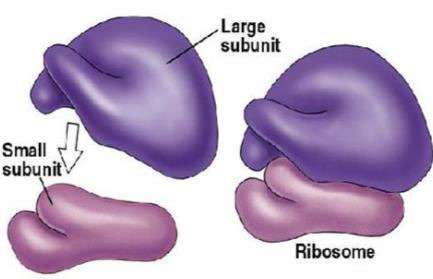
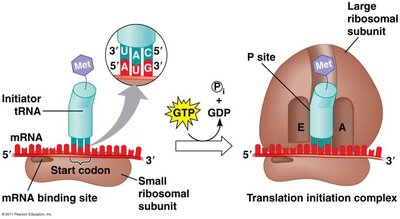
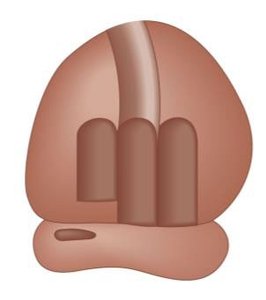
Ribosomes are complex molecular machines composed of ribosomal RNA (rRNA) and proteins. They consist of two subunits: a large and a small subunit. These subunits only assemble in the presence of mRNA.
Large subunit: Catalyzes peptide bond formation.
Small subunit: Binds mRNA and ensures correct tRNA pairing.
Eukaryotic ribosomes: Assembled in the nucleolus; differ in size from bacterial ribosomes.
Medical relevance: Antibiotics like tetracycline and streptomycin target bacterial ribosomes.
Ribosome Binding Sites
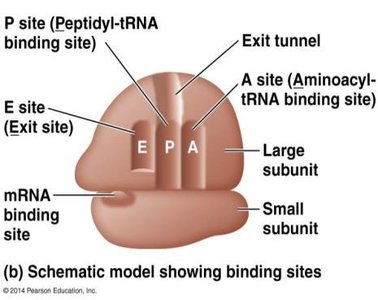
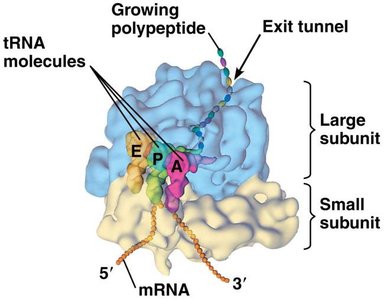
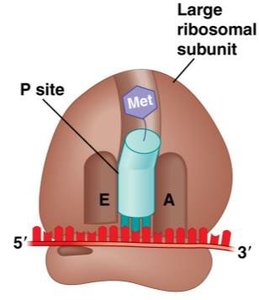
The ribosome contains three binding sites for tRNA:
P site (Peptidyl-tRNA site): Holds the tRNA carrying the growing polypeptide chain.
A site (Aminoacyl-tRNA site): Holds the tRNA carrying the next amino acid to be added.
E site (Exit site): Where discharged tRNAs leave the ribosome.
Mechanism of Translation
Stages of Translation
Translation occurs in three main stages: initiation, elongation, and termination. Each stage requires specific protein factors and, in some steps, energy in the form of GTP.
Initiation: Assembly of the translation initiation complex.
Elongation: Addition of amino acids to the growing polypeptide chain.
Termination: Release of the completed polypeptide when a stop codon is encountered.
Initiation of Translation
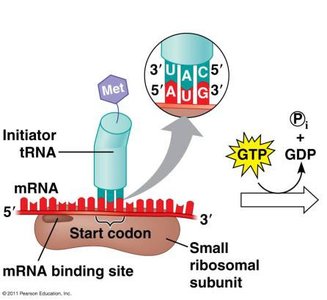
The translation initiation complex is formed by the association of mRNA, initiator tRNA, and both ribosomal subunits. Initiation factors are specialized proteins that facilitate this assembly.
Initiator tRNA: Carries methionine (Met) and recognizes the start codon (AUG).
Initiation factors: Bring together the components of the initiation complex.
Elongation Cycle
Elongation is a cyclic process involving codon recognition, peptide bond formation, and translocation. Elongation factors and energy (GTP) are required for these steps. Peptide bond formation is catalyzed by rRNA in the large subunit.
Codon recognition: Incoming tRNA matches the codon in the A site.
Peptide bond formation: The polypeptide is transferred to the tRNA in the A site.
Translocation: The ribosome moves along the mRNA, shifting tRNAs from A to P to E sites.
Termination of Translation
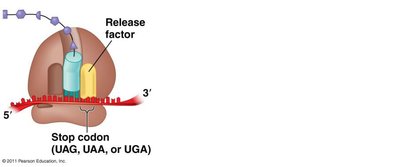
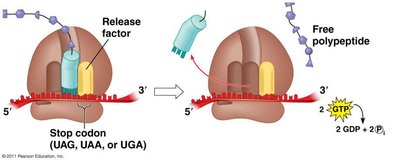
Translation ends when a stop codon (UAG, UAA, or UGA) enters the A site. A release factor binds, causing hydrolysis of the bond between the polypeptide and tRNA, releasing the completed protein and dissociating the ribosome.
Stop codons: Do not code for amino acids; signal termination.
Release factor: Protein that mimics tRNA and triggers release.
Ribosome Populations and Polyribosomes
Free vs. Bound Ribosomes
Cells contain two populations of ribosomes:
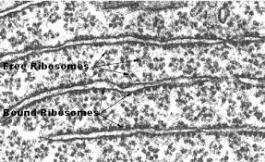
Free ribosomes: Suspended in the cytosol; synthesize cytosolic proteins.
Bound ribosomes: Attached to the endoplasmic reticulum or nuclear envelope; synthesize proteins for the endomembrane system or secretion.
Polyribosomes (Polysomes)
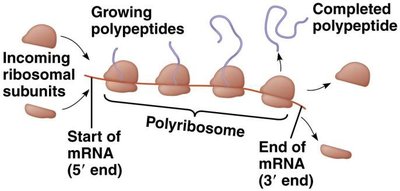
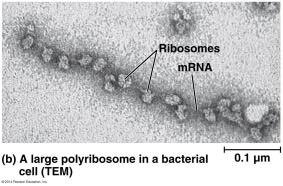
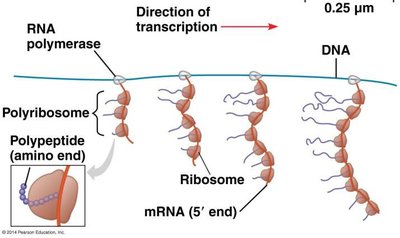
Polyribosomes are clusters of ribosomes simultaneously translating a single mRNA, increasing the rate and level of protein synthesis.
Polyribosome: Multiple ribosomes on one mRNA strand.
Function: Efficient protein synthesis.
Coupled Transcription and Translation in Bacteria
Simultaneous Processes
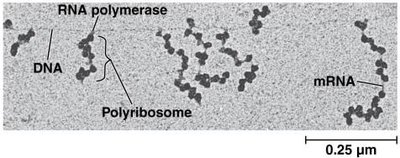
In bacteria, transcription and translation are coupled because there is no nucleus to separate the processes. Ribosomes can begin translating mRNA while it is still being transcribed.
Coupled transcription and translation: Unique to prokaryotes.
Efficiency: Rapid protein synthesis.
Genetic Code and Codons
Codon-Anticodon Pairing and Wobble
The genetic code consists of 61 codons specifying amino acids and 3 stop codons. There are fewer tRNAs than codons due to flexible base pairing (wobble) at the third position.
Wobble hypothesis: Flexibility in base pairing allows one tRNA to recognize multiple codons.
Example: Some tRNAs can pair with more than one codon due to wobble.
Transcription and Translation Start/Stop Sites
Transcription and translation have distinct start and stop sites, which dictate where synthesis begins and ends. These sites are located before and after untranslated regions (UTRs) in mRNA.
Transcription start/stop: Define RNA transcript boundaries.
Translation start/stop: Define protein coding region.
Sample Questions and Applications
Sample Exam Questions
Question: When the ribosome reaches a stop codon, what components can be isolated?
Question: Which ribosomal site holds the growing amino acid chain?
Question: What is the mRNA codon corresponding to a DNA template triplet?
Question: Which statement about codons is true?
Summary Table: Ribosome Sites and Functions
Site | Function |
|---|---|
P site | Holds tRNA with growing polypeptide chain |
A site | Holds tRNA with next amino acid |
E site | Exit site for discharged tRNA |
Summary Table: Translation Stages
Stage | Main Events |
|---|---|
Initiation | Assembly of initiation complex, start codon recognition |
Elongation | Codon recognition, peptide bond formation, translocation |
Termination | Stop codon recognition, release factor binding, polypeptide release |
Key Equations
Peptide Bond Formation:
Transcription:
Translation:
