 Back
BackTransport Systems and Evolutionary Adaptations in Vascular Plants
Study Guide - Smart Notes
 Tailored notes based on your materials, expanded with key definitions, examples, and context.
Transport in Xylem and Phloem
Vascular Tissue Systems
Vascular plants possess specialized tissues—xylem and phloem—that facilitate the transport of water, minerals, and organic compounds throughout the plant body. These tissues are essential for supporting increased plant size and complexity.
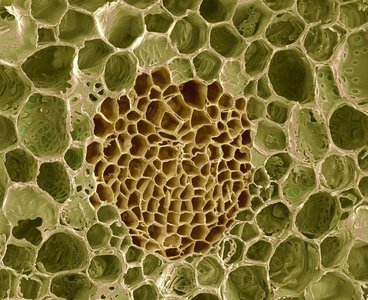
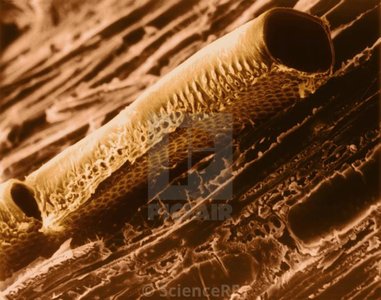
Xylem: Conducts water and dissolved minerals from roots to shoots. Composed mainly of tube-shaped cells called tracheids, which are strengthened by lignin, providing both transport and structural support.
Phloem: Consists of living cells arranged in tubes that distribute sugars, amino acids, and other organic products throughout the plant.
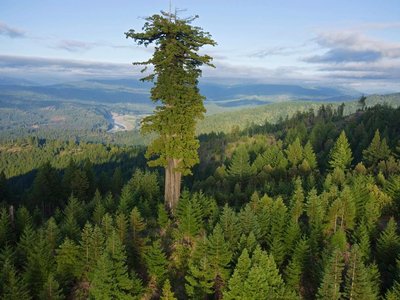
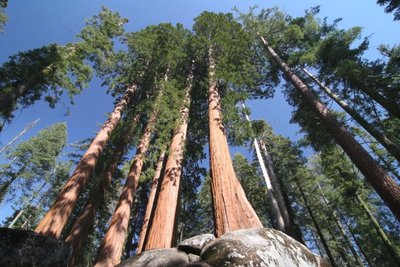
Evolution of vascular tissue enabled plants to grow taller, outcompeting shorter plants for sunlight and dispersing spores over greater distances.
Evolution of Roots and Leaves
Adaptations for Terrestrial Life
Roots and leaves are key evolutionary adaptations that allowed vascular plants to thrive on land by improving resource acquisition and photosynthetic efficiency.
Roots: Anchor plants and absorb water and nutrients from the soil.
Leaves: Increase surface area for capturing solar energy, enhancing photosynthesis.
Two types of leaves:
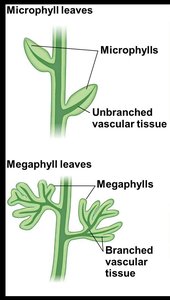
Microphylls: Small leaves with a single, unbranched vein.
Megaphylls: Larger leaves with a highly branched vascular system, allowing for greater photosynthetic productivity.
Seeds and Pollen: Key Adaptations for Life on Land
Seed Evolution and Dispersal
The evolution of seeds and pollen grains was a major innovation, allowing plants to colonize diverse terrestrial habitats and reproduce without the need for water for fertilization.
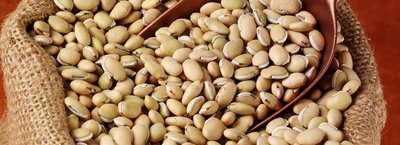
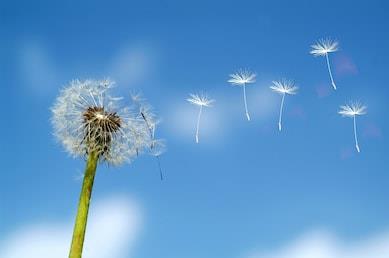
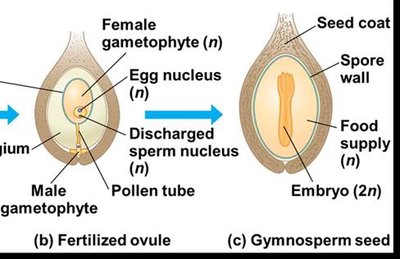
Seed: Consists of an embryo and its food supply, encased in a protective coat. Seeds can remain dormant until conditions are favorable for germination and can be dispersed by wind, water, or animals.
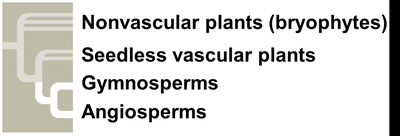
Seed plants are divided into two major clades:
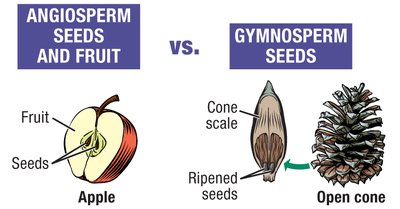
Gymnosperms: Produce "naked" seeds not enclosed in ovaries (e.g., conifers).
Angiosperms: Produce seeds enclosed within ovaries (fruits).
Terrestrial Adaptations in Seed Plants
Common Features of Seed Plants
Seed plants share several adaptations that enhance survival and reproductive success on land.
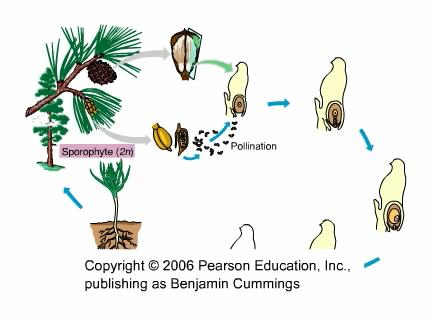
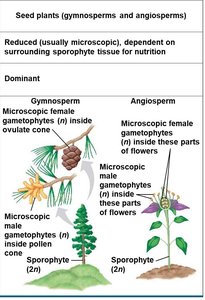
Reduced Gametophytes: Gametophytes are microscopic and develop within the tissues of the parent sporophyte, which provides protection and nutrients.
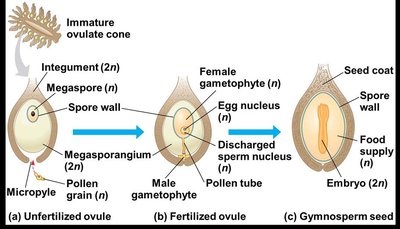
Ovules: Structures that produce and house the female gametophyte and, after fertilization, develop into seeds.
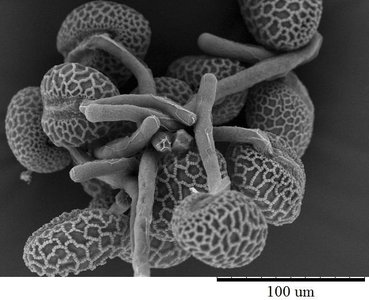
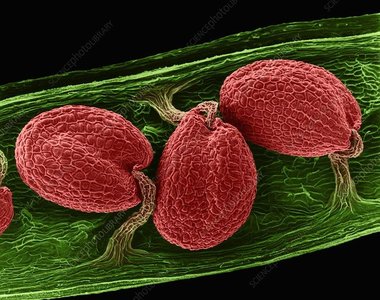
Pollen: Male gametophytes enclosed within a protective wall, allowing for dispersal without water.
Ovules and Pollen
Ovules and pollen are critical for the reproductive success of seed plants.
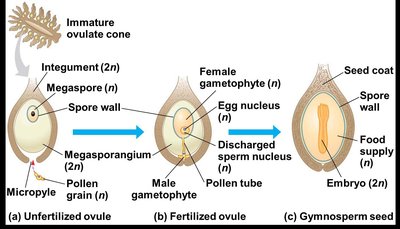
Ovule: Contains the female gametophyte, surrounded by a protective integument. Female gametophytes develop from large megaspores.
Pollen: Male gametophytes develop from microspores and are enclosed within a pollen wall. Pollination is the transfer of pollen to the ovule-containing part of the plant, enabling fertilization without water.
The Evolutionary Advantage of Seeds
Seeds vs. Spores
Seeds offer several evolutionary advantages over spores, contributing to the success of seed plants in terrestrial environments.
Seeds are multicellular, while spores are usually single-celled.
Seeds can remain dormant for extended periods, germinating when conditions are favorable.
Seeds contain a stored food supply, supporting early growth of the embryo.
Adaptations of Gymnosperms
Gymnosperms were well-adapted to drier conditions due to several key features:
Production of seeds and pollen, reducing dependence on water for reproduction.
Thick cuticles and leaves with small surface area to minimize water loss.
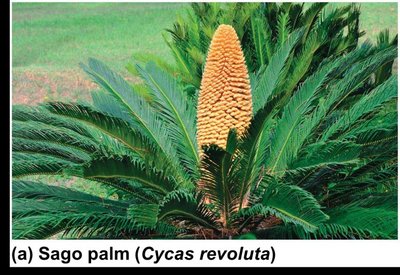
Summary Table: Key Features of Seed Plants
Feature | Gymnosperms | Angiosperms |
|---|---|---|
Seed Enclosure | Naked seeds (not enclosed in fruit) | Seeds enclosed in fruit (ovary) |
Gametophyte Location | Microscopic, inside cones | Microscopic, inside flowers |
Pollination | Mainly wind | Wind or animals |
Dominant Generation | Sporophyte | Sporophyte |
