 Back
Transport Through the Cell Membrane: Structure and Mechanisms
Study Guide - Smart Notes
 Tailored notes based on your materials, expanded with key definitions, examples, and context.
Transport Through the Cell Membrane
Overview of the Cell Membrane
The cell membrane is a selectively permeable barrier that surrounds the cell, controlling the movement of substances into and out of the cell. It allows essential molecules such as oxygen and nutrients to enter, while removing waste products like carbon dioxide and proteins. The membrane's selective permeability is crucial for maintaining cellular homeostasis.
Selective Permeability: Only certain particles can pass through; small molecules pass easily, while large molecules are blocked.
Function: Acts as a "bouncer," regulating entry and exit of substances.
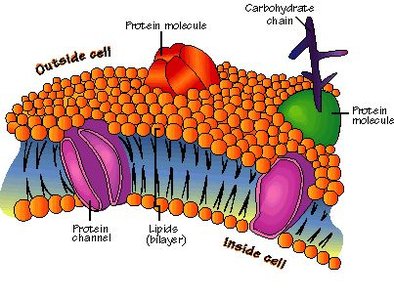
Cell Membrane Structure
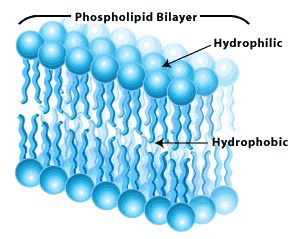
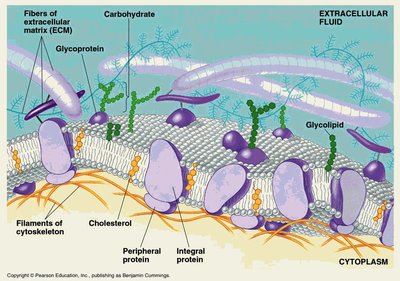
The cell membrane is primarily composed of a phospholipid bilayer with embedded proteins, carbohydrates, and steroids. This structure is often described as a fluid mosaic model due to its dynamic and varied composition.
Phospholipid Bilayer: Two layers of phospholipids with hydrophilic (water-loving) heads facing outward and hydrophobic (water-fearing) tails facing inward.
Steroids (e.g., Cholesterol): Fit between phospholipid tails, providing structural support and fluidity, especially in animal cells.
Carbohydrates: Located on the membrane's exterior, involved in cell communication and identification.
Proteins:
Peripheral Proteins: Located on the membrane's surface (inside or outside).
Integral Proteins: Embedded within the bilayer, sometimes spanning the entire membrane.
Fluid Mosaic Model: Describes the membrane as a flexible layer with moving components, not a rigid structure.
Types of Membrane Transport
Passive Transport
Passive transport is the movement of substances across the cell membrane without the use of cellular energy (ATP). Substances move from areas of high concentration to low concentration, following the concentration gradient.
Diffusion: Movement of small, nonpolar molecules (e.g., oxygen, carbon dioxide) directly through the membrane until equilibrium is reached.
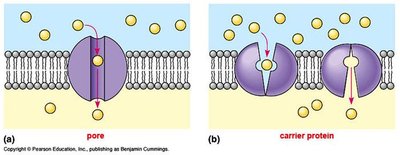
Facilitated Diffusion: Movement of larger or charged molecules (e.g., glucose, Cl-) via transport proteins (channels or carriers).
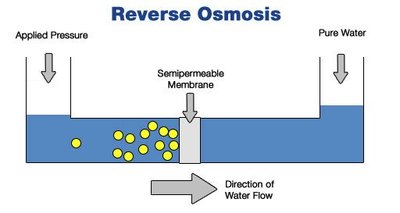
Osmosis: Passive transport of water molecules through a selectively permeable membrane.
Osmosis and Tonicity
Osmosis is the diffusion of water across a semipermeable membrane. The direction of water movement depends on the relative solute concentrations inside and outside the cell, described by the terms hypotonic, hypertonic, and isotonic.
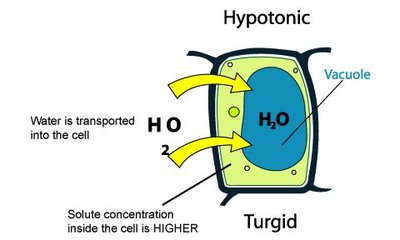
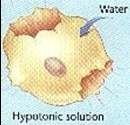
Hypotonic Solution: Lower solute concentration outside the cell; water enters the cell, causing it to swell (turgid in plants, possible cytolysis in animals).
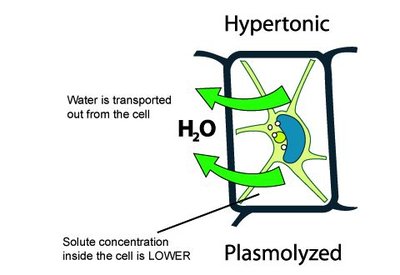
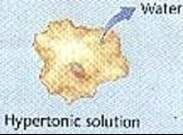
Hypertonic Solution: Higher solute concentration outside the cell; water leaves the cell, causing it to shrink (plasmolysis in plants, crenation in animals).
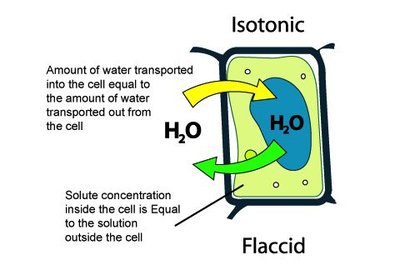
Isotonic Solution: Equal solute concentration; no net water movement, cell remains stable.
Cellular Responses to Water Imbalance
Animal Cells: In hypotonic solutions, cells may burst (cytolysis); in hypertonic solutions, they shrivel and may die.
Plant Cells: In hypotonic solutions, cells become turgid due to turgor pressure; in hypertonic solutions, they undergo plasmolysis and wilt.
Active Transport
Active transport is the movement of molecules against their concentration gradient (from low to high concentration), requiring energy in the form of ATP. This process is essential for maintaining concentration differences across the membrane.
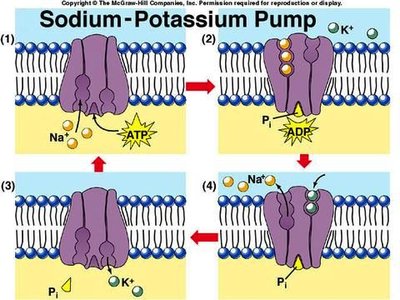
Cell Membrane Pumps: Proteins that use energy to move substances (e.g., sodium-potassium pump).
Sodium-Potassium Pump: Moves 3 Na+ ions out and 2 K+ ions into the cell, crucial for nerve impulse transmission.
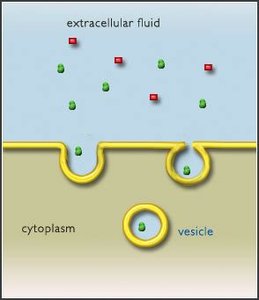
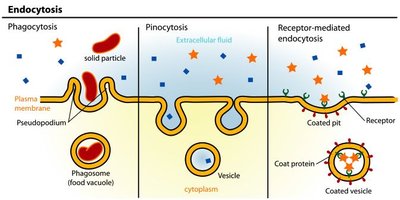
Endocytosis: Process by which large particles or fluids are engulfed into the cell via vesicles.
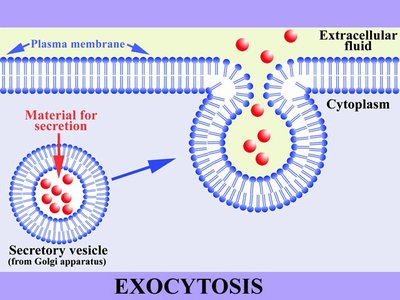
Exocytosis: Process by which large particles are expelled from the cell via vesicles.
Endocytosis and Its Types
Endocytosis involves the cell membrane engulfing material to bring it into the cell, forming a vesicle. There are several types:
Pinocytosis: "Cell drinking"; uptake of fluids and dissolved substances.
Phagocytosis: "Cell eating"; uptake of large particles or entire cells (e.g., white blood cells ingesting bacteria).
Receptor-Mediated Endocytosis: Uptake of specific molecules recognized by cell surface receptors.
Exocytosis
Exocytosis is the process by which cells expel materials in vesicles that fuse with the cell membrane, releasing their contents outside the cell. This is important for removing waste and secreting proteins.
Summary Table: Types of Membrane Transport
Type of Transport | Energy Required? | Direction (Concentration Gradient) | Examples |
|---|---|---|---|
Simple Diffusion | No | High to Low | O2, CO2 |
Facilitated Diffusion | No | High to Low | Glucose, Cl- |
Osmosis | No | High to Low (water) | Water |
Active Transport | Yes (ATP) | Low to High | Sodium-Potassium Pump |
Endocytosis | Yes (ATP) | Into Cell | Phagocytosis, Pinocytosis |
Exocytosis | Yes (ATP) | Out of Cell | Secretion of proteins, waste removal |
