Back
BackUnifying Themes and the Study of Life: Foundations of Biology
Study Guide - Smart Notes
 Tailored notes based on your materials, expanded with key definitions, examples, and context.
Introduction to Biology
What is Life? Defining Characteristics
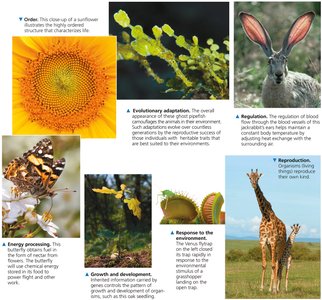
Biology is the scientific study of life. While life itself is difficult to define with a single statement, living organisms share a set of common properties and processes that distinguish them from nonliving matter. These properties include order, evolutionary adaptation, regulation, energy processing, growth and development, response to the environment, and reproduction.
Order: Living things exhibit highly ordered structures, from the molecular to the organismal level.
Evolutionary Adaptation: Populations of organisms evolve over generations through the process of natural selection, resulting in adaptations to their environments.
Regulation: Organisms regulate their internal environment to maintain a stable, constant condition (homeostasis).
Energy Processing: Living organisms acquire energy and transform it to do work, such as moving, growing, and reproducing.
Growth and Development: Organisms grow and develop according to instructions coded by their genes.
Response to the Environment: All organisms respond to environmental stimuli.
Reproduction: Living things reproduce, passing their genetic information to the next generation.
Unifying Themes in Biology
Major Themes for Organizing Biological Knowledge
To organize the vast scope of biological information, biologists focus on several unifying themes that provide a framework for understanding life:
Organization
Information
Energy and Matter
Interactions
Evolution
Organization: Levels of Biological Organization
Hierarchy from Molecules to the Biosphere
Life can be studied at different levels, from the smallest molecules to the entire biosphere. Each level exhibits emergent properties—new characteristics that arise from the arrangement and interaction of parts within a system.
Reductionism: Breaking down complex systems into simpler components for study.
Emergent Properties: Properties that arise at each new level of organization, not present at the preceding level.
Systems Biology: The holistic study of complex interactions within biological systems.
Example: Photosynthesis occurs in an intact chloroplast but not in a mixture of its isolated components, illustrating the importance of organization for function.
Structure and Function
There is a close relationship between the structure of biological components and their function. Analyzing structure provides insight into function, and vice versa.
Example: The shape of a leaf maximizes sunlight capture; the anatomy of a hummingbird enables hovering and backward flight for feeding on nectar.

Cell Components: The Cell Theory
The Cell: Basic Unit of Life
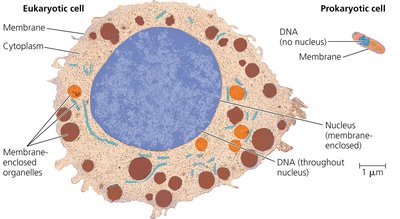
The cell is the fundamental unit of structure and function in living organisms. All living things are composed of cells, and all cells arise from pre-existing cells. There are two main types of cells:
Prokaryotic Cells: Lack a nucleus and membrane-bound organelles; found in Bacteria and Archaea.
Eukaryotic Cells: Have a nucleus and membrane-bound organelles; found in plants, animals, fungi, and protists.
Information: Genetic Material and Gene Expression
DNA: The Molecule of Inheritance
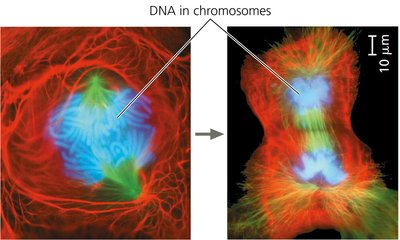
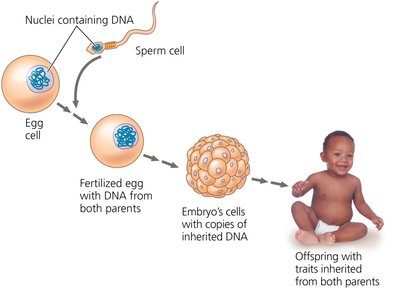
Within cells, genetic information is stored in the form of DNA (deoxyribonucleic acid), organized into chromosomes. Genes, segments of DNA, encode the instructions for building proteins and RNAs, which determine the structure and function of cells.
Transmission of Genetic Information
Genetic information is passed from parents to offspring through the replication of DNA during cell division. This process ensures continuity of life and inheritance of traits.
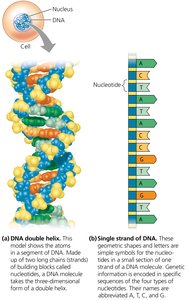
Molecular Structure of DNA
DNA consists of two long strands forming a double helix, with each strand composed of four types of nucleotides (adenine, thymine, cytosine, guanine). The sequence of these nucleotides encodes genetic information.
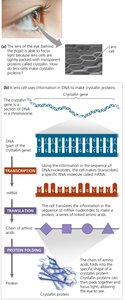
Gene Expression
Gene expression is the process by which information from a gene is used to synthesize a functional product, typically a protein. This involves two main steps:
Transcription: DNA is transcribed into messenger RNA (mRNA).
Translation: mRNA is translated into a chain of amino acids, forming a protein.
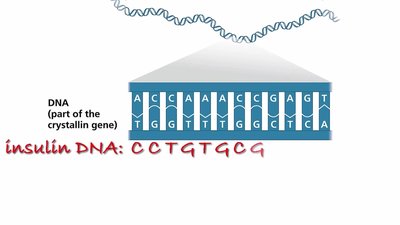
Universality of the Genetic Code
All living organisms use essentially the same genetic code, providing strong evidence for the unity of life. Differences between species are due to variations in nucleotide sequences, not the code itself.
Genomics and Proteomics
Large-Scale Analysis of Biological Information
The genome is the complete set of genetic instructions in an organism. Genomics is the study of whole sets of genes and their interactions, while proteomics focuses on the entire set of proteins produced by an organism. Advances in technology, bioinformatics, and interdisciplinary research have revolutionized these fields, enabling rapid analysis and interpretation of vast biological data.
Energy and Matter
Life Requires the Transfer and Transformation of Energy and Matter
All living organisms require energy to perform work, such as movement, growth, and reproduction. Energy flows through ecosystems, primarily entering as sunlight and exiting as heat, while matter cycles within ecosystems.