 Back
BackUnit 6: The Molecules of Life – Study Guide
Study Guide - Smart Notes
 Tailored notes based on your materials, expanded with key definitions, examples, and context.
Bonding
Electron Configuration and Chemical Behavior
The electron configuration of an atom determines its chemical properties and reactivity. Atoms seek to fill their outermost electron shell, leading to the formation of chemical bonds.
Valence electrons are the electrons in the outer shell and are involved in bonding.
Atoms with incomplete valence shells tend to react to achieve stability.
Example: Oxygen has six valence electrons and tends to form bonds to complete its octet.
Types of Chemical Bonds
Chemical bonds are classified based on how electrons are shared or transferred between atoms.
Covalent bonds: Atoms share electron pairs. Can be nonpolar (equal sharing) or polar (unequal sharing).
Nonpolar covalent bonds: Electrons are shared equally (e.g., O2).
Polar covalent bonds: Electrons are shared unequally, creating partial charges (e.g., H2O).
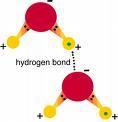
Hydrogen bonds: Weak attractions between a hydrogen atom (partially positive) and an electronegative atom (partially negative), often seen in water.
Ionic bonds: Electrons are transferred, forming charged ions that attract each other (e.g., NaCl).
Bond Strength and Interactions
The strength of bonds affects how substances interact:
Covalent bonds are the strongest, followed by ionic bonds, then hydrogen bonds.
Hydrogen bonds and ionic bonds are important for intermolecular interactions.
Example: Water molecules interact via hydrogen bonds.
Intermolecular vs. Intramolecular Bonding
Bonding can occur within molecules (intramolecular) or between molecules (intermolecular).
Intramolecular bonds: Covalent bonds within a molecule (e.g., O-H bonds in water).
Intermolecular bonds: Hydrogen bonds between molecules (e.g., between water molecules).
Example: Water's cohesion is due to intermolecular hydrogen bonds.
Properties of Water
Special Properties of Water
Water is essential for life due to its unique properties, which arise from hydrogen bonding.
Cohesion: Water molecules stick together due to hydrogen bonds.
Adhesion: Water molecules stick to other substances.
Surface tension: The surface of water resists external force.
High specific heat: Water absorbs and retains heat, stabilizing temperatures.
Solvent properties: Water dissolves many substances due to its polarity.
Example: Water's high heat capacity helps regulate climate and body temperature.
pH and Water Chemistry
The pH scale measures the concentration of H+ ions in a solution, indicating its acidity or basicity.
pH scale: Ranges from 0 (acidic) to 14 (basic), with 7 being neutral.
H+ and OH- ions: Water can dissociate into these ions, affecting pH.
Logarithmic scale: Each unit change in pH represents a tenfold change in H+ concentration.
Equation:
Example: A solution with pH 5 has 10 times more H+ ions than one with pH 6.
Biomolecules of Cells
Classes of Biomolecules
Cells contain four main classes of macromolecules, each with distinct structures and functions.
Carbohydrates: Provide energy and structural support. Main elements: C, H, O.
Lipids: Store energy, form membranes, and act as signaling molecules. Main elements: C, H, O.
Proteins: Catalyze reactions, provide structure, and regulate processes. Main elements: C, H, O, N, sometimes S.
Nucleic acids: Store and transmit genetic information. Main elements: C, H, O, N, P.
Example: Glucose (carbohydrate), triglyceride (lipid), hemoglobin (protein), DNA (nucleic acid).
Monomers and Polymers
Macromolecules are built from smaller units called monomers, which join to form polymers.
Monomer: A single building block (e.g., amino acid, monosaccharide).
Polymer: A chain of monomers (e.g., protein, polysaccharide).
Example: Starch is a polymer of glucose monomers.
Dehydration Synthesis and Hydrolysis
Macromolecules are assembled and broken down by specific chemical reactions.
Dehydration synthesis: Joins monomers by removing a water molecule.
Hydrolysis: Breaks polymers into monomers by adding water.
Law of Conservation of Mass: Mass is conserved in these reactions.
Equation for dehydration synthesis:
Equation for hydrolysis:
Carbohydrates
Carbohydrates are sugars and their polymers, serving as energy sources and structural materials.
Monosaccharides: Simple sugars (e.g., glucose).
Disaccharides: Two monosaccharides joined (e.g., sucrose).
Polysaccharides: Long chains of monosaccharides (e.g., starch, glycogen, cellulose).
Example: Glycogen stores energy in animal cells.
Lipids
Lipids are hydrophobic molecules, including fats, oils, and phospholipids.
Triglycerides: Energy storage molecules made of glycerol and three fatty acids.
Phospholipids: Major component of cell membranes, with hydrophilic heads and hydrophobic tails.
Example: Phospholipids form bilayers in cell membranes.
Proteins
Proteins are polymers of amino acids, performing diverse functions in cells.
Structure: Amino acids linked by peptide bonds form polypeptides.
Function: Enzymes, structural proteins, transport proteins, etc.
Example: Enzymes catalyze biochemical reactions.
Nucleic Acids
Nucleic acids (DNA and RNA) store and transmit genetic information.
Structure: Polymers of nucleotides (sugar, phosphate, nitrogenous base).
Function: DNA encodes genetic instructions; RNA is involved in protein synthesis.
Example: DNA is found in chromosomes; RNA in ribosomes.
Vocabulary and Word Roots
Key Terms
Covalent bond: Attraction between atoms sharing electrons.
Hydrogen bond: Weak attraction between hydrogen and electronegative atom.
Ionic bond: Attraction between oppositely charged ions.
Monomer: Single building block of a polymer.
Polymer: Chain of monomers.
Hydrophilic: Water-loving, polar.
Hydrophobic: Water-fearing, nonpolar.
Peptide bond: Linkage between amino acids in proteins.
Dehydration reaction: Joins monomers by removing water.
Hydrolysis reaction: Breaks polymers by adding water.
Word Roots
ad-: to or toward (adhesion)
aqua-: water (aqueous solution)
co-: together; -valent: strength (covalent bond)
de-: without or remove; hydro-: water (dehydration reaction)
di-: two; -sacchar: sugar (disaccharide)
carb-: coal (carboxyl group)
glyco-: sweet (glycogen)
-lyse: break (hydrolysis)
macro-: large (macromolecule)
mono-: single; -mer: part (monomer)
-philos: loving (hydrophilic)
-phobos: fearing (hydrophobic)
poly-: many (polymer, polysaccharide)
