 Back
BackUnit 7: Natural Selection – Foundations and Mechanisms of Evolution
Study Guide - Smart Notes
 Tailored notes based on your materials, expanded with key definitions, examples, and context.
Unit 7: Natural Selection
7.1: History of Evolutionary Thought
The development of evolutionary theory has involved contributions from many scientists and philosophers, each adding to our understanding of how species change over time.
Plato: Proposed that all species are perfect and unchanging.
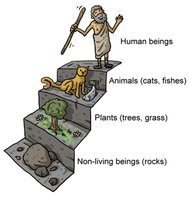
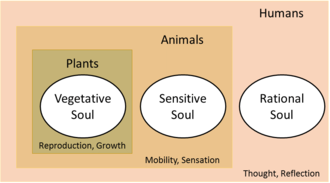
Aristotle: Suggested that species could be arranged in a hierarchy of increasing complexity, known as the "Scala Naturae" or "Great Chain of Being."
Taxonomy: The science of classifying organisms, foundational for understanding evolutionary relationships.
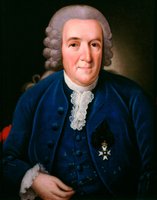
Carolus Linnaeus: Founder of modern taxonomy; developed the binomial nomenclature system. He believed species were fixed and did not change.
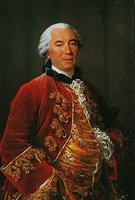
Georges-Louis Leclerc (Comte de Buffon): Proposed that species could change due to environmental factors and speculated that Earth was older than 6,000 years.
Erasmus Darwin: Noted vestigial structures and suggested that competition and selection could improve species.
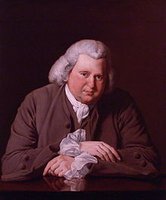
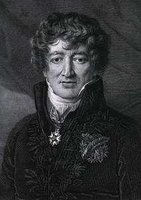
Georges Cuvier: Founded paleontology, opposed evolution, and supported catastrophism (major events shape Earth's features and cause extinctions).
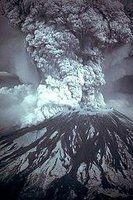
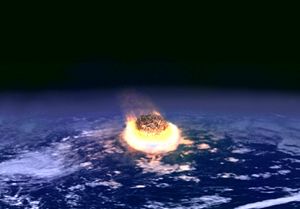
Catastrophism: The idea that sudden, short-lived, violent events, such as volcanoes, earthquakes, and floods, have shaped Earth's surface.
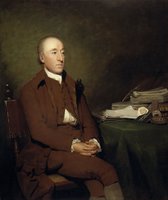
James Hutton: Proposed the concept of "deep time" and gradual geological processes.
Charles Lyell: Outlined uniformitarianism, the idea that the same geological processes observed today have occurred throughout Earth's history.
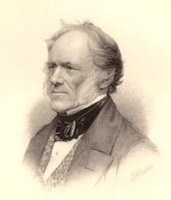
Uniformitarianism: Slow, uniform, and continuous processes are responsible for Earth's features. "The present is the key to the past."
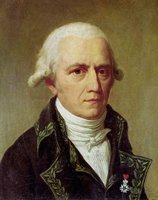
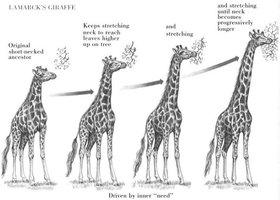
Jean-Baptiste de Lamarck: First to propose a testable hypothesis for evolution. Correctly suggested that adaptations drive evolution and that characteristics are inherited, but incorrectly believed in inheritance of acquired traits ("use and disuse").
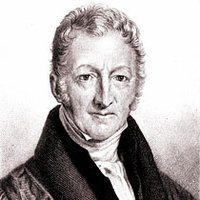
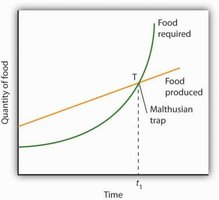
Thomas Malthus: Economist who argued that populations grow faster than resources, leading to competition and survival of the fittest.
7.2: Darwin
Charles Darwin's observations and studies laid the foundation for the theory of evolution by natural selection.
Born in England in 1809, Darwin was interested in nature from a young age. He studied medicine and theology before becoming a naturalist.
He became an assistant to botanist John Henslow and geologist Adam Sedgwick, gaining expertise in classification and geology.
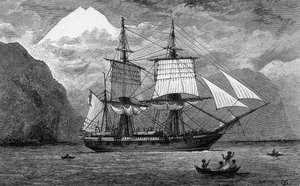
Darwin joined the HMS Beagle as a companion to Captain Fitzroy, with the main goal of mapping the South American coastline.
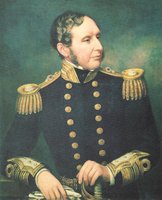
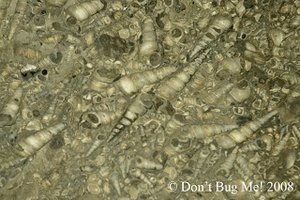
Darwin observed geological formations and fossils in South America, including raised beaches and marine fossils in the Andes.
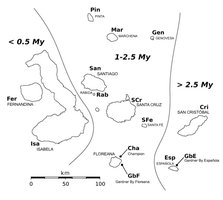
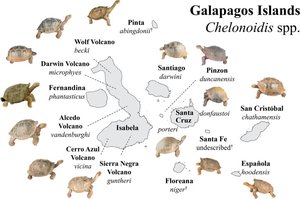
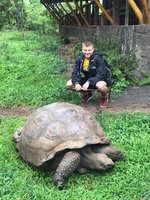
His voyage to the Galapagos Islands was pivotal; he noted that species on each island were uniquely adapted to their environments.
Darwin's finch observations led to the idea that species evolve to fit their environment, a process he called natural selection.
Genetic Variation: Arises from mutations and meiosis, providing the raw material for evolution.
Adaptation: Inherited traits that enhance survival and reproduction in a specific environment.
Fitness: The ability of an organism to survive and reproduce in its environment.
7.3: Selection
Selection is the process by which certain traits become more common in a population due to differential reproductive success.
Artificial Selection: Humans select for desirable traits in plants and animals.
Natural Selection: Outlined by Darwin, it is the process where organisms with advantageous traits survive and reproduce more successfully.
Key Points of Natural Selection:
Variation exists within populations.
Organisms compete for limited resources.
Individuals with advantageous traits have higher reproductive success.
Populations become better adapted over time.
7.4: Evidence of Evolution
Multiple lines of evidence support the theory of evolution, including fossils, anatomical structures, molecular data, and embryology.
Fossils: Remains or traces of ancient organisms. The law of superposition states that older fossils are found in deeper layers.
Transitional Fossils: Show intermediate forms between ancestral and derived species.
Homologous Structures: Anatomically similar structures inherited from a common ancestor.
Analogous Structures: Different structures with similar functions, evolved independently.
Vestigial Structures: Structures that have lost their original function in a species.
Molecular Evidence: DNA and protein similarities reflect evolutionary relationships. For example, humans share 98% of their DNA with chimpanzees.
Embryological Evidence: Similar patterns of development suggest common ancestry.
7.5: Hardy-Weinberg Principle
The Hardy-Weinberg principle provides a mathematical model to study genetic variation in populations.
Evolution: Defined as a change in allele frequencies over time.
Gene Pool: The total collection of alleles in a population.
Allele Frequencies: Denoted as p (dominant) and q (recessive), with the equation .
Genotype Frequencies: , where = homozygous dominant, = heterozygous, = homozygous recessive.
Hardy-Weinberg Equilibrium: Occurs when allele frequencies remain constant if no evolutionary forces act on the population.
Conditions for Equilibrium: No mutations, no migration, large population, random mating, and no selection.
7.6: Genetic Drift and Gene Flow
Genetic drift and gene flow are mechanisms that alter allele frequencies in populations.
Genetic Drift: Random changes in allele frequencies, especially in small populations.
Bottleneck Effect: A sharp reduction in population size reduces genetic diversity.
Founder Effect: A new population started by a small group may have different allele frequencies than the original population.
Gene Flow: Movement of alleles between populations through migration.
7.7: Types of Natural Selection
Natural selection can take different forms depending on which phenotypes are favored.
Stabilizing Selection: Favors intermediate phenotypes; extremes are selected against. Example: Human birth weight.
Directional Selection: Favors one extreme phenotype. Example: Evolution of horse size.
Disruptive Selection: Favors both extremes over the intermediate phenotype. Example: Mice coloration in patchy environments.
7.8: Other Selection Mechanisms
Other forms of selection include sexual selection, exaptation, and heterozygote advantage.
Sexual Selection: Traits that increase mating success become more common.
Sexual Dimorphism: Distinct differences between sexes in appearance or size.
Exaptation: Traits evolved for one function are co-opted for another (e.g., feathers for flight).
Heterozygote Advantage: Heterozygotes have a selective advantage (e.g., sickle cell trait and malaria resistance).
7.9: Evolution and Species Concepts
Evolution occurs at both small (microevolution) and large (macroevolution) scales. The biological species concept defines species based on the ability to interbreed and produce fertile offspring.
Microevolution: Changes in allele frequencies within a population.
Macroevolution: Large-scale changes that can result in new species.
Biological Species Concept: Species are groups of interbreeding natural populations that are reproductively isolated from other such groups.
7.10: Speciation
Speciation is the process by which new species arise.
Allopatric Speciation: Occurs when populations are geographically separated.
Sympatric Speciation: Occurs without geographic separation, often through genetic changes.
Adaptive Radiation: Rapid evolution of many species from a common ancestor, often when new habitats become available.
Punctuated Equilibrium: Species remain unchanged for long periods, punctuated by rapid evolutionary changes.
Gradualism: Species evolve through a slow and steady accumulation of small changes.
7.11: Isolating Mechanisms
Reproductive isolation maintains species boundaries.
Prezygotic Mechanisms: Prevent mating or fertilization (habitat, temporal, behavioral, mechanical, gamete isolation).
Postzygotic Mechanisms: Prevent hybrid offspring from developing into fertile adults (hybrid inviability, infertility, breakdown).
7.12: Life History and the Origin of Life
The origin of life involved several key stages, from the formation of simple molecules to self-replicating systems.
Big Bang Theory: Universe began 13.8 billion years ago; Earth formed 4.5 billion years ago.
Miller-Urey Experiment: Simulated early Earth conditions and produced amino acids, supporting the idea that organic molecules could form naturally.
Stages of Life: Monomers → Polymers → Protocells → Self-replicating systems (RNA world hypothesis).
LUCA: Last Universal Common Ancestor, shared by all life.
7.13: Extinctions
Extinction is the loss of all members of a species. Mass extinctions are rapid decreases in biodiversity, with five major events in Earth's history.
7.14: Taxonomy
Taxonomy is the science of naming and classifying organisms.
Binomial Nomenclature: Two-part scientific naming system (Genus species), always italicized or underlined.
Linnaean System: Hierarchical classification: Species, Genus, Family, Order, Class, Phylum, Kingdom, Domain.
7.15: Three Domain System
All life is classified into three domains based on genetic and cellular differences.
Bacteria: Single-celled, prokaryotic, cell walls with peptidoglycan.
Archaea: Single-celled, prokaryotic, cell walls without peptidoglycan, often in extreme environments.
Eukarya: Cells with a nucleus, includes protists, fungi, plants, and animals.
7.16: Mapping Out Evolution
Evolutionary relationships are depicted using diagrams such as cladograms and phylogenetic trees.
Cladogram: Shows relationships based on shared characteristics; branch lengths are arbitrary.
Phylogenetic Tree: Shows evolutionary history with branch lengths indicating time since divergence.
Clade: A group consisting of a common ancestor and all its descendants.
Node: Represents a speciation event.
Outgroup: A species or group outside the clade of interest, used for comparison.
Ancestral Traits: Traits present in the common ancestor.
Derived Traits: Traits that evolved after the common ancestor.
7.17: Species Relations
Comparative methods help clarify evolutionary relationships.
Convergent Evolution: Independent evolution of similar traits in unrelated lineages due to similar environmental pressures.
Molecular Comparisons: DNA and protein sequence similarities are used to infer evolutionary relationships and estimate divergence times (molecular clocks).
Protein Comparisons: Differences in protein sequences can help determine phylogeny.
