 Back
Units of Nervous System Function: Neurons, Glia, and Cellular Structure
Study Guide - Smart Notes
 Tailored notes based on your materials, expanded with key definitions, examples, and context.
Units of Nervous System Function
Introduction to Nervous System Cells
The nervous system is composed of specialized cells that process and transmit information. Understanding the structure and function of these cells is fundamental to the study of biology and neuroscience.
Neurons are the primary units of information processing and transmission.
Glial cells provide support, protection, and nutrition to neurons.
Nervous System Cells
Historical Perspectives: The Neuron Doctrine
Early debates in neuroscience centered on whether the nervous system was a continuous network or composed of individual cells. Two key figures contributed to this debate:
Camillo Golgi: Developed a silver nitrate stain to visualize neural tissue and proposed the "nerve net" theory, suggesting interconnected fibers.
Santiago Ramón y Cajal: Used Golgi's stain on chick embryos and concluded that the nervous system is made of discrete cells, leading to the Neuron Doctrine.

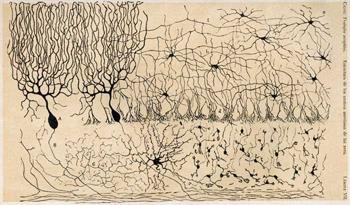

The Neuron Doctrine states that neurons are the fundamental units of brain function. While neurons are individual cells, the brain operates as a highly connected network.
Neurons: Structure and Function
Basic Structure of Neurons
Neurons are specialized for information processing and transmission. Their structure is closely related to their function.
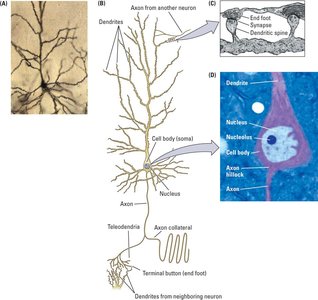
Dendrites: Receive information from other neurons.
Cell Body (Soma): Contains the nucleus and integrates information.
Axon: Transmits information to other cells; each neuron has only one axon.
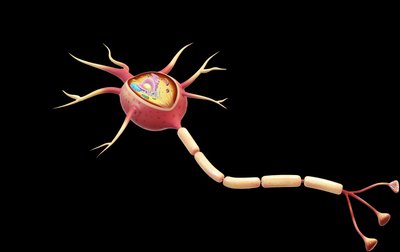
Neurons exhibit neuroplasticity, the ability to change shape and function, which underlies learning and memory. Most behaviors are produced by groups of neurons working together.
Specialized Structures
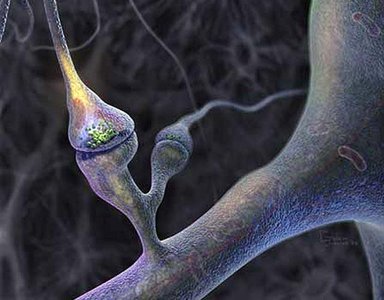
Dendritic Spines: Protrusions on dendrites that increase surface area and are the main sites of synaptic input.
Axon Hillock: The region where the axon originates from the soma and where action potentials begin.
Axon Collaterals: Branches of an axon that allow communication with multiple targets.
Terminal Buttons (Boutons): Knobs at the end of axons that release neurotransmitters to communicate with other neurons.
Synapses and Information Flow
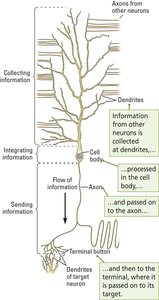
A synapse is the gap between the terminal button of one neuron and the dendritic spine of another. Information typically flows from dendrite to soma to axon to terminal button.

Types of Neurons
Neurons are classified based on their function:
Sensory Neurons: Bring information to the central nervous system (CNS).
Interneurons: Associate sensory and motor activity within the CNS.
Motor Neurons: Send signals from the CNS to muscles.
Type | Function | Example |
|---|---|---|
Sensory Neuron | Input to CNS | Bipolar neuron (retina) |
Interneuron | Association within CNS | Pyramidal cell (cortex) |
Motor Neuron | Output to muscles | Spinal cord motor neuron |


Neural Connections and Signal Integration
The structure of a neuron reflects its connectivity. Large cell bodies often have long extensions, while small cell bodies have short extensions. Neurons receive thousands of excitatory and inhibitory signals, which are integrated to determine whether the neuron will fire an action potential.
Excitation: Increases the likelihood of firing.
Inhibition: Decreases the likelihood of firing.
Glial Cells
Types and Functions of Glial Cells
Glial cells are non-neuronal cells that support and protect neurons. They outnumber neurons in the brain and perform a variety of essential functions.
Ependymal Cells: Line the ventricles and produce cerebrospinal fluid (CSF).
Astrocytes: Provide structural support, regulate blood flow, form scar tissue, and help clear neurotransmitters.
Microglia: Act as immune cells, removing debris and dead cells through phagocytosis.
Oligodendrocytes: Myelinate axons in the CNS.
Schwann Cells: Myelinate axons in the peripheral nervous system (PNS).

Myelin and Nervous System Disorders
Myelin is a fatty coating produced by oligodendrocytes and Schwann cells that insulates axons and speeds neural transmission. Disorders such as Multiple Sclerosis (MS) involve the loss of myelin, leading to impaired neural communication.
Myelin is essential for rapid signal transmission.
MS is an autoimmune disease that damages myelin in the CNS.
Axonal Regeneration
Regeneration of axons is possible in the PNS due to the activity of Schwann cells and microglia, but is limited in the CNS.
Cellular Structure and Function
Cell as a Factory
The cell's structure determines its function. Key organelles include:
Cell Membrane: Regulates movement of substances in and out of the cell; composed of a phospholipid bilayer.
Nucleus: Contains DNA and is the site of gene transcription.
Endoplasmic Reticulum (ER): Site of protein synthesis (translation).
Golgi Bodies: Package and label proteins for transport.
Mitochondria: Produce energy for the cell.
Microfilaments and Microtubules: Provide structural support and transport materials within the cell.
Cell Membrane: Barrier and Gatekeeper
The cell membrane separates the intracellular and extracellular environments, maintaining different concentrations of ions and molecules. It is selectively permeable, allowing only certain substances to pass through via embedded proteins:
Channels: Allow passive movement of ions.
Gates: Open or close to regulate passage.
Pumps: Actively transport substances against concentration gradients.
Chemistry Review
Atoms, Ions, and Molecules
Understanding the chemical basis of cellular function is essential for biology:
Elements: Substances that cannot be broken down further (e.g., oxygen, carbon, hydrogen).
Atoms: Smallest units of elements, composed of protons, neutrons, and electrons.
Ions: Atoms that have gained or lost electrons, resulting in a charge.
Molecules: Formed by atoms bonded together; smallest units of compounds.
Salts: Formed by the attraction between oppositely charged ions (e.g., NaCl).
Water and Biological Function
Water is a polar molecule, enabling it to dissolve salts and other substances. The movement of ions in water is critical for neural communication.
Genetic Information and Protein Synthesis
Nucleus and Gene Expression
The nucleus contains chromosomes made of DNA, which encode genes. Genes are segments of DNA that direct the synthesis of proteins.
Transcription: DNA is copied into messenger RNA (mRNA).
Translation: mRNA is used as a template to assemble amino acids into proteins at the ribosome.
Proteins are composed of amino acids linked by peptide bonds. The sequence of amino acids determines the protein's structure and function.
Protein Structure and Function
Proteins can change shape when interacting with other molecules, enabling dynamic cellular functions.
Proteins serve as enzymes, structural components, and membrane channels, gates, or pumps.
Genes, Cells, and Behavior
From Genes to Behavior
Genes encode proteins, which determine cell structure and function. The collective activity of cells produces behavior. The relationship between genotype (genetic makeup) and phenotype (observable traits) is central to biology.
Genotype: The genetic constitution of an organism.
Phenotype: The observable physical and behavioral traits.
Summary: The nervous system is composed of neurons and glial cells, each with specialized structures and functions. Cellular and molecular processes underlie the ability of the nervous system to process information and generate behavior.
