 Back
Variations on Mendelian Genetics: Patterns of Inheritance and Their Exceptions
Study Guide - Smart Notes
 Tailored notes based on your materials, expanded with key definitions, examples, and context.
Patterns of Inheritance
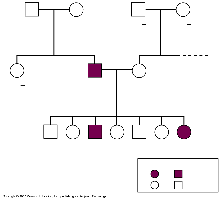
Pedigree Analysis
Pedigrees are graphical representations of family relationships and are used to track the inheritance of specific traits across generations. They help determine whether traits are dominant, recessive, or linked to sex chromosomes, and can be used to infer individual genotypes based on observed phenotypes.
Symbols: Circles represent females, squares represent males. Shaded symbols indicate individuals expressing the trait of interest.
Applications: Used in genetic counseling and research to predict the likelihood of inheriting genetic disorders.
Variations on Mendel's Laws
Incomplete Dominance
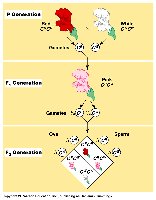
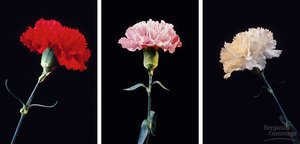
Incomplete dominance occurs when the phenotype of the heterozygote is intermediate between the phenotypes of the two homozygotes. This results in a blending of traits, rather than one trait being completely dominant over the other.
Example: Crossing red and white snapdragons produces pink F1 hybrids. In the F2 generation, the ratio is 1 red : 2 pink : 1 white.
Genotypic Ratio:
Codominance
Codominance occurs when both alleles in a heterozygote are fully expressed, resulting in a phenotype that shows both traits simultaneously.
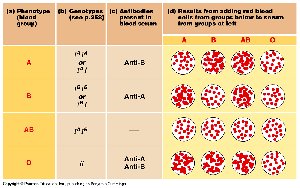
Example: The ABO blood group system, where both IA and IB alleles are expressed in individuals with AB blood type.
Multiple Alleles
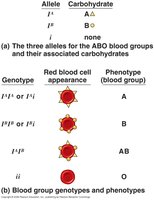
Some traits are controlled by more than two alleles. The ABO blood group is a classic example, with three alleles: IA, IB, and i.
Genotypes and Phenotypes:
Type A: IAIA or IAi
Type B: IBIB or IBi
Type AB: IAIB
Type O: ii
Application: Blood transfusions and compatibility testing.
Rh Factor
The Rh blood factor is a separate trait from the ABO blood group. Rh+ is dominant, Rh- is recessive. Blood types such as A+ or B- are dihybrid traits, combining ABO and Rh factors.
Clinical Importance: Rh incompatibility can cause hemolytic disease of the newborn.
Epistasis
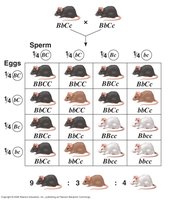
Epistasis occurs when one gene locus alters or masks the expression of another gene locus. This can modify the expected Mendelian ratios.
Example: In mice, one gene determines pigment production (C = color, c = albino), while another gene determines pigment color (B = brown, b = black).
Result: The interaction produces a modified phenotypic ratio.
Bombay Effect
The Bombay phenotype is an example of epistasis affecting the ABO blood group. Individuals with the hh genotype lack the H antigen, so their blood type appears as O regardless of their ABO genotype.
Genotypes: H = dominant, normal ABO expression; h = recessive, no A or B antigen.
Clinical Relevance: Important in blood typing and transfusion medicine.
Polygenic Inheritance
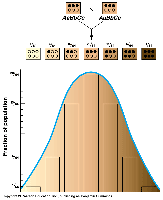
Polygenic inheritance involves multiple genes contributing to a single trait, resulting in continuous variation rather than discrete categories. Traits such as skin color and height are polygenic.
Characteristics: Traits show a bell-curve distribution in populations.
Example: Skin color is controlled by several genes, each contributing to the overall phenotype.
Pleiotropy
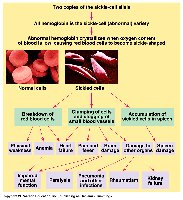
Pleiotropy occurs when a single gene affects multiple, seemingly unrelated phenotypic traits. This is common in many genetic disorders.
Example: Sickle cell anemia, where the sickle cell gene affects red blood cell shape, resistance to malaria, and multiple organ systems.
Multifactorial Inheritance
Multifactorial diseases result from the interaction between genetic and environmental factors. These conditions are increasingly recognized in medicine.
Examples: Heart disease, diabetes, and many cancers.
Factors: Genetics, diet, exercise, and environmental exposures all contribute to disease risk.
Summary Table: Variations on Mendelian Genetics
Variation | Definition | Example |
|---|---|---|
Incomplete Dominance | Heterozygote shows intermediate phenotype | Pink snapdragons |
Codominance | Both alleles fully expressed | AB blood type |
Multiple Alleles | More than two alleles for a trait | ABO blood group |
Epistasis | One gene masks/modifies another | Coat color in mice |
Polygenic Inheritance | Trait controlled by multiple genes | Skin color, height |
Pleiotropy | One gene affects multiple traits | Sickle cell anemia |
Multifactorial | Genes and environment interact | Heart disease |
