 Back
BackL4: Vascular Plant Structure, Growth, and Development
Study Guide - Smart Notes
 Tailored notes based on your materials, expanded with key definitions, examples, and context.
Vascular Plant Structure, Growth, and Development
Introduction to Vascular Plant Organization
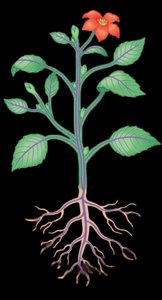
Vascular plants are complex organisms composed of multiple organs and tissue systems that work together to support growth, development, and survival. The two major organ systems are the root system and the shoot system, each with specialized structures and functions.
Major Organs of Vascular Plants
Root and Shoot Systems
The root system anchors the plant, absorbs water and minerals, and stores nutrients, while the shoot system includes stems, leaves, and reproductive organs, supporting photosynthesis and reproduction. These systems are interconnected and function as a unified whole.
Root System: Underground, provides anchorage, absorption, and storage.
Shoot System: Above ground, includes stems (support and transport), leaves (photosynthesis), and reproductive structures.
Root Functions and Architecture
Roots are essential for plant stability and resource acquisition. Their structure varies to suit ecological roles:
Anchorage: Roots secure the plant in the soil.
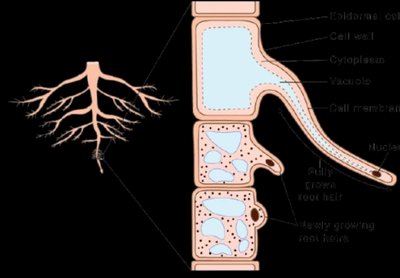
Absorption: Root hairs increase surface area for water and mineral uptake.
Storage: Some roots store carbohydrates and other reserves.
Types of Root Systems
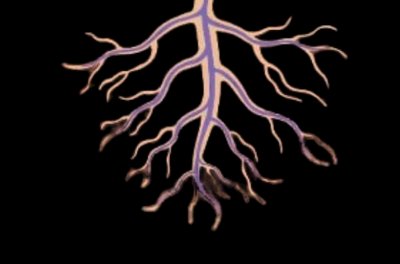
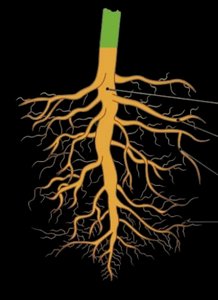
Taproot System (Eudicots): Characterized by a dominant primary root with lateral branches. Provides deep anchorage and access to deep water sources.
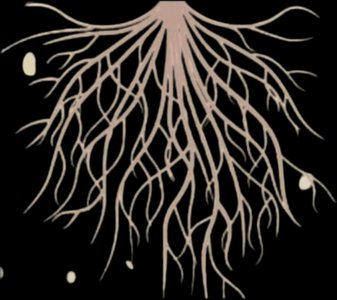
Fibrous Root System (Monocots): Consists of many thin roots forming a dense mat, effective for surface absorption and soil stabilization.
Root Hairs and Surface Area
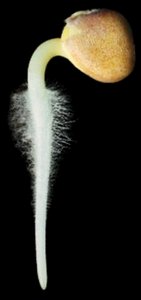
Root hairs are thin extensions of epidermal cells that greatly increase the absorptive surface area of roots, enhancing water and mineral uptake.
Shoot System: Stems and Leaves
Stem Structure and Function
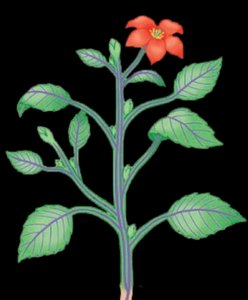
Stems serve as the main axis of the shoot system, supporting leaves and reproductive organs, and facilitating transport between roots and leaves.
Nodes: Points where leaves attach to the stem.
Internodes: Stem segments between nodes.
Apical bud: Located at the tip, responsible for primary growth.
Axillary bud: Can form lateral branches or flowers.
Leaf Types and Morphology
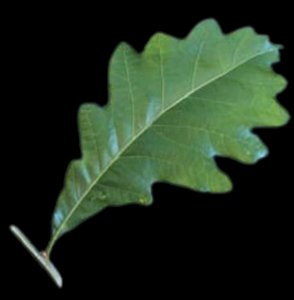
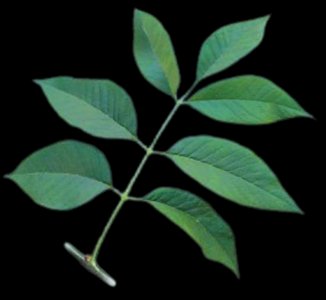
Leaves are the primary sites of photosynthesis. They can be classified as simple or compound based on their structure:
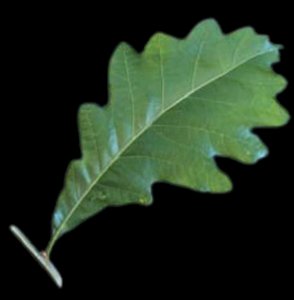
Simple Leaf: A single, undivided blade. (left)
Compound Leaf: Blade divided into multiple leaflets attached to a common stalk. (right)
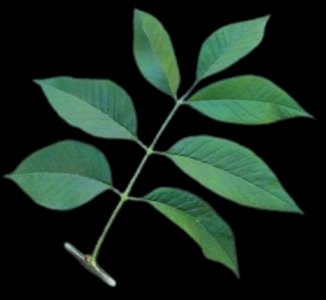
Distinguishing Simple vs. Compound Leaves
The presence of an axillary bud at the base of the whole leaf (not at the base of each leaflet) distinguishes a simple leaf from a compound leaf.
Leaf Venation Patterns
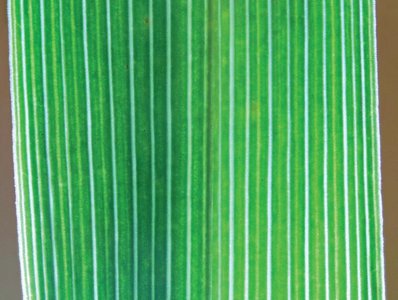
Venation refers to the arrangement of veins in a leaf:
Reticulate (Net-like) Venation: Veins branch and reconnect, typical of dicots. (see slides)
Parallel Venation: Veins run parallel from base to tip, typical of monocots. (photo below)
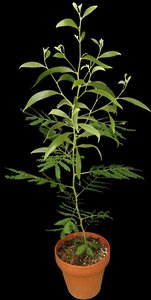
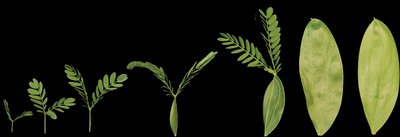
Leaf Morphology Changes: Acacia Example
Some plants, such as Acacia, exhibit changes in leaf morphology during development, adapting to different environmental conditions and life stages.
Juvenile leaves: Bipinnately compound.
Adult leaves: Simple phyllodes.
Model Plant: Arabidopsis thaliana
Arabidopsis as a Model Organism
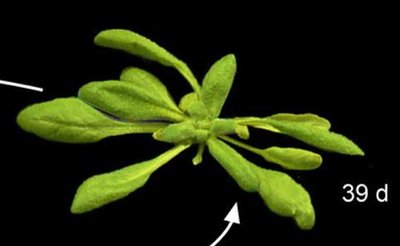
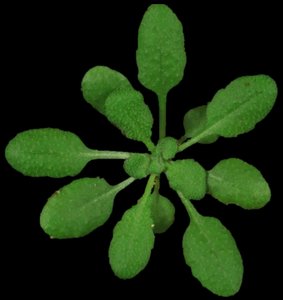
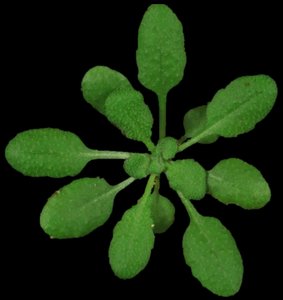
Arabidopsis thaliana is widely used in plant biology due to its short life cycle, ease of genetic manipulation, and clear morphological changes during vegetative growth.
Leaf Heteroblasty in Arabidopsis
Leaf heteroblasty refers to the change in leaf shape and size as the plant matures. In Arabidopsis, this is evident in the sequence of leaf generations during vegetative growth.
Plant Tissue Systems
Overview of Tissue Systems
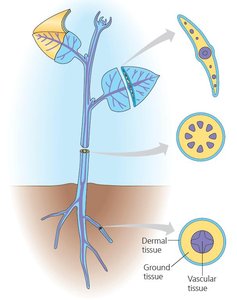
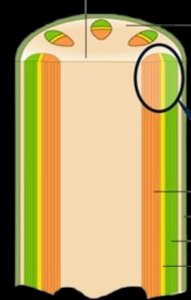
All vascular plant organs (roots, stems, leaves) are composed of three main tissue systems:
Dermal Tissue System: Protective outer covering, includes the epidermis and specialized structures like trichomes and guard cells.
Vascular Tissue System: Conducts water, minerals, and sugars throughout the plant. Includes xylem and phloem.
Ground Tissue System: Functions in photosynthesis, storage, and support. Includes cortex and pith.
Dermal Tissue System
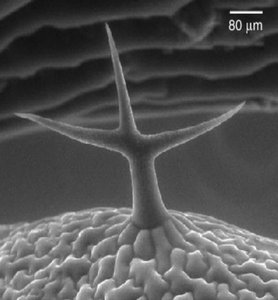
The dermal tissue system forms the first line of defense against physical damage and pathogens. The epidermis is the outermost cell layer, often covered by a waxy cuticle to reduce water loss. Specialized cells include trichomes (hair-like structures) and guard cells (regulate stomata for gas exchange).
Vascular Tissue System
The vascular tissue system connects roots and shoots, enabling the transport of water, minerals, and organic compounds:
Xylem: Transports water and dissolved minerals upward from roots to shoots.
Phloem: Transports sugars and other organic products from sources (e.g., leaves) to sinks (e.g., roots, fruits).
Ground Tissue System
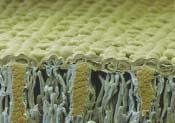
Ground tissue fills the spaces between dermal and vascular tissues. It is involved in photosynthesis, storage, and support. The cortex is located outside the vascular tissue, while the pith is inside.
Major Plant Cell Types and Their Functions
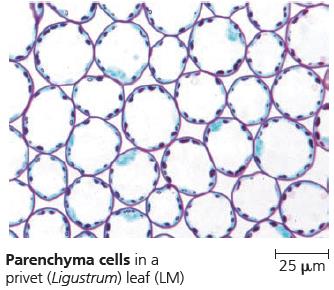
Parenchyma Cells
Parenchyma cells are the most common plant cells, responsible for metabolic functions such as photosynthesis and storage. They have thin, flexible walls and can divide and differentiate into other cell types.
Collenchyma Cells
Collenchyma cells provide flexible support for growing parts of the plant. They have unevenly thickened cell walls and are often found just beneath the epidermis in stems and petioles.
Sclerenchyma Cells
Sclerenchyma cells provide rigid support due to their thick, lignified cell walls. They are often dead at maturity and include fibers and sclereids.
Specialized Transport Cells
Within the vascular system, tracheids and vessel elements (in xylem) transport water, while sieve-tube elements (in phloem) transport sugars. These cells are highly specialized for efficient transport.
Summary Table: Plant Tissue Systems and Major Cell Types
Tissue System | Main Function | Key Cell Types |
|---|---|---|
Dermal | Protection, exchange | Epidermal cells, guard cells, trichomes |
Vascular | Transport of water, minerals, sugars | Xylem (tracheids, vessel elements), Phloem (sieve-tube elements, companion cells) |
Ground | Photosynthesis, storage, support | Parenchyma, collenchyma, sclerenchyma |
Key Equations and Concepts
Surface Area of Roots: Increased by root hairs, enhancing absorption.
Transpiration Stream: Water movement through xylem is driven by evaporation from leaves (transpiration) and cohesion-tension mechanism.
Example: In a drought environment, plants may develop deeper taproots or more extensive fibrous roots to maximize water uptake and survival.
Additional info: Some details, such as the specific structure of trichomes and the role of the cambium in secondary growth, were inferred from standard botanical knowledge to ensure completeness.
