 Back
BackL4: Vascular Plant Structure, Growth, and Development
Study Guide - Smart Notes
 Tailored notes based on your materials, expanded with key definitions, examples, and context.
Vascular Plant Structure, Growth, and Development
Introduction to Vascular Plant Organization
Vascular plants are complex organisms with specialized organs and tissues that enable them to thrive in diverse environments. Their structure is closely linked to their function, allowing for efficient resource acquisition, support, and reproduction.
Major Organs: Roots, stems, leaves, and reproductive organs.
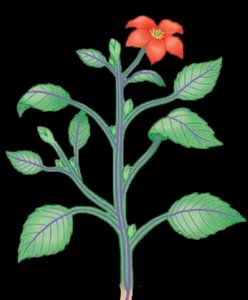
Two Main Systems: The shoot system (stems, leaves, reproductive organs) and the root system (roots).
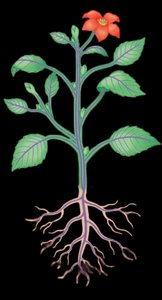
Root and Shoot Systems: Structure and Function
The root and shoot systems operate as an integrated unit, each performing essential roles for plant survival and growth.
Root System: Anchors the plant, absorbs water and minerals, and stores nutrients.
Shoot System: Supports leaves and reproductive structures, positions leaves for optimal light capture, and facilitates gas exchange and photosynthesis.
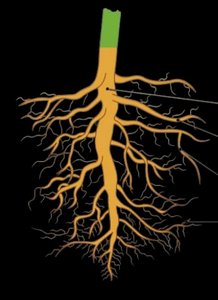
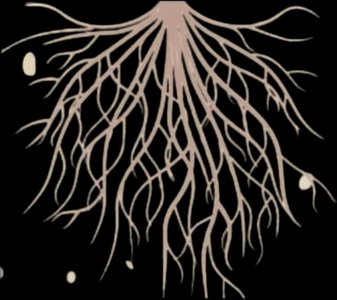
Root System Architecture and Adaptations
Root architecture varies among plant groups and reflects ecological adaptations for anchorage, absorption, and storage.
Taproot System (Eudicots): Characterized by a dominant primary root with lateral branches.
Fibrous Root System (Monocots): Consists of many thin roots forming a dense mat, with no dominant root.
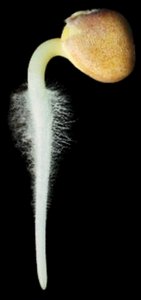
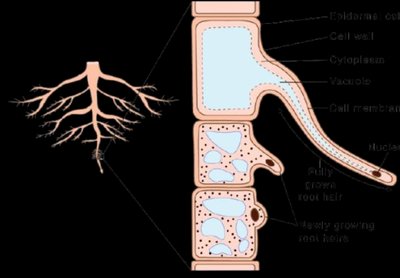
Root Hairs and Surface Area
Root hairs are thin extensions of epidermal cells that greatly increase the absorptive surface area of roots, enhancing water and mineral uptake.
Shoot System: Stems, Leaves, and Buds
The shoot system is organized around the stem, which bears leaves and buds, and positions them for optimal light capture and reproduction.
Node: Point where a leaf attaches to the stem.
Internode: Stem segment between nodes.
Apical Bud: Located at the tip of the stem, responsible for primary growth.
Axillary Bud: Can give rise to lateral branches or flowers.
Leaf Types and Venation Patterns
Leaves are the primary sites of photosynthesis and exhibit diverse forms and venation patterns.
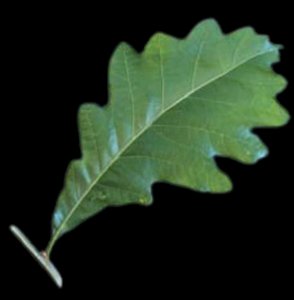
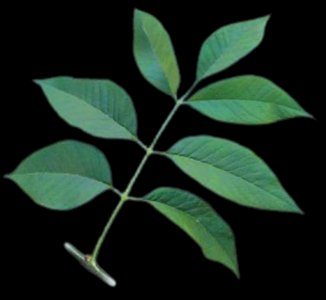
Simple Leaf: A single, undivided blade.
Compound Leaf: Blade divided into multiple leaflets attached to a common stalk.
Leaf Venation
Reticulate (Net-like) Venation: Veins branch and reconnect, typical of dicots.
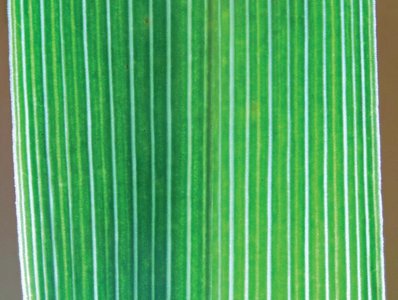
Parallel Venation: Veins run parallel from base to tip, typical of monocots.
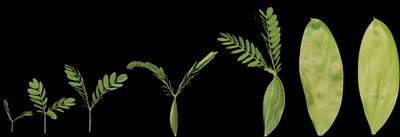
Leaf Morphology Changes: Acacia and Arabidopsis
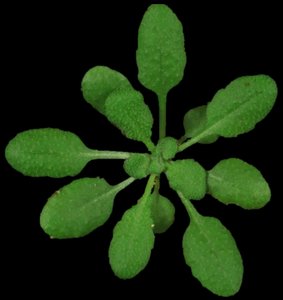
Some plants, such as Acacia and Arabidopsis thaliana, exhibit changes in leaf morphology during development, a phenomenon known as heteroblasty.
Acacia: Juvenile leaves are bipinnately compound; adult leaves are simple phyllodes.
Arabidopsis: Shows clear morphological changes in leaves during vegetative growth.
Plant Tissue Systems
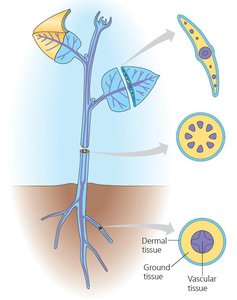
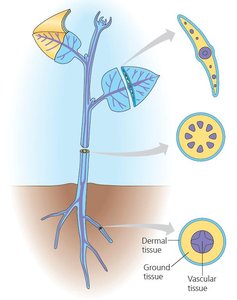
All vascular plant organs are composed of three main tissue systems: dermal, vascular, and ground tissue. Each system has specialized functions and is continuous throughout the plant body.
Dermal Tissue: Protective outer covering, includes the epidermis, cuticle, guard cells, and trichomes.
Vascular Tissue: Conducts water, minerals, and sugars; includes xylem and phloem.
Ground Tissue: Functions in photosynthesis, storage, and support; includes cortex and pith.
Dermal Tissue System
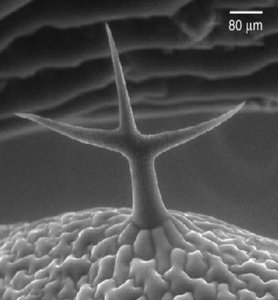
The dermal tissue system forms the first line of defense against physical damage and pathogens. The epidermis is the outermost cell layer, often covered by a waxy cuticle to reduce water loss. Specialized cells such as guard cells regulate gas exchange, and trichomes provide protection and reduce herbivory.
Vascular Tissue System
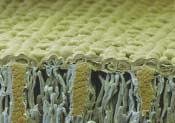
The vascular tissue system connects roots and shoots, facilitating the transport of water, minerals, and organic compounds throughout the plant.
Xylem: Transports water and dissolved minerals upward from roots to shoots.
Phloem: Transports sugars and other organic products from sources (e.g., leaves) to sinks (e.g., roots, fruits).
Ground Tissue System
Ground tissue fills the spaces between dermal and vascular tissues and is involved in photosynthesis, storage, and support. The cortex is located outside the vascular tissue, while the pith is inside.
Major Plant Cell Types and Their Functions
Plant organs are composed of specialized cell types, each adapted for specific functions.
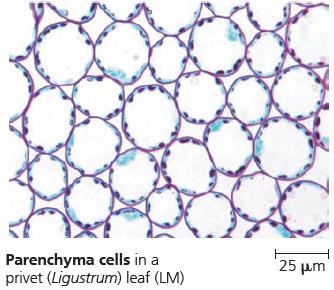
Parenchyma Cells: Thin-walled, living cells involved in photosynthesis, storage, and tissue repair.
Collenchyma Cells: Provide flexible support for growing tissues.
Sclerenchyma Cells: Thick-walled, often dead at maturity, provide rigid support.
Xylem Cells: Vessel elements and tracheids, specialized for water transport.
Phloem Cells: Sieve-tube elements and companion cells, specialized for sugar transport.
Summary Table: Major Plant Cell Types
Cell Type | Structure | Main Function |
|---|---|---|
Parenchyma | Thin primary walls, living at maturity | Photosynthesis, storage, tissue repair |
Collenchyma | Unevenly thickened walls, living at maturity | Flexible support |
Sclerenchyma | Thick secondary walls, often dead at maturity | Rigid support |
Xylem (Vessel elements, Tracheids) | Thick walls, dead at maturity | Water and mineral transport |
Phloem (Sieve-tube elements, Companion cells) | Living cells, sieve plates | Transport of sugars and organic nutrients |
Conclusion
Understanding the structure and function of vascular plant organs, tissues, and cells is fundamental to studying plant biology. The integration of roots, shoots, and specialized tissues enables plants to adapt to a wide range of environments and efficiently carry out essential life processes.
