 Back
BackVascular Plant Structure, Growth, and Development: Study Notes
Study Guide - Smart Notes
 Tailored notes based on your materials, expanded with key definitions, examples, and context.
Vascular Plant Structure, Growth, and Development
I. Plant Body Organization
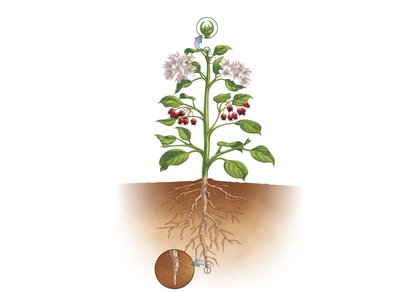
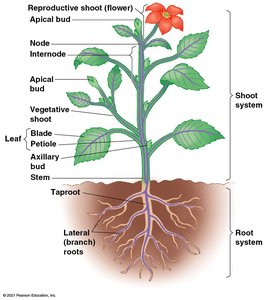
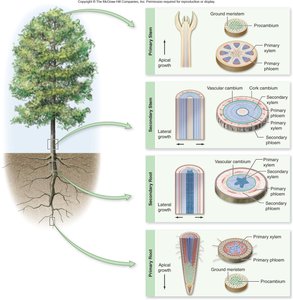
The plant body is organized into two main systems: the shoot system (stems, leaves, and reproductive structures) and the root system. Growth is indeterminate due to the presence of meristems—regions of undifferentiated, actively dividing cells. Meristems are classified as apical (responsible for lengthening) and lateral (responsible for girth).
Shoot System: Includes stems, leaves, and flowers; responsible for photosynthesis, reproduction, and support.
Root System: Anchors the plant, absorbs water and minerals, stores food, and interacts with soil organisms.
Meristems: Apical meristems drive primary growth (length), while lateral meristems (vascular cambium and cork cambium) drive secondary growth (thickness).
II. Plant Tissue Types
Plant tissues are organized into three main types, each with specialized functions and cell types. These tissues form tissue systems that extend throughout the plant body.
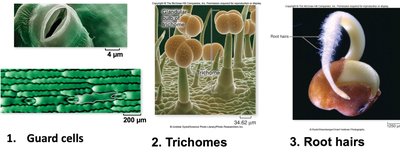
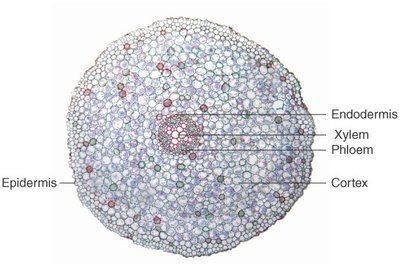
Dermal Tissue: Forms the outer protective covering (epidermis or periderm in woody plants). May include specialized cells such as guard cells, trichomes, and root hairs.
Ground Tissue: Functions in storage, photosynthesis, and support. Includes parenchyma, collenchyma, and sclerenchyma cells.
Vascular Tissue: Conducts water, minerals, and organic compounds. Composed of xylem (water and mineral transport) and phloem (sugar and nutrient transport).
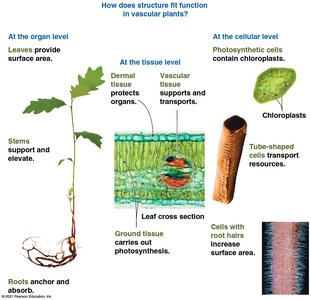
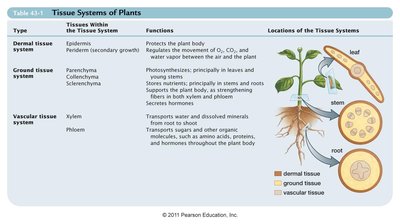
Table: Tissue Systems of Plants
Type | Tissues Within the Tissue System | Functions | Locations |
|---|---|---|---|
Dermal tissue system | Epidermis, Periderm (secondary growth) | Protects the plant body, regulates movement of gases and water | Leaf, stem, root |
Ground tissue system | Parenchyma, Collenchyma, Sclerenchyma | Photosynthesis, storage, support, hormone secretion | Leaf, stem, root |
Vascular tissue system | Xylem, Phloem | Transport of water, minerals, sugars, and hormones | Leaf, stem, root |
III. Dermal Tissue
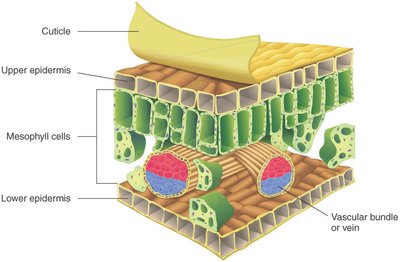
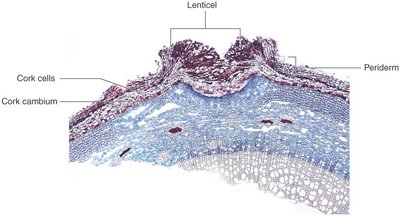
The dermal tissue system forms the plant's outer protective layer. In non-woody plants, it is the epidermis, often covered by a waxy cuticle. In woody plants, the periderm replaces the epidermis during secondary growth. Specialized cells include guard cells (regulate gas exchange), trichomes (protection), and root hairs (increase absorption).
Cuticle: Waxy layer that reduces water loss.
Guard Cells: Control the opening and closing of stomata.
Trichomes: Hair-like structures that protect against herbivores and excessive sunlight.
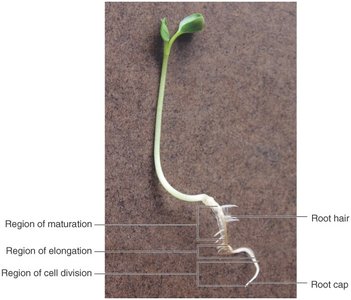
Root Hairs: Increase surface area for water and mineral absorption.
IV. Ground Tissue
Ground tissue is responsible for photosynthesis, storage, and support. It is composed of three main cell types:
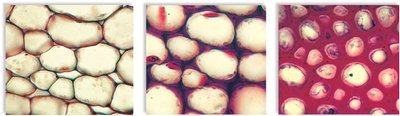
Parenchyma Cells: Thin-walled, living cells involved in photosynthesis, storage, and secretion.
Collenchyma Cells: Living cells with unevenly thickened walls, providing flexible support.
Sclerenchyma Cells: Thick, lignified cell walls; often dead at maturity; provide rigid support (e.g., fibers, sclereids).
V. Vascular Tissue
The vascular tissue system is essential for the transport of water, minerals, and nutrients throughout the plant. It consists of xylem and phloem:
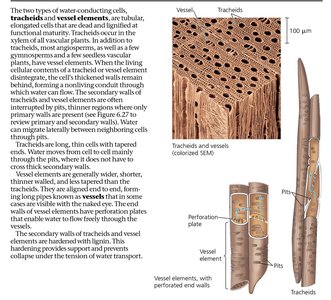
Xylem: Conducts water and dissolved minerals from roots to shoots. Composed of dead cells at maturity—vessel elements (wider) and tracheids (thinner).
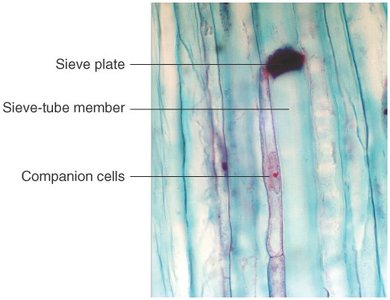
Phloem: Transports sugars, amino acids, and hormones from sources (e.g., leaves) to sinks (e.g., roots, fruits). Composed of living sieve-tube elements (connected by sieve plates) and companion cells (support sieve tubes).
VI. Plant Organs
Plants have three main vegetative organs—roots, stems, and leaves—and reproductive organs (flowers). Each organ is composed of all three tissue systems.
Roots: Anchor the plant, absorb water and minerals, store food, and interact with soil organisms.
Stems: Support leaves and flowers, transport fluids, and store nutrients.
Leaves: Main site of photosynthesis and gas exchange; determinate in structure.
Flowers: Specialized for reproduction; organ identity determined by the ABC model of floral development.
Root Structure and Growth
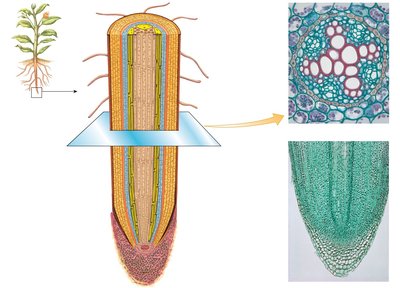
Root Cap: Protects the apical meristem as the root grows through soil.
Zones of Growth: Region of cell division (apical meristem), elongation, and maturation (where root hairs form).
Vascular Cylinder: Central core containing xylem and phloem.
Modified Roots
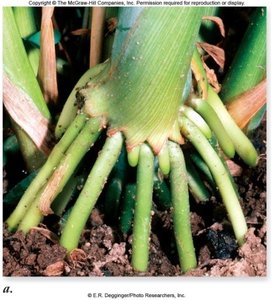
Prop Roots: Provide extra support (e.g., in corn).
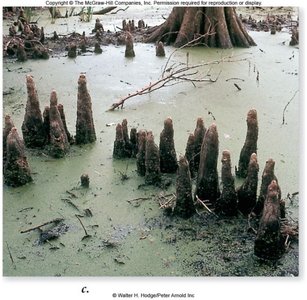
Pneumatophores: Facilitate oxygen uptake in waterlogged soils (e.g., mangroves).
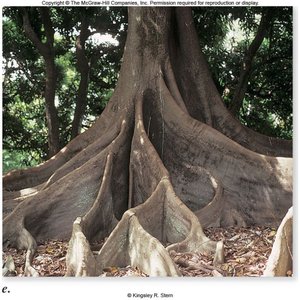
Buttress Roots: Provide stability in shallow soils (e.g., tropical trees).
Food Storage Roots: Store carbohydrates (e.g., carrots, beets).
Stems and Vascular Tissue Organization
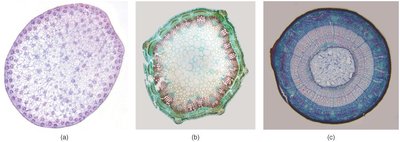
Monocots: Vascular bundles scattered throughout the stem; no secondary growth.
Dicots (Eudicots): Vascular bundles arranged in a ring; secondary growth possible (wood formation).
Woody Eudicots: Secondary xylem forms wood; secondary phloem forms part of the bark.
Wood and Bark
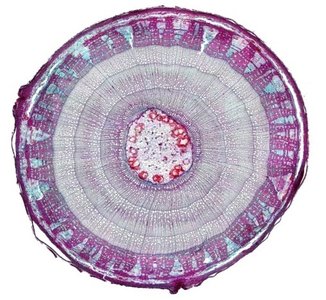
Wood: Accumulation of secondary xylem produced by the vascular cambium.
Bark: Includes all tissues external to the vascular cambium (secondary phloem, cork cambium, periderm).
Sapwood: Outer, functional xylem that transports water.
Heartwood: Inner, non-functional xylem that provides structural support.
Annual Rings: Result from seasonal growth patterns in secondary xylem.
Modified Stems
Rhizomes: Horizontal underground stems (e.g., ginger).
Tubers: Swollen tips of rhizomes that store carbohydrates (e.g., potatoes).
Leaves
Initiation: Leaves arise as primordia from the shoot apical meristem.
Function: Principal site of photosynthesis; regulate transpiration and gas exchange.
Structure: Determinate growth; blade, petiole, veins.
Specialized Leaves: Tendrils (support), spines (protection), traps (insectivorous plants).
Summary Table: Comparison of Plant Tissue Types
Tissue Type | Main Cell Types | Primary Functions |
|---|---|---|
Dermal | Epidermal cells, guard cells, trichomes, root hairs | Protection, gas exchange, water retention |
Ground | Parenchyma, collenchyma, sclerenchyma | Photosynthesis, storage, support |
Vascular | Xylem (tracheids, vessel elements), phloem (sieve-tube elements, companion cells) | Transport of water, minerals, sugars |
Additional info: The ABC model of flower development explains how combinations of three classes of genes (A, B, and C) specify the identity of floral organs (sepals, petals, stamens, carpels). This model is fundamental to understanding the genetic control of flower formation.
