 Back
L2: Vascular Plants and the First Forests: Evolution, Diversity, and Life Cycles
Study Guide - Smart Notes
 Tailored notes based on your materials, expanded with key definitions, examples, and context.
Vascular Plants and the First Forests
Introduction to Plant Evolution
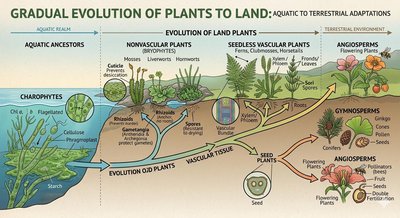
The evolution of plants from aquatic ancestors to complex terrestrial forms marks a significant transition in the history of life. This process involved the gradual adaptation of green algae-like ancestors to the challenges of life on land, resulting in the emergence of bryophytes and vascular plants, and eventually the first forests.
Evolutionary Origins of Land Plants
Evolution by Modification: Plant evolution is characterized by the modification of pre-existing structures rather than the sudden invention of new ones.
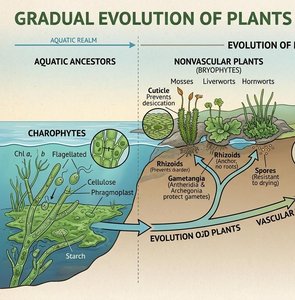
Green Algae Ancestry: Plants arose from green algae, with charophytes identified as the closest living relatives.
Key Adaptations: Adaptations such as cuticles, rhizoids, and spores enabled the colonization of land.
Major Groups of Early Land Plants
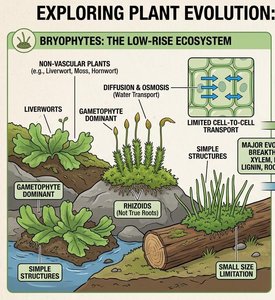
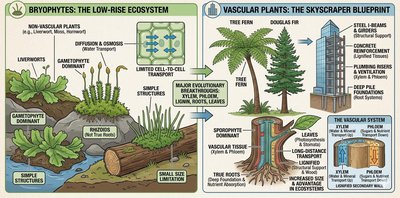
Bryophytes (Non-Vascular Plants): Includes mosses, liverworts, and hornworts. These plants lack vascular tissues (xylem and phloem) and require moist environments for survival and reproduction.
Seedless Vascular Plants: Includes ferns, horsetails, and whisk ferns. These plants possess vascular tissues, allowing for greater size and complexity.
Challenges of Moving to Land
Desiccation: Risk of drying out due to exposure to air.
Support: Need for structural support outside of water.
Reproduction: Adaptations for reproduction without water as a medium.
Bryophytes: Non-Vascular Plants
Characteristics of Bryophytes
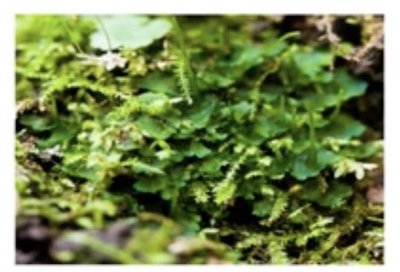
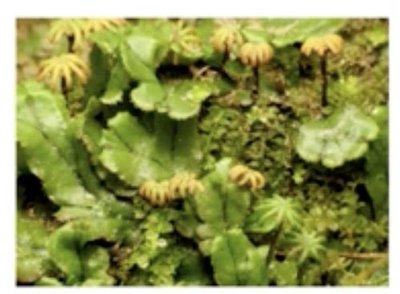
Bryophytes are the earliest diverging group of land plants. They are small, simple plants that lack true vascular tissues and are dependent on moist environments.
Examples: Mosses, liverworts, hornworts
Moisture Requirement: Require a source of moisture for survival and reproduction
Structure: Lack true leaves and stems; possess rhizoids for anchorage
Photosynthetic Pigments: Contain chlorophyll a and b
Diversity Among Bryophytes
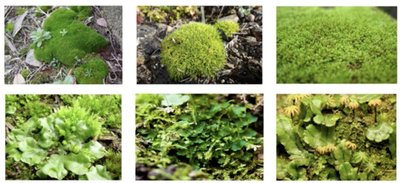
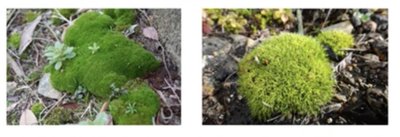
Mosses: Multicellular rhizoids, dominant gametophyte generation
Liverworts and Hornworts: Unicellular rhizoids, distinct body forms
Bryophyte Structure and Function
Rhizoids: Root-like structures for anchorage, not true roots
Water Transport: Occurs mainly by diffusion and osmosis due to lack of vascular tissue
Size Limitation: Small size due to absence of supportive tissues
Vascular Plants: Structure and Evolutionary Innovations
Key Features of Vascular Plants
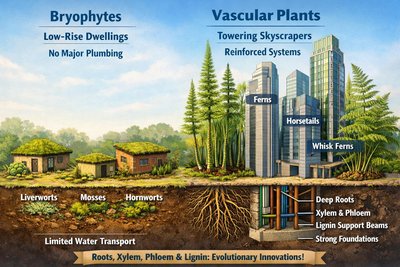
Vascular plants possess specialized tissues (xylem and phloem) for water and nutrient transport, allowing them to grow larger and inhabit a wider range of environments.
Xylem: Conducts water and minerals from roots to shoots
Phloem: Transports sugars and organic nutrients
Lignin: Provides structural support, enabling greater height
Bryophytes vs. Vascular Plants
Feature | Bryophytes | Vascular Plants |
|---|---|---|
Vascular Tissue | Absent | Present (xylem & phloem) |
Support | Small, low to ground | Large, upright |
Dominant Generation | Gametophyte | Sporophyte |
Water Transport | Diffusion/osmosis | Vascular tissue |
Understanding Spore-Producing Plants
Spore-Producing Plants vs. Seed Plants
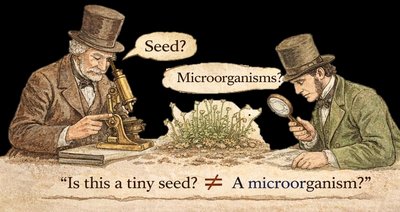
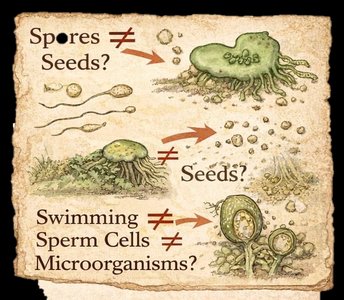
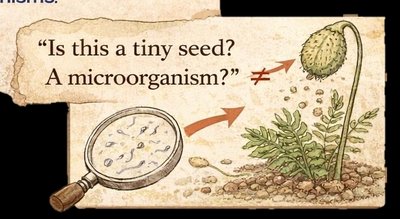
Spore-producing plants reproduce using spores rather than seeds. Early botanists often misinterpreted spores as seeds or pollen grains, but these structures are distinct in function and evolutionary significance.
Spore-Producing Plants: Includes mosses, liverworts, hornworts, ferns, horsetails, clubmosses, and spikemosses
Seeds: Complex structures containing an embryo, nutritive tissue, and protective coat
Pollen: Male gametophyte in seed plants, involved in fertilization
Key Differences: Spores, Seeds, and Pollen
Structure | Function | Example |
|---|---|---|
Spore | Dispersal and reproduction in non-seed plants | Ferns, mosses |
Seed | Embryo protection and dispersal in seed plants | Pine, oak |
Pollen | Male gametophyte, fertilization in seed plants | Flowering plants, conifers |
Alternation of Generations in Plant Life Cycles
Overview of Alternation of Generations
All land plants exhibit alternation of generations, a life cycle that alternates between multicellular haploid (gametophyte) and multicellular diploid (sporophyte) stages.
Gametophyte: Haploid stage that produces gametes by mitosis
Sporophyte: Diploid stage that produces spores by meiosis
Zygote: Formed by the fusion of gametes, develops into the sporophyte
Key Terms
Haploid (n): One set of chromosomes
Diploid (2n): Two sets of homologous chromosomes
Ploidy: Number of chromosome sets in a cell
Generalized Plant Life Cycle Steps
Gametophyte produces haploid gametes by mitosis
Fertilization forms a diploid zygote
Zygote develops into diploid sporophyte
Sporophyte produces haploid spores by meiosis
Spores develop into haploid gametophytes
Examples of Plant Life Cycles
Mosses: Gametophyte is dominant; sporophyte is dependent
Ferns: Sporophyte is dominant; gametophyte is independent but small
Seed Plants (Gymnosperms & Angiosperms): Sporophyte is dominant; gametophyte is highly reduced
Summary Table: Plant Groups and Life Cycle Features
Group | Dominant Generation | Vascular Tissue | Reproductive Structure |
|---|---|---|---|
Bryophytes | Gametophyte | No | Spore |
Seedless Vascular Plants | Sporophyte | Yes | Spore |
Seed Plants | Sporophyte | Yes | Seed & Pollen |
Key Equations and Concepts
Meiosis:
Fertilization:
Conclusion
The transition from aquatic green algae to terrestrial vascular plants involved a series of evolutionary innovations, including the development of vascular tissues, alternation of generations, and the emergence of seeds. Understanding these adaptations provides insight into the diversity and complexity of modern plant life.
