Back
BackVertebrate Evolution and Diversity: Study Notes
Study Guide - Smart Notes
 Tailored notes based on your materials, expanded with key definitions, examples, and context.
Vertebrate Evolution and Diversity
Overview of Vertebrate Evolution
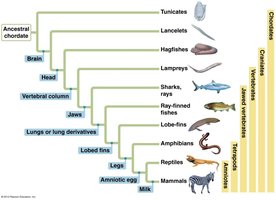
Vertebrates are a diverse group of animals characterized by the presence of a backbone or vertebral column. Their evolutionary history is marked by several key innovations that have enabled them to adapt to a wide range of environments.
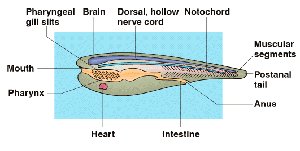
Chordates: All vertebrates are chordates, possessing a notochord, dorsal hollow nerve cord, pharyngeal slits, and a post-anal tail at some stage of development.
Craniates: Vertebrates are also craniates, meaning they have a skull (cranium) that protects the brain.
Major Innovations: The evolution of jaws, lungs, limbs, and amniotic eggs are significant milestones in vertebrate history.
Chordate Characteristics
Chordates share several defining features that distinguish them from other animal groups.
Notochord: A flexible, rod-shaped structure that provides support.
Dorsal Hollow Nerve Cord: Runs along the back and develops into the central nervous system.
Pharyngeal Gill Slits: Openings in the pharynx that function in filter-feeding or gas exchange.
Post-anal Tail: An extension of the body past the anal opening.
Craniates and Vertebrates
Craniates are animals with a skull, while vertebrates are craniates with a backbone.
Craniates: Include hagfish, which have a cranium but lack vertebrae.
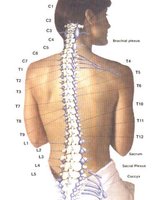
Vertebrates: Possess a vertebral column made of bone or cartilage.
Jawless Fish: Hagfish and Lampreys
Hagfish
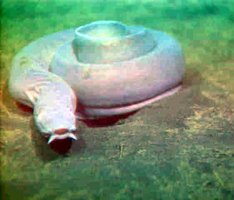
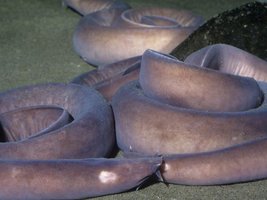
Hagfish are jawless, eel-like craniates that lack vertebrae. They are important for understanding early vertebrate evolution.
Characteristics: No scales or plates, cartilaginous skeleton, unpaired fins, isotonic with seawater.
Ecology: Bottom dwellers, feed on dead or dying material, possess a notochord for life.
Unique Features: Produce slime as a defense mechanism.
Lampreys
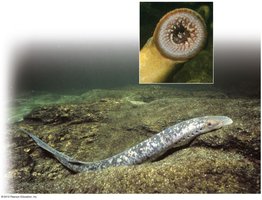
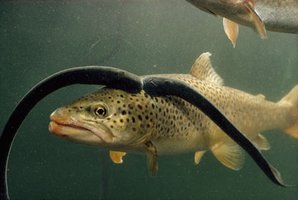
Lampreys are jawless vertebrates that can be free-living or parasitic.
Characteristics: Rasping tongue, bites and releases anti-coagulant, notochord present with pieces of backbone.
Habitat: Found in both fresh and salt water.
Parasitic Behavior: Attach to other fish and feed on their blood.
Jawed Fish: Cartilaginous and Bony Fish
Evolution of Jaws
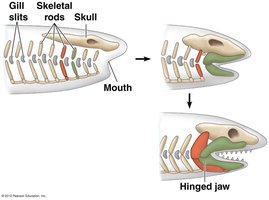
The development of jaws was a major evolutionary innovation, allowing vertebrates to exploit new food sources.
Hinged Jaws: Evolved from skeletal rods supporting gill slits.
Classes: Chondrichthyes (cartilaginous fish), ray-finned fish, lobe-finned fish.
Cartilaginous Fish (Class Chondrichthyes)
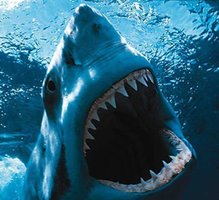
Cartilaginous fish include sharks, skates, and rays.
Skeleton: Made of cartilage rather than bone.
Jaws: Moveable jaws, sharp vision and smell.
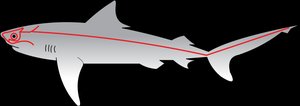
Lateral Line: Sensory system for detecting vibrations in water.
Feeding: Some are suspension feeders, others are predators.
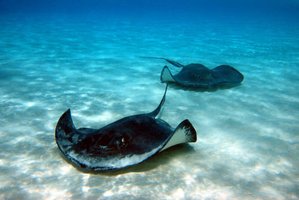
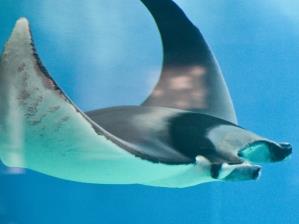
Skates and Rays
Skates and rays are dorso-ventrally flattened cartilaginous fish.
Feeding: Some are filter feeders (e.g., devil fish).
Adaptations: Eyes on top of head, venomous sting.
Ray-Finned Fish
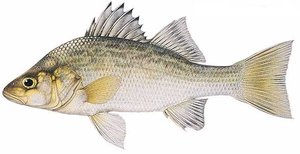
Ray-finned fish are the most diverse group of vertebrates.
Operculum: Bony plate covering the gills.
Swim Bladder: Gas-filled organ for buoyancy control.
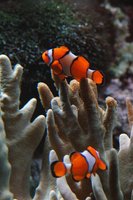
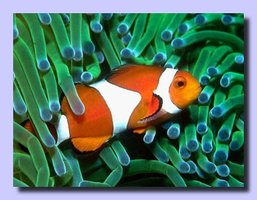
Diversity: Includes species such as trout, goldfish, and clownfish.
Lobe-Finned Fish
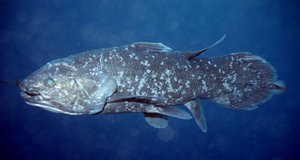
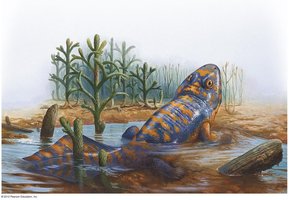
Lobe-finned fish have rod-shaped bones in their fins and are ancestors to tetrapods.
Examples: Coelacanth and lungfish.
Significance: Some lobe-finned fish can breathe air and move on land.
Comparative Vertebrate Embryology
Embryonic Development Across Vertebrates
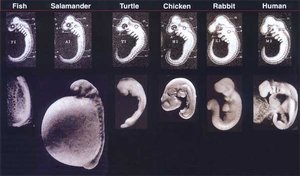
Vertebrate embryos share common developmental stages, reflecting their evolutionary relationships.
Early Stages: Embryos of fish, amphibians, reptiles, birds, and mammals are remarkably similar.
Divergence: Differences become more pronounced as development progresses.
Significance: Supports the concept of common ancestry among vertebrates.
Summary Table: Major Vertebrate Groups and Innovations
Group | Key Features | Examples |
|---|---|---|
Jawless Fish | No jaws, cartilaginous skeleton, notochord | Hagfish, Lamprey |
Cartilaginous Fish | Cartilage skeleton, hinged jaws, lateral line | Sharks, Rays, Skates |
Ray-Finned Fish | Bony skeleton, operculum, swim bladder | Trout, Goldfish, Clownfish |
Lobe-Finned Fish | Rod-shaped bones in fins, lungs | Coelacanth, Lungfish |
Key Terms and Concepts
Notochord: A flexible rod that supports the body in all embryonic and some adult chordate animals.
Operculum: A bony plate that covers and protects the gills in ray-finned fish.
Swim Bladder: An internal gas-filled organ that helps ray-finned fish control their buoyancy.
Lateral Line: A sensory organ in fish and some amphibians that detects movement and vibration in the surrounding water.
Hinged Jaw: An evolutionary adaptation that allows vertebrates to grasp and process food more efficiently.
Conclusion
The evolution of vertebrates is marked by a series of innovations that have enabled them to diversify and occupy a wide range of ecological niches. Understanding these evolutionary milestones provides insight into the complexity and adaptability of life on Earth.