 Back
BackVertebrate Evolution: Major Innovations and Lineages
Study Guide - Smart Notes
 Tailored notes based on your materials, expanded with key definitions, examples, and context.
Phylum Chordata and Vertebrate Lineages
Defining Features of Chordates
Chordates are a diverse phylum of animals characterized by several key features present at some stage in their development. These features are foundational to understanding vertebrate evolution.
Notochord: A flexible, rod-shaped structure that provides support.
Dorsal hollow nerve cord: Runs along the back and develops into the central nervous system.
Pharyngeal slits or clefts: Openings in the pharynx that function in filter-feeding or gas exchange.
Post-anal tail: An extension of the body past the anal opening.
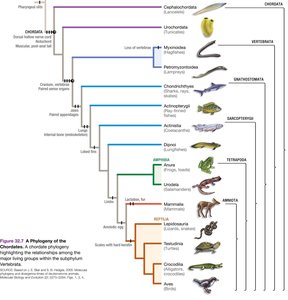
Example: All vertebrates, including fish, amphibians, reptiles, birds, and mammals, are chordates.
Major Vertebrate Lineages
Vertebrates are a subphylum of chordates distinguished by the presence of a vertebral column. The major lineages include jawless fishes, cartilaginous fishes, bony fishes, amphibians, reptiles (including birds), and mammals.
Jawless fishes (Agnatha): Hagfish and lampreys.
Cartilaginous fishes (Chondrichthyes): Sharks, rays, and skates.
Bony fishes (Osteichthyes): Ray-finned and lobe-finned fishes.
Tetrapods: Amphibians, reptiles, birds, and mammals.
Evolutionary Innovations in Vertebrates
Evolution of the Jaw (Gnathostomes)
The evolution of jaws was a major innovation that allowed vertebrates to exploit new feeding strategies. Jaws are hypothesized to have evolved from skeletal rods that supported pharyngeal slits in early chordates.
Evidence: Similar structure and developmental origin of jaw and gill-supporting tissues.
Gnathostomes: Jawed vertebrates, including most modern fishes and all tetrapods.
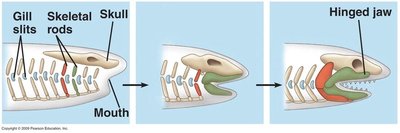
Example: The transition from jawless to jawed fishes enabled more efficient predation and feeding.
Origins of Bones and Teeth
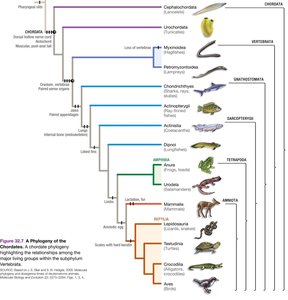
Mineralized bone and teeth are defining features of vertebrates. The earliest mineralization occurred in the mouth, likely as a feeding adaptation.
Human skeleton: Composed of mineralized bone; cartilage is limited to specific areas.
Teeth: Evolved from dental elements within the head, providing advantages in food processing.
Evolution of Lungs and Buoyancy Control
Lungs and swim bladders are important adaptations for gas exchange and buoyancy in aquatic vertebrates. Early ray-finned fishes possessed lungs that later evolved into swim bladders in some lineages.
Lungs: Supplemented gill-based gas exchange in early fishes.
Swim bladder: Evolved from lungs, providing buoyancy control.
Protective bony flap (operculum): Covers and protects the gills.
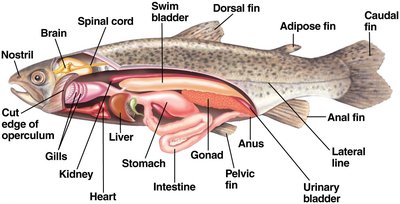
Additional info: Darwin originally proposed that lungs evolved from swim bladders, but evidence shows the reverse is true.
Transition to Land: Tetrapods
Evolution of Limbs
The evolution of limbs with digits enabled vertebrates to move onto land. Tetrapods are defined by the presence of four limbs, a neck for head movement, and the loss of gills in adults.
Derived characteristics: Limbs with digits, neck with multiple vertebrae, ears, and glands.
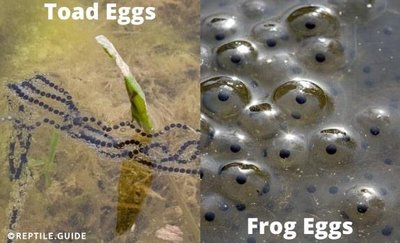
External fertilization: Common in amphibians; eggs are jelly-like and require moist environments.
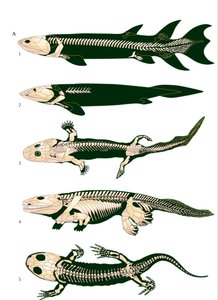
Example: Amphibians such as frogs and salamanders are modern tetrapods that still rely on water for reproduction.
Class Amphibia
Amphibians are the first vertebrates to colonize land but remain closely tied to water for reproduction. They exhibit external fertilization and lay jelly-like eggs.
Habitat requirements: Moist environments are necessary for egg and larval development.
Global decline: Amphibian populations are declining due to disease, habitat loss, climate change, and pollution.
Amniotes and the Amniotic Egg
Evolution of the Amniotic Egg
The amniotic egg is a key adaptation that allowed vertebrates to reproduce on land. It contains specialized membranes for protection, gas exchange, waste removal, and nutrition.
Amnion: Fluid-filled sac that cushions the embryo.
Chorion: Facilitates gas exchange.
Allantois: Stores waste produced by the embryo.
Yolk sac: Provides nutrients.
Albumen: Supplies additional protein.
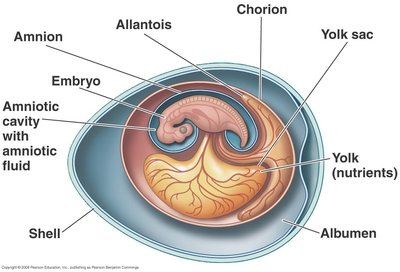
Example: Reptiles, birds, and mammals are amniotes, but only reptiles and birds lay shelled eggs.
Reptilia Clade
Reptiles are amniotes that lay shelled eggs and exhibit internal fertilization. Most are ectothermic, relying on external heat sources to regulate body temperature.
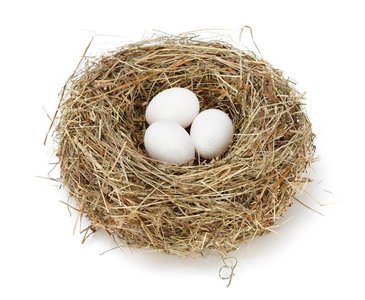
Egg types: Birds lay inflexible, calcium carbonate eggs; other reptiles lay flexible, leathery eggs.
Ectothermy: Reduces food requirements compared to endotherms.
Birds: Only group of reptiles that are endothermic (generate their own heat).
Major Innovations in Amniotes
Flight in Birds
Birds evolved several features that enable flight, including feathers, lightweight bones, and powerful muscles. These adaptations allowed birds to exploit aerial niches and migrate over long distances.
Feathers: Provide lift and insulation.
Hollow bones: Reduce body weight.
High metabolic rate: Supports energy demands of flight.
Parental Care
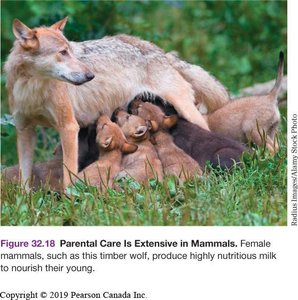
Parental care is an important evolutionary innovation in birds and mammals, increasing offspring survival but requiring significant energy investment.
Pro: Increases survival of young by providing food, protection, and teaching behaviors.
Con: Requires time and energy, reducing the number of offspring that can be produced.
Mammalian Evolution and Diversity
Derived Characters of Mammals
Mammals are a diverse group of endothermic vertebrates with several unique features.
Mammary glands: Produce milk to nourish young.
Hair or fur: Provides insulation.
Fat layer under skin: Aids in temperature regulation.
Diaphragm: Muscle that helps ventilate the lungs.
Long parental care: Offspring are dependent for extended periods.
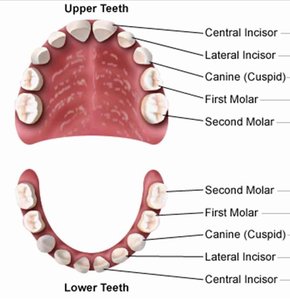
Differentiated teeth: Specialized for different functions (incisors, canines, molars).
Mammalian Birthing Modes
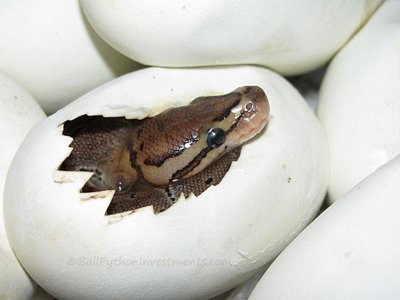
Mammals are classified into three groups based on their reproductive strategies: monotremes, marsupials, and eutherians.
Group | Key Features | Example |
|---|---|---|
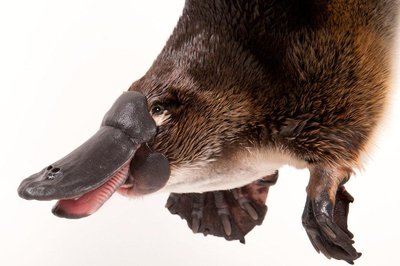
Monotremes | Lay eggs, produce milk, lack nipples | Platypus, echidna |
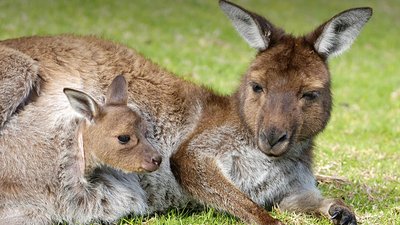
Marsupials | Birth live young, young develop in pouch | Kangaroo, koala |
Eutherians | Placental mammals, complete development in uterus | Humans, elephants |
Summary Table: Major Vertebrate Innovations
Innovation | Function | Major Groups |
|---|---|---|
Jaws | Feeding adaptation | Gnathostomes (jawed vertebrates) |
Lungs | Gas exchange | Ray-finned and lobe-finned fishes, tetrapods |
Limbs | Movement on land | Tetrapods |
Amniotic egg | Reproduction on land | Amniotes (reptiles, birds, mammals) |
Flight | Aerial locomotion | Birds |
Parental care | Increased offspring survival | Birds, mammals |
